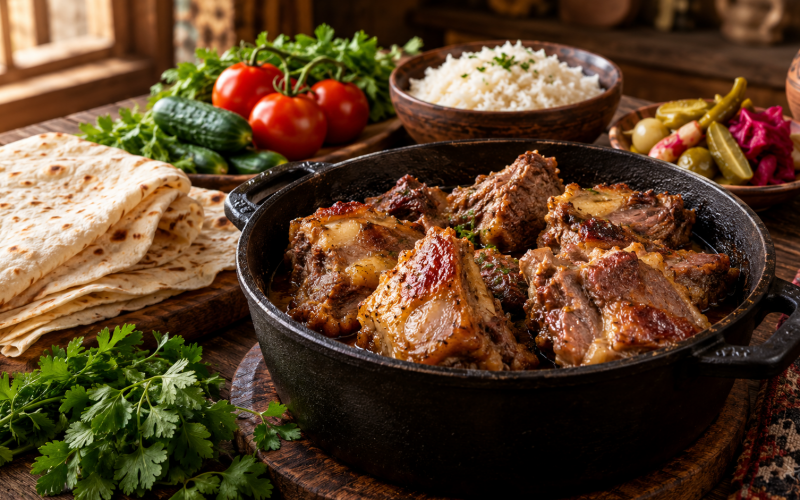
Armenian cuisine is renowned for its rich flavors, time-honored cooking techniques, and deep connection to family traditions. Among its distinctive meat dishes, lamb ghavurma holds a special place. Prepared through slow cooking and careful rendering of fat, this hearty dish transforms simple ingredients into tender, aromatic meat with a rich, concentrated flavor.
Ghavurma reflects an approach to cooking in which patience and ingredient quality matter more than elaborate seasoning. Lamb is cooked until tender, allowing its natural flavors to develop and blend with the fat and seasonings. Depending on the family recipe, the dish may contain little more than meat, fat, salt, and pepper, or it may incorporate onions, garlic, and aromatic herbs.
Historically, ghavurma was also associated with traditional methods of preserving cooked meat for later consumption. Today, it remains an appealing example of Armenian culinary heritage, combining practicality, hospitality, and a love of substantial, flavorful food.
In this guide, we explore the origins of Armenian lamb ghavurma, its cultural significance, the ingredients used in its preparation, traditional cooking techniques, popular variations, and the best ways to serve and store this remarkable dish.
What Is Ghavurma? Understanding the Traditional Armenian Dish
Ghavurma is a meat dish associated with the culinary traditions of Armenia and neighboring regions. Its name belongs to a family of related terms used across parts of the Caucasus, Anatolia, and the Middle East, where meat has traditionally been fried, cooked slowly, or preserved in rendered fat.
Although recipes differ from one place to another, the central idea is recognizable: meat is cooked thoroughly, often with its own fat or additional animal fat, until it becomes tender and develops a concentrated flavor.
In Armenian home cooking, lamb ghavurma is particularly appreciated for its straightforward ingredients and satisfying texture. The exact preparation method depends on local customs and family traditions, so the dish should not be understood as having one universally standardized recipe.
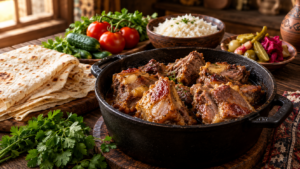
Well-prepared lamb ghavurma is characterized by tender meat, a rich aroma, and a deep, savory flavor. The lamb may be cut into substantial pieces, allowing it to retain its texture throughout the cooking process. As the fat renders, it helps carry flavor and can prevent the meat from becoming excessively dry. When the cooking temperature is controlled carefully, the meat becomes tender while developing a satisfying richness.
Unlike grilled lamb, which acquires much of its characteristic flavor from direct exposure to high heat, ghavurma relies primarily on gradual cooking. The result is a dish with a different texture and a more concentrated, slow-developed flavor.
The Importance of Ghavurma in Armenian Cuisine
Lamb has long been an important ingredient in Armenian cooking, appearing in celebratory meals, family gatherings, and traditional dishes prepared for special occasions. Its distinctive flavor pairs naturally with herbs, grains, seasonal vegetables, and freshly baked bread.
Ghavurma fits comfortably within this culinary tradition. It can be served as a substantial main course or prepared in advance for later meals. Historically, its suitability for preparing and storing cooked meat also made it a practical choice for households that needed to preserve food beyond the day of preparation.
Today, Armenian families may prepare ghavurma according to inherited recipes or adapt the technique to modern kitchens. Some prefer a minimal approach that emphasizes the lamb itself, while others introduce additional ingredients to create a more aromatic result.
The History of Ghavurma and Its Place in Armenian Food Culture
Before domestic refrigerators became commonplace, preserving meat presented a significant challenge. Families needed reliable ways to make seasonal food supplies last, particularly during colder months when fresh meat might not be readily available.
Cooking meat thoroughly and storing it beneath rendered animal fat was one traditional preservation technique used in parts of the Caucasus and neighboring regions. Once the meat had cooled, the solidified fat formed a covering that limited its exposure to air. This method helped protect the cooked meat under suitable conditions, although its effectiveness depended on preparation, storage temperature, and other factors.
Ghavurma’s connection with this practical approach illustrates how culinary traditions often emerge from the need to make the most of available ingredients and preserve food for future use.
In traditional rural communities, the preparation of meat was often linked to seasonal activities and the availability of livestock. Cooking a larger quantity at once could reduce repeated preparation and provide food for several subsequent meals. Rich meat dishes also had a natural place at family gatherings and festive tables, where substantial food was an expression of generosity and hospitality.
Ghavurma could be prepared for immediate consumption or kept for later use, depending on household customs. Its adaptability made it both a practical dish and a satisfying centerpiece for a shared meal.
The development of modern refrigeration and more accessible cooking equipment has changed how many traditional dishes are prepared and stored. Ghavurma can now be made in smaller quantities for an ordinary family dinner rather than as part of a large seasonal preparation. Modern cooks may use a heavy-bottomed saucepan, cast-iron cookware, or an oven to achieve the slow, even cooking required for tender meat.
Some contemporary recipes also reduce the amount of added fat or introduce onions and herbs for additional flavor. These adaptations reflect changing tastes and dietary preferences without necessarily abandoning the essential principle of carefully cooked lamb.
Choosing the Right Ingredients for Lamb Ghavurma
The quality of the lamb has a considerable influence on the final result. Cuts containing a balance of meat, fat, and connective tissue are particularly suitable for slow cooking.
Lamb shoulder is an excellent option because it contains enough connective tissue to become tender during prolonged cooking. As the collagen gradually breaks down, the meat develops a soft texture without immediately falling apart.
Lamb leg can also be used, particularly when a somewhat leaner result is desired. However, because it generally contains less connective tissue than shoulder, careful temperature control is important to prevent it from becoming dry.
Lamb breast and ribs provide additional richness because they contain more fat and connective tissue. These cuts are suitable for cooks who prefer a more substantial, deeply flavored preparation.
Whichever cut you choose, aim for fresh meat with a natural color, a clean smell, and a reasonable distribution of fat. Pieces of similar size will cook more evenly and make it easier to determine when the dish is ready.
Fat is one of the defining components of ghavurma. It contributes to the dish’s aroma, texture, and characteristic richness. During cooking, lamb fat gradually melts and can be used to brown the meat and support the cooking process. Depending on the cut, the lamb may release enough fat on its own, or a small amount of additional animal fat may be necessary.
The goal is not to immerse the meat in an excessive quantity of grease. Rather, the fat should complement the lamb, helping it cook evenly and develop a full flavor. If the finished dish contains more fat than desired, some can be removed before serving. Nevertheless, eliminating all the fat would change the character of the preparation and diminish one of its defining qualities.
Traditional-style lamb ghavurma often relies on a restrained selection of seasonings. Salt enhances the natural flavor of the meat, while black pepper contributes gentle warmth. Depending on the recipe, garlic, onions, bay leaves, or fresh and dried herbs may also be used.
The most suitable seasoning depends on the desired result. A minimalist preparation allows the flavor of lamb to remain prominent, whereas a more aromatic version introduces additional layers of taste. It is best to begin with a modest amount of seasoning and adjust it as necessary. Strong spices should be used carefully, as they can overwhelm the distinctive flavor of the meat.
Some cooks add onions to provide sweetness and a softer, more rounded flavor. Garlic can contribute a savory aroma, while herbs add freshness and complexity. Other ingredients, such as a small amount of water or broth, may be introduced if the meat needs additional moisture during cooking. Wine and elaborate spice mixtures are not essential to lamb ghavurma and should be considered adaptations rather than universal requirements of the traditional Armenian preparation.
Before cooking, trim any undesirable pieces of connective tissue and remove excess moisture from the surface of the meat with paper towels. Cut the lamb into pieces of relatively even size. Very small pieces may become dry before larger ones are tender, while excessively large pieces can take considerably longer to cook.
Traditional Armenian Lamb Ghavurma Recipe
The exact cooking time depends on the cut of lamb, the size of the pieces, and the temperature maintained throughout the process. Allow approximately 20–30 minutes for preparation, followed by around 1.5–3 hours of cooking.
A heavy-bottomed saucepan, Dutch oven, or cast-iron pot is particularly useful. These vessels distribute heat more evenly than thin cookware and help prevent the fat and meat from scorching.
For a straightforward home-cooked version, the main ingredients are lamb, an appropriate amount of lamb fat, salt, and black pepper. Onion, garlic, and herbs can be added according to personal preference.
Step 1: Prepare the Lamb
Cut the lamb into medium-sized pieces, removing any unwanted connective tissue while retaining a reasonable amount of natural fat. Pat the meat dry before cooking. Excess moisture can interfere with browning, causing the lamb to steam rather than develop a rich, golden surface.
Step 2: Render the Fat
Place the cooking vessel over low to medium-low heat. If the lamb contains fatty trimmings, add them first and allow the fat to render gradually.
Avoid heating the fat too aggressively. Excessive temperatures can cause it to smoke or burn, creating unpleasant flavors that are difficult to correct later. Once enough fat has accumulated to coat the bottom of the pot, remove any excessively browned pieces if necessary. The rendered fat is now ready to help brown the lamb.
If the selected cut is relatively lean, a modest amount of suitable cooking fat can be added.
Step 3: Brown the Meat
Add the lamb to the hot fat in a single layer where possible. If the quantity is too large, work in batches rather than overcrowding the pot.
Allow the pieces to develop a golden-brown surface before turning them. Browning creates additional flavor through reactions that occur when the meat’s surface becomes sufficiently hot and dry. The objective is to develop a rich exterior without burning the fat or cooking the meat too aggressively.
Once the pieces are browned on the appropriate sides, return any previously cooked batches to the pot.
Step 4: Cook the Lamb Slowly
Reduce the heat and continue cooking the lamb gently. The meat should cook steadily without vigorous frying or prolonged exposure to excessively high temperatures.
If the lamb releases sufficient moisture, it may be possible to continue without adding liquid. If the bottom of the pot becomes dry or the meat begins to stick, add a small amount of water or broth as needed.
Covering the vessel can help retain moisture, although the lid may be removed periodically if excess liquid needs to evaporate. Turn the pieces occasionally and check that the meat is not sticking to the bottom. Cooking should continue until the lamb becomes tender and its flavor has developed fully.
Step 5: Add Seasonings
Season the meat with salt and freshly ground black pepper. If the recipe includes onions or garlic, add them at a suitable stage of cooking so they soften without burning.
Herbs and other aromatic ingredients should be used according to their intensity. Some herbs tolerate longer cooking, while delicate fresh herbs are better added toward the end.
Taste the cooking juices and adjust the seasoning as necessary. A successful ghavurma should taste savory and balanced, with the natural character of lamb remaining at the forefront.
Step 6: Check for Doneness
Lamb should be fully cooked and tender before the dish is served. The precise time required depends on the cut and the size of the pieces.
Shoulder and other collagen-rich cuts generally benefit from prolonged cooking, which allows connective tissue to soften. Leaner cuts may reach an acceptable texture sooner.
For food safety, use a food thermometer when appropriate and follow recommended safe internal temperatures for lamb. The meat should be tender enough to eat comfortably rather than tough or rubbery.
Step 7: Rest and Serve
Once the lamb is tender, remove the pot from the heat and allow the dish to settle briefly.
Serve the meat warm, accompanied by some of its flavorful cooking fat and juices. The amount can be adjusted according to preference. Fresh herbs, bread, vegetables, or a simple grain-based side dish can provide contrast to the rich meat.
The finished dish should be aromatic and tender, with the lamb retaining its identity rather than becoming lost beneath an excessive quantity of seasoning or liquid.
The Secrets to Perfect Ghavurma
Slow cooking is central to the texture of ghavurma. When collagen-rich cuts are heated gradually over sufficient time, their connective tissue softens, making the meat more tender.
High heat may brown the exterior quickly but does not necessarily produce a tender interior. A steady temperature allows the meat to cook more evenly and gives its natural flavors time to develop. Patience is particularly important when using lamb shoulder or other cuts intended for prolonged cooking. Rather than relying on the clock alone, evaluate the meat’s tenderness as the cooking progresses.
The relationship between lean meat and fat influences both flavor and texture. Too little fat can make a lean cut difficult to cook without drying, while an excessive amount can leave the finished dish unpleasantly greasy. Select a cut with a suitable natural distribution of fat and adjust the quantity of added fat accordingly.
A well-browned surface contributes depth and complexity, but burned fat can introduce bitter flavors. Begin with moderate heat and allow the cooking vessel to reach an appropriate temperature before adding the lamb. Avoid leaving rendered fat unattended over high heat.
Heavy-bottomed cookware is particularly suitable because it distributes heat more evenly and reduces the likelihood of localized scorching. The vessel should be large enough to brown the lamb in manageable batches. If too much meat is added at once, moisture accumulates and the temperature may drop, preventing proper browning.
Several mistakes can undermine the quality of ghavurma. Using excessively high heat can burn the fat before the meat becomes tender. Overcrowding the pot interferes with browning, while unevenly cut pieces cook at different rates. Adding too much liquid can turn the preparation into something closer to a stew. Over-seasoning may obscure the flavor of lamb, and rushing the cooking process can leave connective tissue tough.
Avoiding these errors helps preserve the dish’s characteristic texture and flavor.
Popular Variations of Lamb Ghavurma
A simple version focuses on lamb, rendered fat, salt, and pepper. This approach is particularly suitable for good-quality meat because it allows its natural aroma and flavor to dominate. The success of this version depends on the choice of cut, careful browning, and steady cooking.
Onions and garlic can introduce sweetness and aromatic complexity. Onions gradually soften during cooking, contributing a rounded flavor that complements the richness of lamb. Garlic can be added in moderation, preferably at a stage when it can release its aroma without burning.
Herbs can add freshness and complexity to lamb ghavurma. Depending on the recipe, cooks may choose parsley, thyme, bay leaves, or other seasonings that complement the meat. The combination should remain balanced. Fresh herbs can be added near the end of cooking or used as a garnish, while more robust aromatics can be introduced earlier.
Modern equipment allows cooks to adapt the traditional technique to different kitchens and schedules. A slow cooker can provide steady heat, although the meat may need to be browned separately to develop the desired flavor. An oven can also be useful when a covered pot is cooked at a low, controlled temperature.
Those who prefer a lighter dish can select a leaner cut, limit additional fat, and remove excess rendered fat before serving. These adaptations change certain aspects of the preparation, but they can preserve the essential qualities of well-cooked, flavorful lamb.
What to Serve with Armenian Lamb Ghavurma
Bread is a natural accompaniment to rich meat dishes. Armenian lavash, with its thin texture and mild flavor, is particularly suitable. It can be served alongside the lamb or used to accompany small portions of meat and vegetables. Bread also provides a simple contrast to the dish’s concentrated flavor.
Rice provides a neutral base that complements the richness of lamb without competing with it. A simple rice pilaf can make the meal more substantial, while bulgur offers a slightly nutty flavor and a different texture. The choice depends on the occasion and the desired balance.
Fresh vegetables provide color, texture, and a refreshing contrast to the meat. Tomatoes, cucumbers, onions, and leafy herbs can be combined into a simple seasonal salad. A modest dressing of lemon juice and oil may be enough to complement the dish without overwhelming it.
Pickled vegetables are another useful accompaniment. Their acidity and crisp texture contrast with the soft meat and rich cooking fat. Cucumbers, cabbage, and other traditionally preserved vegetables can introduce a sharper flavor to the meal. A small portion of something tangy can make a rich dish feel more complete.
Ghavurma does not necessarily require a sauce, since the meat and its cooking juices already provide considerable flavor. If an additional accompaniment is desired, a light garlic or herb sauce may work well. Fresh herbs, lemon, or a modest amount of yogurt-based dressing can introduce freshness without obscuring the natural flavor of the lamb.
How Ghavurma Is Served in Armenia
Food in Armenian culture is closely associated with hospitality, family gatherings, and the pleasure of sharing a meal. Traditional meat dishes often appear alongside bread, seasonal produce, herbs, and other dishes intended for the table.
Ghavurma fits naturally into this tradition. It can be served as a main course for a family dinner or prepared ahead of time for a gathering. Presentation is usually straightforward rather than elaborate. The cooked lamb is placed in a serving dish, with some of its cooking fat or juices retained to preserve flavor and texture. Bread and vegetables can be arranged alongside it.
The dish’s richness makes it particularly suitable for a meal built around several contrasting components. Fresh vegetables add brightness, grains provide substance, and bread offers a familiar accompaniment.
There is no single serving arrangement that applies to every Armenian household. Family recipes and regional customs differ, and contemporary cooks may present ghavurma in ways that reflect their own preferences. What unites these approaches is an emphasis on generous portions, satisfying food, and the experience of eating together.
Ghavurma and Other Traditional Meat Dishes
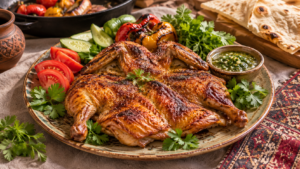
Armenian khorovats is a well-known barbecue tradition in which meat is cooked over an open flame or hot coals. The technique encourages browning and can introduce smoky aromas. Ghavurma relies instead on gradual cooking in fat, producing a different texture and flavor profile.
Khorovats is often associated with outdoor gatherings and freshly grilled meat, whereas ghavurma can be particularly convenient for cooking ahead and serving over several meals. Both dishes demonstrate the importance of meat in Armenian cuisine, but their methods and results are distinct.
Khashlama is another traditional meat dish associated with Armenian and neighboring culinary traditions. Depending on the recipe, it may involve meat cooked slowly with vegetables and liquid. Ghavurma, by contrast, is characteristically associated with cooking meat in its own rendered fat or additional fat. The resulting dish tends to be richer and less broth-based.
Similar methods of cooking and preserving meat appear across the Caucasus, Anatolia, and parts of the Middle East. In different regions, related names may refer to dishes with distinct ingredients, seasonings, or preservation techniques. These similarities reflect long histories of cultural exchange, trade, migration, and shared approaches to making food last.
Nevertheless, culinary traditions should not be treated as interchangeable. The precise meaning of ghavurma depends on local context, and Armenian household recipes may differ from preparations found elsewhere.
Nutritional Value of Lamb Ghavurma
Lamb provides high-quality protein, which contributes to the maintenance and repair of body tissues. It also supplies vitamin B12, iron, zinc, and other nutrients involved in normal physiological functions. The exact nutritional composition depends on the animal, the cut of meat, and how it is prepared.
Because ghavurma is cooked with rendered fat, its nutritional profile differs from that of a lean grilled lamb dish. Fat contributes to the characteristic flavor and texture, but it also increases the energy content of the finished dish.
The total amount depends on the fat content of the lamb, whether additional fat is used, and how much remains in the serving. A portion containing leaner meat and less retained fat will generally provide fewer calories than a richer preparation made with fatty cuts.
Those who prefer a less rich meal can choose a relatively lean cut, limit additional fat, and remove some of the rendered fat before serving. Serving moderate portions alongside fresh vegetables and a grain-based side dish can also help create a more balanced meal.
Ghavurma is a substantial meat dish, so portion size is worth considering, especially when it is prepared with generous amounts of fat. A balanced meal can include a moderate serving of lamb, vegetables, and bread or grains. The best proportions depend on individual preferences and dietary needs.
How to Store and Reheat Lamb Ghavurma Safely
If ghavurma is prepared in advance or leftovers remain after a meal, it should be cooled and refrigerated promptly. Divide large quantities into smaller, shallow containers to help them cool more quickly. Refrigerate the meat within two hours of cooking, or within one hour when the surrounding temperature exceeds 32°C.
Cooked leftovers should generally be refrigerated at 4°C or below and consumed within three to four days. If they will not be used within that period, freezing is a suitable alternative.
Ghavurma can be frozen in individual portions, making it convenient to reheat only the amount needed. Use airtight, freezer-safe containers and label them with the preparation date. For best quality, thaw leftovers in the refrigerator rather than on the kitchen counter.
Historically, covering cooked meat with rendered fat was one way to help preserve it. The solidified fat reduced the meat’s exposure to air and formed part of a broader traditional preservation practice. However, a layer of fat is not a guarantee of microbiological safety. Harmful microorganisms can survive cooking or develop during improper storage, and some hazards are not detectable by smell or appearance.
For modern home preparation, ghavurma should be refrigerated or frozen unless a validated preservation process specifically establishes another safe method.
To reheat ghavurma, use a covered saucepan over low to medium-low heat. If the meat appears dry, add a small amount of water or broth. Stir occasionally to distribute heat and prevent sticking. Avoid prolonged high-temperature reheating, which can toughen the meat and cause the remaining fat to burn.
When reheating leftovers, ensure that the entire portion reaches 74°C. Reheat only the quantity required for the meal rather than repeatedly warming and cooling the same batch.
Conclusion: Discover the Rich Flavors of Armenian Lamb Ghavurma
Armenian lamb ghavurma is more than a traditional meat dish. It reflects a culinary approach built around resourcefulness, careful cooking, and an appreciation for the natural flavor of quality ingredients.
Its characteristic richness comes from the relationship between lamb, rendered fat, and gradual cooking. Although family recipes vary, the central principles remain recognizable: choose suitable meat, manage the temperature carefully, season thoughtfully, and allow enough time for the lamb to become tender.
Ghavurma also offers a glimpse into the history of Armenian food culture, including traditional methods of preparing meat in quantity and the importance of shared meals. Its connection with older preservation techniques makes it particularly interesting, while modern refrigeration allows home cooks to prepare it conveniently and store it safely.
Whether served with Armenian lavash, fresh vegetables, rice, or seasonal accompaniments, lamb ghavurma is a dish that rewards patience and celebrates simplicity.
If you want to discover the authentic flavors of Armenian cuisine, explore its rich culinary traditions, enjoy the warmth of Armenian hospitality, and experience the distinctive taste of traditional lamb ghavurma.
Come to Armenia and try it for yourself!