

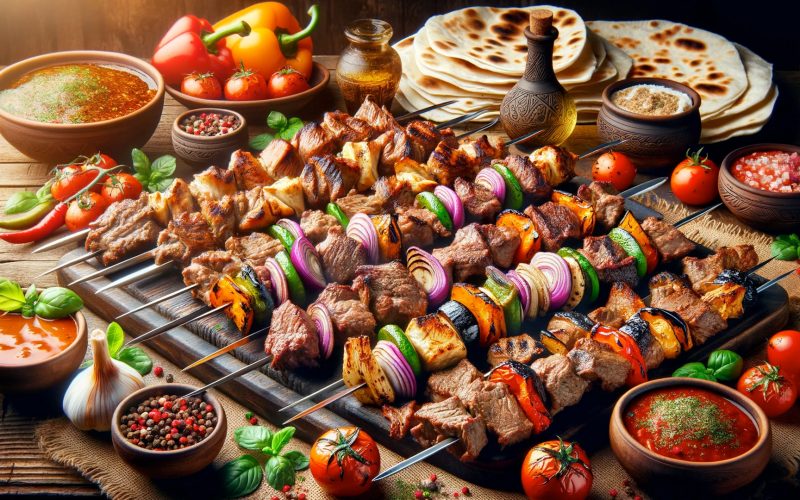
Hook/Opening
The tantalizing aroma of sizzling meat over an open flame is enough to draw anyone to the table, and in Armenia, this irresistible scent belongs to one dish above all: Khorovats. Often described as the heart and soul of Armenian cuisine, Khorovats is far more than a simple barbecue—it is a culinary tradition steeped in history, culture, and communal spirit.
Brief Description of Khorovats
Khorovats is the quintessential Armenian grilled meat dish, typically prepared on skewers over a charcoal fire. While pork, lamb, and beef are the most common choices, the true magic of Khorovats lies not only in the quality of the meat but also in the careful marination, the rhythmic turning of skewers over an open flame, and the shared enjoyment that follows. This dish is as much about the preparation and gathering as it is about the flavors themselves.
Cultural Significance and Popularity
In Armenia, Khorovats is a staple at celebrations, family gatherings, and national holidays. It is a symbol of hospitality, generosity, and togetherness. Beyond Armenia’s borders, Armenian communities worldwide embrace Khorovats as a delicious link to their heritage, a taste that evokes nostalgia and a sense of belonging. Whether in the bustling streets of Yerevan or the kitchens of the diaspora, Khorovats continues to unite people across generations and geographies.
Purpose of the Article
This article aims to take readers on a journey through the world of Khorovats, exploring its rich history, traditional preparation methods, cultural significance, and the delightful variations that exist across Armenia. Readers will gain a deeper appreciation of why this simple yet exquisite dish is considered a cornerstone of Armenian identity.
Thesis Statement
Khorovats is more than just grilled meat—it is a symbol of Armenian identity, tradition, and communal gatherings, embodying the warmth, resilience, and hospitality that define Armenian culture.
Historical Background
Origins of Khorovats
Khorovats has a rich history that dates back centuries, with its roots deeply embedded in Armenian culture and daily life. The earliest mentions of Khorovats can be found in Armenian literature and oral traditions, where stories of communal feasts and open-fire cooking highlight the central role of grilled meat in social gatherings. Historical texts and folk tales often describe villagers coming together to celebrate seasonal harvests, religious holidays, or important life events, with Khorovats taking center stage.
The dish’s origins may also reflect the culinary influences of neighboring regions. Armenia, situated at the crossroads of the Middle East and the Caucasus, has historically interacted with Persian, Turkish, and Georgian cultures. While each culture boasts its own style of grilled meats, Armenian Khorovats is distinct in its preparation techniques, choice of meat, and emphasis on communal enjoyment, setting it apart as a uniquely Armenian culinary treasure.
Evolution Through Time
Over the centuries, Khorovats has evolved alongside Armenia itself. Traditional recipes were once simple, relying on basic seasonings such as salt, pepper, and local herbs. With the passage of time, new ingredients, marination techniques, and cooking methods emerged. Some regions of Armenia began incorporating wine, pomegranate juice, or yogurt into marinades, adding layers of flavor while maintaining the integrity of the meat.
Historical events also shaped Khorovats preparation and ingredients. Periods of scarcity or political upheaval sometimes influenced the choice of meat, with lamb or beef becoming more prevalent than pork in certain areas due to availability or religious considerations. Despite these changes, the essence of Khorovats—grilling meat over an open flame and sharing it with loved ones—remained constant.
Cultural Significance in Armenian History
Khorovats has long been more than a dish; it is a symbol of togetherness and celebration. In Armenian history, it played a central role in family gatherings, religious holidays, weddings, and seasonal festivals. The act of preparing Khorovats is often a communal effort: men traditionally handle the grilling, while women prepare side dishes and accompaniments, creating a shared experience that strengthens familial and social bonds.
Even in times of hardship, Khorovats served as a comforting reminder of home, heritage, and resilience. Today, it continues to embody the same values, uniting generations at the table and preserving the rich culinary and cultural traditions of Armenia.
What Khorovats Is
Definition
Khorovats is the quintessential Armenian barbecue, a culinary tradition centered around grilling meat over an open flame. While the word itself literally translates to “grilled” in Armenian, Khorovats represents much more than a cooking method—it is a ritual, a social event, and a symbol of Armenian hospitality. Central to Armenian culture, Khorovats is enjoyed at family gatherings, national celebrations, and informal get-togethers, uniting people over the simple joy of shared food.
The versatility of Khorovats allows it to be made with a variety of meats, including pork, lamb, beef, chicken, and even fish. Each type of meat brings a distinct flavor and texture, and local preferences often dictate the choice. For example, lamb is widely favored in rural areas for its rich, savory taste, while pork is commonly enjoyed in urban settings.
Key Ingredients
The success of Khorovats lies in selecting high-quality meat and complementing it with flavorful marinades. Traditional Armenian recipes emphasize freshness, with cuts such as shoulder, ribs, or tenderloin used for optimal taste and tenderness.
Marinades are a defining feature of Khorovats, often combining garlic, onions, fresh herbs (such as parsley, cilantro, or tarragon), and acidic elements like vinegar, pomegranate juice, or lemon juice. These ingredients not only tenderize the meat but also infuse it with aromatic complexity. Regional variations add unique twists: in some areas, yogurt or tomato-based marinades are used, while others favor a simple salt-and-pepper seasoning to highlight the meat’s natural flavor.
Cooking Methods
The traditional method of preparing Khorovats involves threading marinated meat onto skewers and grilling it over an open charcoal flame. This technique allows the meat to cook evenly while absorbing the smoky aroma of the fire. The skewers are often turned rhythmically, ensuring that each piece is perfectly charred on the outside yet juicy on the inside.
Modern adaptations of Khorovats have embraced contemporary cooking technologies. While the essence of the dish remains the same, grills, ovens, and portable barbecue devices are now commonly used, especially in urban settings or during inclement weather. Despite these innovations, the ritualistic aspect of communal cooking and the celebration of shared flavors continue to define the Khorovats experience.
Preparation Process
Choosing Ingredients
The foundation of exceptional Khorovats begins with the careful selection of ingredients. High-quality, fresh meat is essential, as it directly influences both taste and texture. Popular choices include pork, lamb, beef, chicken, and occasionally fish, with specific cuts like shoulder, ribs, or tenderloin preferred for their tenderness and flavor.
Equally important are the herbs, vegetables, and seasonings that will accompany the meat. Fresh garlic, onions, parsley, cilantro, tarragon, and bell peppers are commonly used, while acidic ingredients like vinegar, lemon juice, or pomegranate juice help tenderize the meat and enhance its aroma. Selecting fresh, vibrant ingredients ensures that every skewer is bursting with authentic Armenian flavors.
Marinating
Marination is a critical step in preparing Khorovats, transforming simple meat into a succulent, aromatic delight. Traditional techniques involve combining chopped herbs, crushed garlic, onions, and spices with an acidic component like vinegar or pomegranate juice. The meat is then coated in this mixture and left to marinate for several hours—or even overnight—to allow the flavors to penetrate deeply.
Regional and family variations abound, with some households incorporating yogurt, tomato paste, or local spices for a distinct taste. These variations often reflect generational recipes passed down within families, making each Khorovats experience uniquely personal and culturally rich.
Grilling Techniques
Grilling Khorovats requires attention to both technique and timing. Skewers are prepared by threading pieces of marinated meat, sometimes interspersed with slices of vegetables, ensuring even cooking and visual appeal. The skewers are then placed over a charcoal flame, which imparts the signature smoky flavor.
Proper flame management is essential: the fire should be hot enough to sear the meat but not so intense that it burns the exterior before the interior cooks. Skewers are turned regularly to achieve a uniform golden-brown color, creating a balance between a crispy exterior and tender, juicy interior. Experienced cooks often gauge doneness by smell, sound, and slight resistance when pressing the meat, highlighting the skill and intuition involved in traditional Khorovats preparation.
Serving
Khorovats is traditionally served with accompaniments that complement the rich flavors of the grilled meat. Soft Armenian lavash, fresh vegetables such as tomatoes, cucumbers, and herbs, and a variety of sauces—often made from yogurt, garlic, or pomegranate—enhance the meal and provide a harmonious balance.
Presentation and etiquette play a role as well. Khorovats is often arranged on large platters for communal sharing, emphasizing the social and familial nature of the meal. Guests are invited to help themselves, fostering a sense of togetherness and celebration that is central to the Armenian dining experience.
Cultural and Social Significance
Khorovats as a Symbol of Togetherness
Khorovats is much more than a beloved dish—it is a symbol of togetherness and social bonding in Armenian culture. Family gatherings often revolve around preparing and sharing Khorovats, with relatives of all ages participating in the experience. From selecting the meat to arranging the skewers on the grill, the preparation becomes a shared activity that strengthens family ties.
Beyond the household, Khorovats plays a central role in community celebrations and national holidays. Festivals, religious observances, and public events frequently feature open-air barbecues, where neighbors and friends gather to enjoy the smoky aroma, festive music, and lively conversations. In these moments, Khorovats becomes more than food; it is a social connector that brings people together in joy and celebration.
Rituals and Traditions
The preparation and consumption of Khorovats are steeped in tradition. Seasonal events, such as spring planting or autumn harvest celebrations, often include communal grilling, symbolizing gratitude and abundance. Weddings, birthdays, and other life milestones also prominently feature Khorovats, highlighting its role as a centerpiece of Armenian festivity.
Traditionally, the act of cooking Khorovats is a communal endeavor. Men typically handle the grilling, while women prepare side dishes, sauces, and fresh accompaniments. Children and younger family members assist in setting the table or helping with simpler tasks, making the process a shared family experience. This ritual of collaboration reflects the values of hospitality, cooperation, and community that are deeply embedded in Armenian life.
Role in Armenian Identity
Khorovats is more than a culinary delight; it is a tangible expression of Armenian identity and heritage. Across generations and continents, it serves as a reminder of cultural roots, evoking memories of childhood, family, and homeland. For the Armenian diaspora, preparing and sharing Khorovats is a way to maintain a connection to their heritage, reinforcing a sense of belonging and cultural pride.
The dish’s enduring popularity underscores its significance in defining what it means to be Armenian. Each skewer of perfectly grilled meat tells a story of resilience, tradition, and shared joy, making Khorovats a living symbol of Armenian culture and a beloved emblem of communal life.
Variations of Khorovats
Regional Variations
Khorovats is celebrated across Armenia, but regional differences give the dish a unique character in each area. In Western Armenia, recipes often emphasize robust marinades with garlic, onions, and local herbs, while in Eastern Armenia, simpler seasoning techniques are favored to highlight the natural flavors of the meat.
The Armenian diaspora has also adapted Khorovats to local ingredients and cooking conditions. In countries where charcoal grilling is less accessible, community members may use ovens or gas grills while preserving traditional marinades and skewering techniques. These adaptations allow Armenians worldwide to maintain a tangible connection to their culinary heritage, even far from home.
Meat Variations
While lamb is traditionally the meat of choice, Khorovats recipes accommodate a wide variety of proteins. Pork, beef, and chicken are commonly used depending on regional availability and preference, each bringing its own texture and taste profile to the grill. Fish Khorovats, especially popular in areas near rivers and lakes, offers a lighter alternative, while some modern recipes include vegetarian options such as marinated mushrooms, eggplant, or bell peppers for skewering.
The choice of meat or protein not only reflects practical considerations but also cultural and familial traditions, allowing each Khorovats meal to tell a story about its origin and the people preparing it.
Modern Twists
Contemporary chefs and home cooks alike have experimented with Khorovats, creating fusion recipes that combine traditional Armenian techniques with global flavors. Some modern twists include marinades infused with soy sauce, chili, or exotic spices, while others incorporate creative vegetable combinations or serve Khorovats in wraps, sandwiches, or grain bowls.
Despite these innovations, the essence of Khorovats remains intact: the communal experience, the smoky aroma, and the shared joy of savoring perfectly grilled meat. These modern adaptations illustrate how Armenian cuisine continues to evolve while honoring its roots, ensuring that Khorovats remains both timeless and relevant.
Khorovats Around the World
Armenian Diaspora
Khorovats has traveled far beyond the borders of Armenia, carried by the Armenian diaspora to countries across the globe. In the United States, Russia, France, Lebanon, and elsewhere, Armenian communities continue to celebrate Khorovats as a way to preserve their cultural heritage. Backyard barbecues, community gatherings, and family celebrations frequently feature Khorovats, offering diaspora members a taste of home and a sense of connection to their roots.
The dish serves as a cultural bridge, linking generations and reinforcing Armenian identity even in foreign lands. Whether it is a small family meal in Los Angeles or a large festival in Moscow, Khorovats remains a symbol of tradition, hospitality, and shared joy.
Restaurants and Festivals
Around the world, Armenian restaurants have introduced Khorovats to international audiences, showcasing its flavors and techniques in both traditional and modern formats. From fine dining establishments in Paris to casual eateries in Beirut, these restaurants allow locals and tourists alike to experience authentic Armenian barbecue.
International festivals dedicated to Armenian cuisine further elevate Khorovats, celebrating not only the dish but also the broader culinary culture of Armenia. These events often include live demonstrations of grilling techniques, tasting sessions, and opportunities to learn about the history and traditions behind Khorovats, highlighting its role as a cultural ambassador.
Culinary Influence
Khorovats has also influenced neighboring cuisines and inspired cross-cultural adaptations. Its emphasis on open-flame grilling, marination, and communal dining resonates with culinary traditions in the Caucasus, the Middle East, and beyond. In some regions, local chefs experiment with Khorovats-inspired dishes, blending Armenian techniques with regional flavors, spices, and ingredients.
Through these global exchanges, Khorovats continues to evolve while maintaining its identity, demonstrating the enduring appeal of Armenian cuisine and its ability to connect people across cultures.
Health and Nutritional Aspects
Nutritional Profile
Khorovats, as a dish centered on high-quality grilled meat, is naturally rich in protein, essential vitamins, and minerals. The nutritional content varies depending on the type of meat used:
- Lamb: High in protein and iron, but also contains more saturated fat compared to other meats.
- Beef: Excellent source of protein, zinc, and B vitamins, with moderate fat content depending on the cut.
- Pork: Lean cuts are rich in protein and B vitamins, though fattier cuts can increase calorie content.
- Chicken: Lower in fat than red meat, high in protein, and versatile for healthier preparations.
- Fish: Low in saturated fat, high in omega-3 fatty acids, and protein-rich.
Overall, Khorovats can be a nutrient-dense meal when prepared with fresh ingredients and balanced accompaniments such as vegetables and herbs.
Health Considerations
Grilling Khorovats over an open flame is generally healthier than frying or roasting in heavy oils, as excess fat drips away during cooking. However, there are considerations to keep in mind: prolonged exposure of meat to high flames can produce compounds that may be harmful if consumed in large quantities.
Tips for healthier Khorovats preparation include:
- Using lean cuts of meat to reduce saturated fat.
- Incorporating plenty of vegetables on skewers for added fiber and nutrients.
- Marinating meat with herbs, citrus, or vinegar, which can reduce the formation of potentially harmful compounds during grilling.
- Avoiding excessive charring by maintaining moderate flame temperatures.
Dietary Adaptations
Khorovats can also be adapted for vegetarian or vegan diets without losing its traditional charm. Marinated vegetables such as mushrooms, eggplants, zucchini, bell peppers, and tofu can be threaded onto skewers and grilled to achieve smoky, savory flavors.
Additionally, gluten-free options are easily achievable. Traditional Armenian lavash can be replaced with gluten-free flatbreads, and sauces made from yogurt, herbs, or pomegranate concentrate naturally avoid gluten. These adaptations allow Khorovats to be enjoyed by people with various dietary preferences while maintaining the communal and cultural essence of the dish.
How to Make Khorovats at Home
Step-by-Step Recipe
Beginner-Friendly Recipe:
For those new to Armenian cuisine, this simplified version of Khorovats allows anyone to enjoy its flavors without specialized equipment.
- Ingredients:
- 500g pork or chicken, cut into 1.5-inch cubes
- 2 cloves garlic, minced
- 1 medium onion, finely chopped
- 2 tablespoons olive oil
- 1 tablespoon vinegar or lemon juice
- Salt and pepper to taste
- Fresh parsley or cilantro for garnish
- 500g pork or chicken, cut into 1.5-inch cubes
- Preparation:
- Combine garlic, onion, olive oil, vinegar, salt, and pepper in a bowl.
- Add meat, coating it thoroughly with the marinade. Let it rest for 2–4 hours in the fridge.
- Thread the meat onto skewers.
- Combine garlic, onion, olive oil, vinegar, salt, and pepper in a bowl.
- Grilling:
- Preheat a grill or grill pan over medium-high heat.
- Place skewers on the grill, turning every 3–4 minutes until evenly browned and fully cooked (internal temperature: 75°C / 165°F for chicken, 70°C / 160°F for pork).
- Preheat a grill or grill pan over medium-high heat.
- Serving:
- Garnish with fresh herbs and serve with warm flatbread, fresh vegetables, or a yogurt-based sauce.
- Garnish with fresh herbs and serve with warm flatbread, fresh vegetables, or a yogurt-based sauce.
Advanced Authentic Recipe:
For enthusiasts seeking traditional flavors, an authentic Khorovats involves:
- Using a mix of lamb, pork, or beef cuts.
- Marinating overnight with a mixture of garlic, onions, pomegranate juice, herbs, and a touch of wine or vinegar.
- Grilling over a charcoal fire for a smoky aroma.
- Occasionally placing vegetables such as tomatoes, bell peppers, or eggplants between the meat cubes on skewers.
Tips for Perfection
To achieve the perfect Khorovats:
- Avoid overcrowding skewers: This ensures even cooking and prevents steaming rather than grilling.
- Manage the heat: Maintain a moderate charcoal flame to avoid charring while allowing the meat to cook through.
- Marinate adequately: Longer marination enhances tenderness and flavor.
- Rest the meat: Let cooked Khorovats rest for a few minutes before serving to retain juices.
Khorovats pairs beautifully with traditional Armenian accompaniments such as lavash, fresh herbs, grilled vegetables, or yogurt-based sauces. For beverages, it complements light red wines, sparkling water, or traditional Armenian drinks like tannour bread-infused yogurt drinks. Serving Khorovats family-style encourages sharing and preserves the communal experience that defines this iconic dish.
Khorovats is much more than a simple grilled meat dish; it is a culinary tradition steeped in history and culture. From its earliest mentions in Armenian literature and oral traditions to its evolution across regions and the diaspora, Khorovats has maintained its central role in Armenian life. Its preparation—whether over an open flame with skewers, modern grills, or even vegetarian adaptations—reflects a dedication to flavor, community, and shared experience.
As a living tradition, Khorovats bridges past and present, linking generations through the shared rituals of marination, grilling, and communal dining. It embodies Armenian identity, hospitality, and resilience, offering a tangible connection to heritage for both those in Armenia and the global Armenian diaspora. Every skewer tells a story, preserving cultural knowledge and fostering a sense of belonging across time and space.
Trying Khorovats, whether at a local Armenian restaurant, a festival, or in your own backyard, is more than enjoying a delicious meal—it is an invitation to experience Armenian culture firsthand. By savoring the smoky aroma, the perfectly seasoned meat, and the communal spirit of the dish, one can connect with centuries of tradition and appreciate the enduring warmth and richness of Armenian culinary heritage.
Join us in Armenia for an unforgettable Khorovats experience and a taste of authentic Armenian culture.





20 Responses
Yo, fellow Pinoys! Looking for some 80jili action? Check out 80jili ph. Hopefully, makakuha tayo ng jackpot! Good luck sa ating lahat!
Thinking about some Spin Time later… could be a fun way to unwind. Hope the odds are in my favor tonight! Vist: spin time
The Superjili app is legit. Smooth gameplay, no lag, and I can play anywhere. Makes gaming on the go a breeze. Download it here: superjili app
Stumbled upon 9jljl the other day, and haven’t stopped playing since! It’s got a pretty decent selection of games. Give it a whirl, you might find something you like! 9jljl
PH987 is my go-to! Great service, seems legit, and I’ve had some good wins. Worth checking out if you’re looking for a new place to play. ph987
If you’re after a new gaming fix, cczzgame has got a solid roster. Had a good experience so far, plus they seem to be updating regularly. cczzgame
[8602]k7777 Official Login – বিকাশ পেমেন্ট ও সেরা ক্যাসিনো বোনাস,k7777 অ্যাপ ডাউনলোড করে সেরা স্লট গেম খেলার নিয়ম জানুন এবং বিকাশ দিয়ে সহজে লেনদেন করুন। এখনই যোগ দিয়ে আকর্ষণীয় বোনাস বুঝে নিন। visit: k7777
[318]chotloto | link vào tải app và hướng dẫn chơi baccarat,Truy cập chotloto để nhận link vào mới nhất, tải app nhanh chóng và tìm hiểu kinh nghiệm đánh slots nổ hũ cùng cách nạp tiền casino qua momo tiện lợi. Thử ngay! visit: chotloto
Super friendly community and great game selection. I’ve tried many sites but this one feels the most honest. Five stars for kk77bet.
[4760]Okbet bet login at legit na online slots sa Pilipinas,Gamitin ang okbet bet login para sa legit na online slots ph. I-download ang okbet bet apk download at subukan ang pinakamabilis na gcash casino ngayon. visit: okbet bet
I love the slot selection and the bonuses for new members are generous. Such a fun way to spend the weekend at poneclubslot.
[8393]Roobet অ্যাকাউন্ট খোলা এবং বিকাশ দিয়ে অনলাইন ক্যাসিনো গেম,roobet অ্যাপ download করে লাইভ ক্যাসিনো খেলার নিয়ম জানুন এবং সেরা অনলাইন স্লট গেম উপভোগ করুন। আজই সহজে রেজিস্ট্রেশন করে খেলা শুরু করুন। visit: roobet
The app version is so much better than the browser. Installation was a breeze and the graphics are top notch. Great job on 7gameasiaapk.
The app version is a game changer. It is so much more convenient to play on the go without any glitches. Download r777gameapk for the best mobile feel.
I had some trouble logging in at first but once I got in, the games were amazing. The Jili slots are always my favorite for the big wins. jilicocasinologin
The graphics are stunning and the updates are frequent. I spend a lot of my free time on vnak168 and never get bored.
[9925]acebet লগইন ও অ্যাপ ডাউনলোড | সেরা অনলাইন স্লট গেম,acebet login করার নিয়ম জানুন এবং অ্যাপ ডাউনলোড করে লাইভ ক্যাসিনো খেলার নিয়ম শিখুন। বিকাশ দিয়ে ক্যাসিনো ডিপোজিট করে আজই শুরু করুন। visit: acebet
I’ve been using this app for a few weeks now and the interface is super smooth. Definitely one of the best experiences I’ve had lately. Check out x777eeapp
If you are looking for a fair and honest gaming site, phjilibett is the way to go. Five stars from me!
Logging in is quick and secure which is exactly what I need. I feel safe using my account on aaajili357login for my daily sessions.