

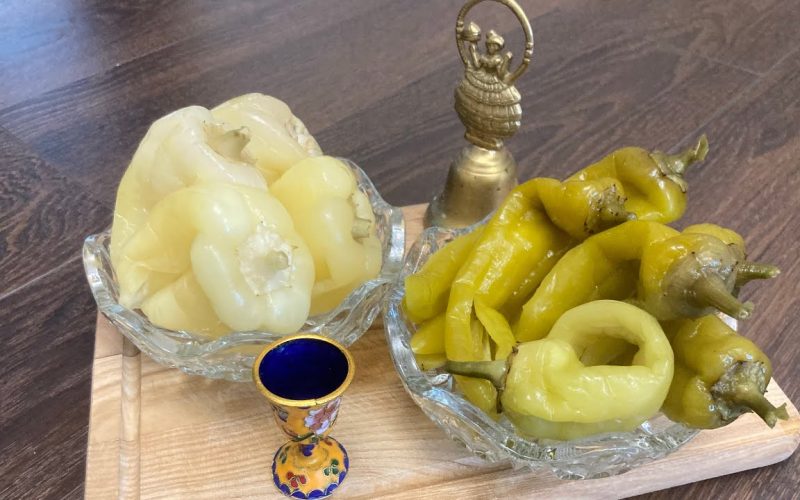
Imagine a jar set on the table — glass fogged slightly from the cool brine inside. Through it, you see a tangle of long, curved peppers, glowing in shades of soft yellow and pale green. They look almost like chilies that forgot to grow up mean. When the lid twists open, there’s that sharp pop and a rush of aroma escapes — tangy vinegar, a hint of garlic, and the bright, nose-tickling scent of fermented vegetables.
You reach in with a fork.
The pepper is firm, almost squeaky against the metal. When you bite, it snaps cleanly — a loud, juicy crunch that echoes more like a fresh cucumber than a chili. The brine floods your mouth first: sour, salty, refreshing. Then comes the pepper itself — grassy, slightly sweet, alive.
Your brain braces for heat.
After all, it looks like a hot pepper.
It sounds like one too — “tsitsak” has that sharp, sizzling ring to it.
But instead of fire, you get… gentleness. A whisper of warmth at most. Enough to remind you it’s a pepper, not enough to make you reach for water. It’s a flavor paradox in vegetable form: all the drama, none of the danger.
That’s tsitsak — Armenia’s beloved trickster pepper.
And in Armenian food culture, it’s far more than just something pickled on the side.
More Than Heat: The Tsitsak Illusion
In many cuisines, peppers are about intensity — heat as a challenge, a thrill, sometimes even a test of endurance. Tsitsak plays a different game. It offers the experience of a hot pepper — the look, the shape, the expectation — but delivers balance instead.
This makes it incredibly versatile. Tsitsak doesn’t dominate a dish. It lifts it.
Its mildness means you can eat a whole pepper in one bite, seeds and all, without regret. The acidity from pickling sharpens rich foods, cuts through fat, and refreshes the palate between mouthfuls. It behaves less like a spice and more like a bright, edible punctuation mark at the end of a sentence.
Constant Presence at the Armenian Table
In Armenia, tsitsak isn’t exotic or trendy. It’s everyday. Familiar. Expected.
Walk into a traditional Armenian home at mealtime, and there’s a good chance a plate of pickled vegetables — torshi — will already be on the table. Among the cabbage, cucumbers, and green tomatoes, you’ll almost always find tsitsak peppers, casually piled, glossy with brine.
They sit beside grilled meats like khorovats (Armenian barbecue), next to lavash bread, herbs, cheeses, and fresh vegetables. You don’t ask for tsitsak. You just reach for it.
A bite of smoky pork.
A tear of soft lavash.
Then — crunch — a tsitsak pepper to reset everything.
It’s not there to steal the spotlight. It’s there to make everything else taste better.
The Comfort of Familiar Sharpness
Part of tsitsak’s importance is emotional, not just culinary.
For many Armenians, the smell of pickling brine simmering with garlic and dill is tied to late summer and early autumn — the preserving season. Families prepare jars of tsitsak together, packing peppers tightly, pouring over hot brine, sealing them for the colder months ahead.
Opening a jar in winter isn’t just about flavor. It’s about memory. Sunshine preserved. Gardens remembered. The taste of a season that’s gone but not forgotten.
That bright, sour crunch brings life to heavy winter meals and, in a way, to the mood at the table too.
Why Tsitsak Is More Than a Condiment
Calling tsitsak “just a condiment” is like calling music “just background noise.” It misunderstands its role.
Tsitsak:
- Balances rich and fatty foods
- Adds texture through its signature crunch
- Cleanses the palate with acidity
- Brings visual brightness to the table
- Connects meals to tradition and seasonality
It’s a small thing that does big work.
In a cuisine known for grilled meats, breads, herbs, and bold flavors, tsitsak is the quiet harmonizer. It doesn’t shout. It sharpens. It refreshes. It surprises.
And maybe that’s why it’s so loved.
Because tsitsak reminds us that not everything that looks fierce has to burn — sometimes, it just needs to wake up your taste buds and make the next bite even better.
What Is Tsitsak?
“Tsitsak” (ծիծակ) is the Armenian word used to describe this specific type of pepper, most often the pale green, slender variety that’s traditionally pickled. In everyday Armenian speech, the word doesn’t just refer to any chili — it usually implies this particular mild, elongated pepper that shows up on tables across the country.
Linguistically, “tsitsak” is tied closely to regional food culture rather than formal botanical terminology. In villages and markets, people don’t talk about species or cultivars — they talk about tsitsak as something familiar, seasonal, and practical. Depending on the region, the word can sometimes be used more loosely to describe similar mild green peppers, but in culinary contexts, it almost always points to the variety used for pickling.
Over time, the name has become less of a strict plant label and more of a cultural one — it refers not just to a pepper, but to a taste, a preparation style, and a shared memory.
Botanical Background
Botanically speaking, tsitsak peppers belong to the species Capsicum annuum, one of the most widespread and diverse pepper species in the world. This is the same species that includes bell peppers, jalapeños, cayenne peppers, and paprika varieties — which shows just how wide the range of shapes, flavors, and heat levels can be within a single species.
Typical appearance of tsitsak peppers:
- Long and slender shape – Usually slightly curved rather than perfectly straight
- Light green to yellowish color – Especially when harvested for pickling
- Thin skin and tender flesh – Which helps them absorb brine quickly and stay pleasantly crisp
They look fiery — like they should deliver a serious burn — but their structure tells a different story. The walls are thinner, the flesh more delicate, and the seeds less densely packed with heat compared to truly hot varieties.
How tsitsak differs from similar peppers:
- Banana peppers – Often thicker-walled and sweeter, with a more uniform, waxy yellow color. Banana peppers are commonly used fresh on sandwiches, while tsitsak is strongly associated with fermentation and pickling.
- Hungarian wax peppers – These can look very similar in size and color, but they usually pack significantly more heat. Bite into one expecting tsitsak-level mildness, and you might be in for a surprise.
- Pepperoncini – Typically shorter, wrinklier, and more commonly seen in Mediterranean cuisines. Pepperoncini also tend to be tangy and mild, but their flavor is often fruitier, while tsitsak leans more grassy and vegetal.
To the untrained eye, these peppers can be easily confused. To someone raised with tsitsak on the table, the difference is obvious after just one bite.
Heat Level Explained
On the Scoville scale, tsitsak peppers generally fall into the mild to medium range, often somewhere between 1,000 and 5,000 Scoville Heat Units (SHU). That puts them around the level of a mild jalapeño — sometimes even gentler.
So why do people expect them to be hotter?
Part of it is visual psychology. Long, narrow peppers are often associated with intense heat — think cayenne or Thai chilies. Tsitsak has the same dramatic silhouette, which sets up an expectation of fire. Add the sharp, briny punch from pickling, and your brain braces for a burn that never fully arrives.
But tsitsak heat is highly variable. Growing conditions play a major role, including:
- Sun exposure – More sun can increase capsaicin production
- Water stress – Drier conditions often lead to hotter peppers
- Soil quality and temperature – Both influence overall flavor and heat intensity
That’s why one jar of tsitsak might be completely mild, while another batch has a noticeable kick. It’s part of the pepper’s personality — a little unpredictable, but never overwhelming.
The Cultural Importance of Tsitsak in Armenia
In Armenia, tsitsak isn’t a specialty item or an occasional side — it’s a regular presence. It belongs to the rhythm of everyday meals just as much as bread or herbs.
You’ll find it at:
- Family dinners, where a plate of pickled vegetables sits in the center of the table
- Holiday feasts, alongside rich dishes that benefit from something sharp and refreshing
- Village gatherings, where home-preserved foods are shared generously
It cuts through grilled meats, balances stews, and adds brightness to simple meals of cheese, greens, and lavash. Its job is quiet but essential: to keep each bite interesting and the palate awake.
More Than Food — A Seasonal Ritual
Tsitsak is also tied to the agricultural calendar. Late summer is pepper season, and that means pickling season.
Families gather to process piles of fresh peppers while they’re at their peak. The work is hands-on and communal:
- Washing and sorting peppers
- Trimming stems
- Packing them tightly into jars
- Pouring over hot brine infused with garlic and herbs
These are not just cooking tasks — they’re rituals of preservation, passed down through generations. Recipes aren’t always written. They’re remembered: “a handful of garlic,” “enough salt so it tastes like the sea,” “pack them tight, tighter than that.”
Children watch, help, and learn. The kitchen becomes a classroom, and the jars lining the shelves are the reward.
Tsitsak as a Symbol of Home
For Armenians living abroad, tsitsak carries a meaning that goes far beyond flavor.
In diaspora communities, jars of pickled peppers often travel across borders in suitcases, carefully wrapped and protected like fragile treasures. When that familiar smell of brine and garlic fills a kitchen far from Armenia, it’s more than nostalgic — it’s grounding.
Tsitsak becomes:
- A link to grandparents and village gardens
- A taste of home at a foreign table
- A way to keep culinary identity alive across generations
You can recreate many dishes from recipes. But the taste of properly pickled tsitsak — sharp, crunchy, unmistakable — feels like something you inherit as much as you prepare.
And that’s why this modest, pale green pepper holds such an outsized place in Armenian life: it feeds not just the body, but memory, continuity, and belonging.
From Garden to Jar: How Tsitsak Is Traditionally Prepared
Tsitsak peppers thrive in the kind of climate Armenia knows well: warm summers, strong sun, and well-drained soil. They love heat, but not extreme humidity. Too much moisture can make the plants prone to disease, while dry, sunny conditions help concentrate flavor — and sometimes a touch more heat.
Soil-wise, they do best in loose, fertile ground rich in organic matter. Gardeners often plant them in small household plots alongside tomatoes, eggplants, and herbs. Tsitsak isn’t treated like an exotic crop — it’s a dependable summer staple.
Harvest season usually arrives in late summer to early autumn, when the plants are heavy with long, pale peppers dangling in clusters.
The best tsitsak peppers for pickling share a few signs:
- Light green to pale yellow color – Not fully ripened to red
- Firm texture – They should feel solid, not soft or wrinkled
- Smooth, unblemished skin – Cuts or bruises can spoil fermentation
- Medium size – Too large can mean tougher skin, too small may be underdeveloped
At this stage, the peppers are tender, slightly grassy in flavor, and perfect for absorbing brine.
The Traditional Armenian Pickling Method
The beauty of traditional tsitsak lies in its simplicity. No long spice lists, no complicated techniques — just a few essential ingredients:
- Water
- Salt
- Garlic
- Sometimes dill or celery leaves
That’s it. The magic doesn’t come from vinegar or sugar. It comes from time and natural fermentation.
Unlike quick vinegar pickles, traditional tsitsak is made through lacto-fermentation. Naturally occurring bacteria on the peppers and in the environment convert sugars into lactic acid. This process preserves the peppers while creating their signature sour, complex flavor.
The result is softer, rounder, and more alive than sharp vinegar pickles. It’s not just sour — it’s deep, savory, and aromatic.
Step-by-Step Traditional Process
While every family swears their method is the “right” one, the core process is widely shared.
1. Washing and sorting peppers
Freshly harvested tsitsak are rinsed thoroughly to remove dust and dirt. Damaged or overly ripe peppers are set aside.
2. Lightly piercing or leaving whole
Some cooks gently pierce each pepper with a needle or knife tip to help the brine penetrate. Others leave them whole, trusting time to do the work. Both methods are traditional.
3. Layering with garlic and herbs
At the bottom of a jar or crock goes garlic — whole cloves, sometimes lightly crushed. Dill heads or celery leaves may be tucked between layers for aroma. Then the peppers are packed in tightly, often standing upright.
4. Pouring the brine
A simple saltwater brine (salty like the sea) is poured over until everything is fully submerged. Keeping the peppers under the liquid is crucial for proper fermentation.
5. Fermentation period
The jar is left at room temperature for several days to begin fermenting. Tiny bubbles appear. The brine may turn slightly cloudy — a good sign. After this active phase, the jars are moved to a cooler place to slow the process.
6. Storage methods
Traditionally, jars are kept in cellars, cool balconies, or refrigerators once fermentation reaches the desired sourness. Properly fermented tsitsak can last for months.
How Flavor Develops Over Time
Tsitsak doesn’t taste the same on day three as it does three months later. It evolves.
- After the first week – The peppers are still very crisp, lightly sour, and fresh-tasting. The garlic flavor is sharp and noticeable.
- After one month – The sourness deepens. The flavors meld. The texture softens slightly but still keeps a pleasant snap.
- After several months – The peppers become more tender, the brine more aromatic, and the taste more complex — tangy, savory, and rounded rather than sharp.
The transformation is gradual, and many families have strong opinions about the “perfect” stage.
Flavor Profile: Bright, Tangy, and Surprisingly Gentle
Biting into a pickled tsitsak is a full sensory moment.
First comes the crunch — loud and clean. Then a rush of juiciness, as brine spills across your tongue. The flavor lands in a perfect salty-sour balance, refreshing rather than overwhelming.
It wakes up your mouth instead of attacking it.
The “Mild Heat” Illusion
You keep waiting for the burn — but it never fully arrives.
There may be a gentle warmth at the back of the throat or a slight tingle on the lips, but tsitsak rarely brings real heat. The acidity and salt actually soften the pepper’s sharpness, making it even more approachable.
That’s why tsitsak works for people who usually avoid spicy food. It delivers the character of a chili pepper without the punishment.
Comparison to Other Pickled Peppers
Pepperoncini (Italian/Greek)
Similar in tanginess and mildness, but often softer and more wrinkled. Their flavor tends to be fruitier, while tsitsak tastes greener and more vegetal.
Pickled jalapeños (Mexican)
Usually much hotter, with thicker flesh and a stronger chili flavor. Jalapeños are bold and assertive; tsitsak is lighter and more refreshing.
Pickled banana peppers (American delis)
Often sweeter and vinegary, with a more one-dimensional sourness. Tsitsak, thanks to fermentation, has deeper, more layered acidity and aroma.
In the world of pickled peppers, tsitsak stands out not because it’s the hottest or boldest — but because it’s balanced, bright, and endlessly snackable.
How Armenians Eat Tsitsak
Tsitsak isn’t sprinkled on top of food like a decorative afterthought. It’s served whole, proudly, usually on a small plate as part of a spread of pickled vegetables.
You don’t slice it into neat rings. You pick it up by the stem — or stab it with a fork — and take a bite between mouthfuls of the main meal.
That’s key: tsitsak is eaten between bites of heavier foods. A piece of grilled meat, a bit of bread… then crunch — a hit of sour, salty brightness to reset your palate before the next bite. It acts like a built-in flavor refresh button.
Perfect Pairings
Tsitsak shines brightest next to rich, savory dishes. Its acidity and crunch create contrast, which is exactly what Armenian cuisine loves.
Grilled meats (khorovats / barbecue)
Fatty, smoky pork or lamb meets sharp, tangy pepper — it’s a classic balance. The tsitsak cuts through the richness and keeps each bite from feeling too heavy.
Lavash and fresh herbs
Wrap a piece of meat, some herbs, and a bite of tsitsak in soft lavash, and you’ve got a perfect mouthful: smoky, green, sour, and fresh all at once.
Beans, stews, and potato dishes
Hearty, slow-cooked foods can feel dense. Tsitsak adds lift. A bite of pepper alongside creamy beans or tender potatoes brightens the entire dish.
Cheese and bread
Salty Armenian cheeses with bread and tsitsak make a simple but deeply satisfying combination — especially for a light meal or snack.
Tsitsak in Everyday Meals
Beyond big feasts, tsitsak sneaks into daily cooking in small, practical ways.
With fried eggs
A plate of eggs, bread, and a tsitsak on the side is a common, no-fuss meal. The pepper’s acidity cuts through the richness of the yolk beautifully.
Inside sandwiches and wraps
Tucked into lavash wraps or sandwiches, tsitsak adds crunch and brightness, turning something simple into something layered and lively.
Chopped into salads
Some people slice fermented tsitsak into small pieces and toss it into tomato-cucumber salads for an extra salty-sour kick.
The Science Behind the Crave
There’s a reason you keep reaching for “just one more” pepper.
Why Fermented Foods Taste So Good
Fermented tsitsak isn’t just sour — it’s complex.
During fermentation, natural processes create compounds that enhance umami (savory depth) while also increasing acidity. That combination wakes up your taste buds and makes other foods taste more vivid.
Sour and salty flavors also help stimulate appetite, which is why pickled foods often appear at the start of meals or alongside heavy dishes.
Digestive Benefits
Traditionally fermented tsitsak (not vinegar-pickled) contains natural probiotics — beneficial bacteria formed during lacto-fermentation. While amounts vary, these microbes are associated with supporting gut health.
Long before modern nutrition science, people believed fermented foods helped with digestion. Serving tsitsak alongside rich meats wasn’t just about taste — it was also thought to make heavy meals easier on the stomach.
Salt, Sour, and Spice Balance
Tsitsak works because it hits three powerful taste signals at once:
- Salt enhances overall flavor
- Sourness cuts through fat and refreshes the palate
- Mild spice adds a gentle warmth without overwhelming
That trio makes it the perfect partner for rich and fatty dishes. It doesn’t compete — it balances.
Regional Variations in Armenia
Like all traditional foods, tsitsak changes a little from region to region and family to family.
Different Brines and Techniques
Some households prefer a stronger salt brine, resulting in a more intense, savory flavor. Others use a lighter hand, producing a gentler, more delicate sourness.
While classic tsitsak relies on fermentation alone, in some areas people add a bit of vinegar for extra sharpness or faster preservation — especially when time or storage conditions are limited.
Additions That Change the Flavor
Though tsitsak can stand alone, some variations include other vegetables in the jar:
- Carrots for subtle sweetness
- Cauliflower for extra texture
- Herbs and spices like dill, bay leaves, or peppercorns for aromatic depth
These additions don’t overpower the peppers but give the brine more personality.
Homemade vs Market Versions
Ask an Armenian, and many will tell you: the best tsitsak is homemade.
Homemade versions often have:
- A more natural, complex sourness
- Slight cloudiness from real fermentation
- Texture that ranges from very crisp to pleasantly tender
Market versions can be excellent, but sometimes they’re more uniform, more vinegary, or softer due to commercial processing.
When Armenians judge a “good” jar of tsitsak, they look for:
- Bright, clean aroma
- Peppers that hold their shape
- A balanced sour-salty taste
- And that signature crunch that makes you reach for another one without even thinking about it.
Tsitsak Beyond Armenia
Wherever Armenians settled, tsitsak followed.
In Middle Eastern, Russian, and European Armenian kitchens, jars of pickled peppers sit alongside local dishes, bridging old flavors with new surroundings. Even when the exact Armenian variety isn’t available, families adapt. They experiment with similar long, pale green peppers found in local markets, adjusting brine strength and fermentation time to get as close as possible to that familiar taste.
The result might not be botanically identical, but emotionally, it’s still tsitsak. The smell of garlic brine, the crunch, the sour kick — those are the anchors. Food memory is flexible like that.
Growing Global Interest
Outside Armenian communities, tsitsak is gaining attention for a different reason: the world has fallen in love with fermented foods.
As people explore kimchi, sauerkraut, and kombucha, naturally fermented vegetables have become part of modern food culture. Chefs interested in bold, acidic flavors and traditional techniques are discovering tsitsak as an ingredient that delivers brightness without overpowering heat.
In contemporary kitchens, tsitsak shows up:
- Sliced over grilled meats and roasted vegetables
- Chopped into grain bowls and salads
- Blended into sauces or relishes for a fermented, tangy punch
Its mildness makes it chef-friendly — it adds complexity without hijacking the dish.
Substitutes Outside Armenia
If true tsitsak peppers aren’t available, several alternatives can come close — though each changes the experience slightly.
Best substitutes:
- Hungarian wax peppers (mild ones) – Similar shape and color, but check the heat level; some can be much hotter
- Banana peppers – Mild and easy to find, though often sweeter and thicker-walled
- Pepperoncini – Already commonly pickled, tangy and mild, but with a fruitier flavor and softer texture
None are a perfect match. Tsitsak has a particular grassy, lightly sharp taste and a balance between tenderness and crunch that’s hard to duplicate. Still, with fermentation instead of straight vinegar pickling, these substitutes can get surprisingly close.
Making Tsitsak at Home (Reader-Friendly Overview)
You don’t need a cellar in the Armenian countryside to make tsitsak. At its heart, it’s still just peppers, salt, and patience.
What kind of peppers to choose
Look for long, pale green, thin-walled peppers that feel firm and fresh. Avoid thick, blocky varieties — they don’t ferment the same way and can turn mushy.
Fermented vs. vinegar method for beginners
- Fermented method – Traditional and more complex in flavor. Uses only saltwater brine and time. Slightly less predictable but deeply rewarding.
- Vinegar method – Faster and more controlled. The taste is sharper and simpler, but it’s a good starting point if fermentation feels intimidating.
Common mistakes
Too much salt
An overly strong brine can make the peppers unpleasantly salty and slow fermentation.
Too little fermentation time
Good flavor takes time. Peppers that haven’t fermented long enough taste flat and just salty rather than pleasantly sour.
Soft peppers
Usually caused by overripe peppers, weak brine, or exposure to air. Keeping everything submerged and using fresh, firm peppers helps preserve that signature crunch.
Common Myths About Tsitsak
“It’s extremely spicy.”
It looks like it should be — but most tsitsak is mild, with only a gentle warmth.
“It’s just a banana pepper.”
They may look similar, but tsitsak has a distinct flavor and cultural role, especially when traditionally fermented.
“Pickled peppers are all the same.”
Not even close. Vinegar-pickled peppers taste sharp and one-dimensional, while fermented tsitsak develops layered sourness, aroma, and depth over time.
Why Tsitsak Stays Memorable
Tsitsak isn’t flashy. It doesn’t challenge you to survive its heat or overwhelm you with spice. Its power is quieter.
It’s memorable because it connects taste with memory — of summer harvests, family kitchens, and crowded tables. It shows how a simple ingredient, treated with care, can become something that carries culture across seasons and borders.
Tsitsak is all about balance:
- Bold enough to wake up your palate
- Gentle enough to eat whole
- Simple enough to make at home
- Deep enough to mean something
In one small, pale green pepper, you find the story of seasonality, preservation, and hospitality — the instinct to save the best of summer and share it generously with everyone at the table.
Not bad for something that fits in the palm of your hand.
A Pepper That Speaks Softly but Leaves a Mark
Tsitsak never shouts.
It doesn’t overwhelm your mouth with fire or demand attention with extreme heat. Instead, it returns us to that first surprise — the contrast between expectation and reality. It looks bold, smells sharp, and promises intensity… yet delivers balance, brightness, and a gentle warmth that makes you want another bite instead of a glass of milk.
That quiet contrast is exactly what makes tsitsak unforgettable.
More than just a pickled pepper, tsitsak is an open door into Armenian cuisine. It teaches you how this food culture thinks about flavor: not in extremes, but in harmony. Rich meats meet sour crunch. Soft bread meets lively acidity. Heavy dishes are lifted, not masked.
Tsitsak isn’t meant to be a dare or a test of spice tolerance. It’s a companion — something to eat alongside your meal, between bites, again and again, until you realize the table wouldn’t feel complete without it.
A small pepper, a simple brine, a long tradition — and somehow, a taste that lingers in memory long after the jar is empty.
So come join us at the table. Try tsitsak not as a thrill, but as a friend to your food. Let its bright crunch, tangy depth, and mild warmth show you a different side of pepper — one rooted in balance, tradition, and generosity. Take a bite, then another, and discover how something so simple can carry the taste of a whole culture.





32 Responses
Hey guys, just checked out 719betcom. Seems alright, pretty standard stuff. Nothing groundbreaking, but if you’re looking for a quick flutter, give it a peek. Check it out here: 719betcom
Downloaded some games from 777cbgamedownload the other day. The download process was smooth, but the game selection is so-so. Worth a browse if you’re bored. Get your games at 777cbgamedownload
Struggling to log in? 939gamelogin was pretty straightforward for me. Make sure you’ve got your details right! Give it a shot: 939gamelogin
Oops! I misspelled rong bach kin in my serach and end up in this page, and if this does the trick then I’m happy. Does anyone know any good side? rong bach kin
Just found ketqua 04 net on Ketqua04.info. Seems pretty accurate and reliable for all things lottery. Worth a look if you’re into that sort of thing: ketqua 04 net
Hey, are there any players here familiar with ‘ròng bạch kim’? I’ve caught wind of it. Want to know what’s going on. Go here: ròng bạch kim
Viva88bong88 is my go-to for sports betting. They’ve got tons of options and the odds are decent. Plus, the site’s pretty slick. You can start betting here: viva88bong88
4rabetapkdownload is super convenient. I wanted to play on my phone and the download was a breeze. Much easier than using the website on mobile! Grab the 4rabetapkdownload!
Heard some buzz about 888jiliactivity, and gotta say, it lives up to the hype! Really enjoyed the overall experience they offered. Explore the 888jiliactivity if you fancy!
Yo, signing up for jalwagames was surprisingly easy. Just a heads-up for anyone looking to jump in and play. Registration’s quick! Join the fun: registerjalwagames
I’ve been poking around on ga888baiser, and it’s got some interesting stuff. If you’re curious, take a peek and see what you think. Could be your new favorite. Check it out: ga888baiser
Just a quick one: 5hbetentrar is pretty easy to navigate. Getting in is smooth. If you’re looking to get started, this is a good spot. Easy access: 5hbetentrar
Alright, trying my luck at Spinfortune! Hope it’s my lucky day! Fingers crossed for some big wins at spinfortune.
Wincasinobonus? That’s what I’m talking about! Gotta love a good bonus. Let’s hope they’re actually good. Check it out before you commit! Find the potential winnings here: wincasinobonus
I think I have some good stories for the rest of my life after I tried ddd61, I had a nice game. Check it: ddd61.
[1179]TK888 | Link Vào Chính Thức và Cách Chơi Baccarat Online,tk888 cung cấp link truy cập an toàn, hỗ trợ tải app apk nhanh chóng và hướng dẫn nạp tiền qua Momo tiện lợi. Khám phá thế giới casino đẳng cấp ngay hôm nay! visit: tk888
No more login issues! I used to struggle with other sites but this one is rock solid. Just head over to j77gamelogin and you’ll be in the game in seconds.
[5124]tr88com | Link Vào Chính Thức và Hướng Dẫn Nạp Tiền Casino,tr88com cung cấp link truy cập an toàn, hướng dẫn tải app APK nhanh chóng cùng bí kíp chơi Baccarat và nổ hũ hiệu quả. Khám phá ngay để trải nghiệm dịch vụ đỉnh cao. visit: tr88com
Super friendly customer support. They helped me out with my deposit issue in just a few minutes. Five stars for phjili188!
Super easy access and the loading speed is impressive. I love how everything is organized, making it easy to find my favorite games. Great vibes over at 991jililink.
I love how I can play on the go without any glitches. The app version is just perfect for my daily breaks. Cheers to kishphapp!
Just joined a few days ago and I am already impressed by the rewards system. It feels like they actually value their players here. Check out vnsc168 for some great action.
The game selection is top notch and the interface is super smooth on mobile. Really enjoying my time on phtaya001 so far!
Really impressed with the variety of games available here. I hit a decent streak last night and the withdrawal process was straightforward. Give ph333casinoph a try.
I’ve tried many sites but this one stands out for its fairness and great rewards. I am really enjoying my time on br7brwin
I’ve been looking for a reliable place to play and this one really delivers. The login process is smooth and the interface is very user friendly. Highly recommend 888win9comlogin for anyone starting out.
The graphics are top notch and the gameplay is very fluid. I am spending a lot of my free time on vnnohu999 these days.
Best lottery experience I’ve had in a while. The wap version is incredibly lightweight and fast, making it easy to play on the go. Go check indolottery88wap.
Really impressed with the customer support here. They answered my questions almost instantly. Highly recommend giving bdjoya9official a shot.
Always good to have a working alternative link. This one is stable and gets me right where I need to be without any lag. linkalternatifjasabola
The graphics are stunning and the gameplay is very immersive. I spent hours here and didn’t even notice the time passing. I love inyyycasino so much.
Finding a site that keeps my account secure while still being fun is rare these days. I really appreciate how seamless the login process is with zero hassle. The platform offers fair games and transparent rules so I always know exactly what I am dealing with. My bankroll stays safe and the promotions keep getting better every week. It feels like a community that truly cares about its players. e2batlogin