

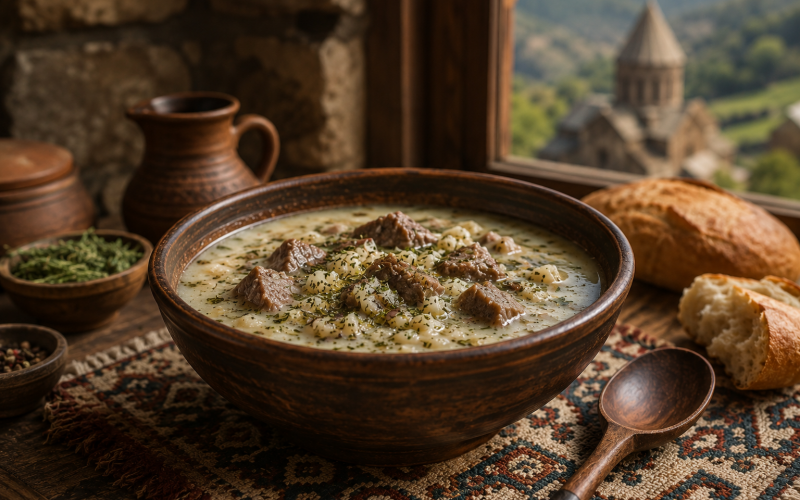
Armenian cuisine is known around the world for its rich flavors, ancient traditions, and deep connection to history. Many dishes, such as dolma, khorovats, lavash, and harissa, have become internationally recognized symbols of Armenia’s culinary heritage. However, behind these famous foods lies another world of traditional recipes that have been preserved mainly inside Armenian homes rather than restaurants.
One of these lesser-known treasures is Vanakhash, a traditional Armenian comfort soup that represents the very essence of homemade village cooking.
Unlike elaborate festive dishes created for celebrations, Vanakhash belongs to the everyday culinary traditions of Armenia. It is a dish shaped by necessity, patience, and respect for simple ingredients. For generations, Armenian families prepared this nourishing soup during cold seasons, relying on locally available products to create a warm and satisfying meal.
Vanakhash is more than just a soup. It reflects the lifestyle of Armenian villages, where cooking was closely connected with nature, agriculture, family traditions, and seasonal rhythms. A pot of slowly prepared soup could bring warmth to an entire household, provide strength after a long day of work, and preserve memories passed from grandparents to grandchildren.
The dish demonstrates one of the most important principles of traditional Armenian cuisine: simple ingredients can create deeply meaningful food when prepared with care and time.
While modern Armenian restaurants often focus on more recognizable dishes, Vanakhash remains an important example of authentic Armenian home cooking. Its story is not only about ingredients and preparation methods but also about cultural preservation. Every traditional recipe carries memories of the people who cooked it, the villages where it was served, and the families who continued making it despite changing times.
In this article, we will explore the history of Vanakhash, its traditional ingredients, the cultural meaning behind the dish, regional variations, nutritional qualities, and the authentic way it can be prepared today.
What Is Vanakhash?
Vanakhash is a traditional Armenian soup known for its rich, hearty character and comforting qualities. It belongs to the category of rustic Armenian dishes that were created to provide nourishment using accessible ingredients.
Although the exact composition of Vanakhash may differ depending on family traditions and regional practices, the dish is generally associated with a slowly cooked soup containing a flavorful broth, grains or other filling components, vegetables, herbs, and sometimes meat.
The name Vanakhash itself is connected with Armenian culinary traditions and reflects the historical relationship between food and local culture. Like many ancient dishes, the recipe has been transmitted orally rather than through written cookbooks. This means that different families may prepare their own versions, each preserving a slightly different interpretation of the traditional dish.
A Soup Built Around Simplicity
At first glance, Vanakhash may seem like a simple village soup. However, its simplicity is precisely what makes it special.
Traditional Armenian cooks understood how to transform basic ingredients into deeply satisfying meals. A small number of carefully selected products could become something nourishing and flavorful through slow preparation.
The main characteristics of Vanakhash include:
- a rich homemade broth;
- a warm and comforting texture;
- slow cooking that develops flavor;
- traditional herbs and seasonings;
- ingredients chosen for nutrition and availability.
The soup represents the idea that food does not need to be complicated to be memorable.
Why Vanakhash Remains Important
Many traditional dishes disappear when lifestyles change. Faster cooking methods, urbanization, and the popularity of international cuisines have caused many regional recipes to become less common.
Vanakhash is important because it preserves a connection with Armenia’s rural past. It tells a story about generations who understood seasonal cooking, food preservation, and making the most of what the land provided.
For many Armenians, dishes like Vanakhash are associated with:
- childhood memories;
- family kitchens;
- grandparents’ recipes;
- winter evenings;
- hospitality and sharing.
It is a dish that represents comfort not only through taste but also through emotional connection.
The Origins of Vanakhash: A Dish Shaped by Armenian History
To understand Vanakhash, it is important to understand the environment where traditional Armenian cuisine developed.
Armenia is a country of mountains, valleys, and high plateaus. For centuries, many communities lived in regions where agriculture depended heavily on climate conditions. Winters could be harsh, transportation was limited, and families needed food that was affordable, filling, and capable of providing energy.
Traditional Armenian cuisine evolved around these realities.
Cold seasons played a major role in shaping Armenian cooking traditions. During winter months, people needed meals that could:
- provide warmth;
- contain enough calories for physical work;
- use preserved ingredients;
- feed multiple family members;
- be prepared slowly over available heat sources.
Soups became an essential part of everyday life because they combined practicality and nutrition.
A large pot could be prepared in the morning and enjoyed throughout the day. Ingredients that were simple on their own could create a rich meal when cooked together.
Vanakhash belongs to this tradition of practical but deeply flavorful Armenian food.
Rural Armenian Cooking Traditions Behind Vanakhash
For centuries, Armenian households depended largely on ingredients produced locally.
Families often used:
- grains grown in nearby fields;
- vegetables from home gardens;
- herbs collected from surrounding areas;
- meat from local livestock;
- homemade dairy products;
- preserved foods prepared during warmer seasons.
Nothing was wasted.
Traditional cooks had a remarkable ability to use every available ingredient efficiently. Bones became the base for nourishing broths. Herbs were dried for winter use. Vegetables were preserved. Grains provided long-lasting sources of energy.
Vanakhash reflects this approach.
It was not created as a luxury dish. Instead, it was created as a practical meal that could support families through difficult seasons while still offering comfort and flavor.
Vanakhash in Armenian Family Traditions
One of the most important aspects of traditional Armenian cuisine is the connection between food and family identity.
Recipes were rarely written down. Instead, they were passed through generations through observation and practice.
A grandmother might teach a daughter or granddaughter:
- how much seasoning to add;
- when the soup had reached the right consistency;
- how long the ingredients should cook;
- how to recognize the perfect flavor.
This knowledge was based not only on measurements but also on experience.
The Role of Women in Preserving Recipes
Historically, Armenian women played a central role in maintaining household culinary traditions. The kitchen was a place where knowledge, stories, and cultural memories were shared.
Preparing Vanakhash was not only about feeding the family. It was also a way of preserving heritage.
A familiar smell coming from the kitchen could immediately remind people of home, childhood, and family gatherings.
Hospitality and sharing are deeply rooted in Armenian culture. Guests are traditionally welcomed with generous meals, warm bread, and carefully prepared dishes.
Although Vanakhash is considered everyday food rather than a ceremonial dish, it reflects the same values:
- generosity;
- care;
- warmth;
- respect for guests.
A bowl of homemade soup represents a simple but meaningful gesture: offering someone comfort and nourishment.
Traditional Ingredients of Vanakhash
The exact recipe for Vanakhash may vary, but traditional versions are built around a combination of nourishing ingredients that create a balanced and flavorful soup.
Broth: The Foundation of Flavor
The foundation of many traditional Armenian soups is a carefully prepared broth.
A rich broth provides:
- deep flavor;
- aroma;
- nutritional value;
- warmth.
Traditional cooks often preferred slow preparation because time allowed the ingredients to release their natural flavors.
Meat-based broths were especially valued because they provided protein and minerals. Bones and connective tissues also contributed richness and texture.
The broth was not simply liquid — it was the heart of the dish.
Grains have always played an important role in Armenian cuisine.
They were valuable because they were:
- affordable;
- easy to store;
- nutritious;
- filling.
Depending on the recipe, traditional soups could include different grains or similar ingredients that created a satisfying texture.
These components transformed Vanakhash from a light soup into a complete meal.
Vegetables and Aromatic Ingredients
Traditional Armenian cooking relies heavily on vegetables and aromatic ingredients.
Common additions include:
Onions create the base flavor of many Armenian dishes. Slowly cooked onions add sweetness and depth.
Garlic provides a distinctive aroma and is widely used in Armenian cuisine.
Depending on availability, seasonal vegetables could add color, texture, and additional nutrients.
Fresh and Dried Herbs
Fresh and dried herbs are one of the defining elements of Armenian cooking.
Common herbs include:
- parsley;
- cilantro;
- dill;
- mint;
- thyme;
- savory.
Herbs were traditionally used not only for flavor but also because many local plants were valued for their natural qualities.
A small amount of fresh greenery added brightness to the rich soup.
How Armenians Traditionally Prepared Vanakhash
The preparation of Vanakhash reflects one of the central principles of Armenian cooking: good food requires patience.
Unlike modern recipes designed for speed and convenience, traditional Armenian dishes often depend on slow cooking. Time allows simple ingredients to develop complex flavors and creates the comforting character that defines homemade soups.
Although recipes vary between families and regions, the traditional preparation process usually follows several important stages.
Step 1: Preparing the Broth
The first and most important stage is creating a flavorful base.
Traditional cooks understood that a good soup begins with a good broth. Meat, bones, or vegetables were slowly simmered to extract maximum flavor.
The process could take several hours because slow cooking allowed:
- natural flavors to combine;
- nutrients to be released;
- the broth to become richer;
- the final soup to develop a deeper taste.
In Armenian households, preparing broth was often considered an important culinary skill. Experienced cooks could recognize the right moment when the broth had reached the ideal balance of richness and clarity.
Step 2: Preparing the Main Ingredients
While the broth was cooking, other ingredients were prepared.
Vegetables were cleaned and chopped carefully. Grains were washed and sometimes soaked before cooking to achieve the desired texture.
Traditional Armenian cooks did not separate cooking from cultural knowledge. Every step had meaning:
- ingredients were prepared according to season;
- quantities were adjusted depending on the size of the family;
- flavors were balanced through experience rather than strict measurements.
Step 3: Slow Simmering
The defining characteristic of Vanakhash is slow cooking.
The ingredients are combined and allowed to cook gradually, giving the soup time to develop its full flavor.
Slow simmering helps:
- soften grains and vegetables;
- combine different flavors;
- create a harmonious texture;
- make the soup more satisfying.
This method reflects a broader Armenian culinary tradition where patience is considered an essential ingredient.
Step 4: Adding Herbs and Seasonings
Fresh herbs are usually added toward the end of cooking.
This preserves their aroma and prevents delicate flavors from disappearing.
Seasoning is traditionally balanced rather than overwhelming. Armenian cuisine often focuses on highlighting the natural taste of ingredients rather than covering them with strong spices.
A successful Vanakhash should taste:
- rich but not heavy;
- aromatic but not overpowering;
- simple but memorable.
Step 5: Resting Before Serving
Many traditional soups improve after resting for a short time.
Allowing Vanakhash to sit after cooking helps the flavors settle and blend together.
This is another example of traditional cooking wisdom: some dishes cannot be rushed.
Regional Variations of Vanakhash Across Armenia
Like many traditional Armenian dishes, Vanakhash does not have only one fixed version.
Armenia’s diverse landscape has created many regional culinary traditions. Mountain villages, valleys, and different agricultural areas developed their own approaches based on available ingredients and local preferences.
The same dish could taste slightly different from one village to another while maintaining the same cultural identity.
Northern Armenian Variations
Northern regions of Armenia are known for colder climates and mountainous landscapes.
Traditional food in these areas often emphasizes:
- hearty ingredients;
- warming dishes;
- rich broths;
- filling meals.
Vanakhash prepared in colder regions may have a more substantial character because families needed food that provided energy during long winters.
Soups played an especially important role in northern villages because they offered warmth and comfort during freezing months.
Central Armenian Traditions
Central Armenian cuisine often represents a balance between different culinary influences.
Here, Vanakhash may reflect a more moderate approach:
- balanced flavors;
- carefully measured ingredients;
- a combination of grains, vegetables, and herbs.
Families often adapted recipes according to what was available locally.
Southern Armenian Influences
Southern Armenian cuisine is often associated with warmer climates and greater availability of herbs and vegetables.
Versions of Vanakhash from southern areas may include:
- more fresh herbs;
- lighter textures;
- additional seasonal ingredients.
The dish demonstrates how Armenian cuisine adapts naturally to different environments while preserving its identity.
Family Variations Matter More Than Geography
Although regional differences exist, many Armenians would say that the most important variation is not geographical but familial.
Every household could have its own version.
One family might prefer:
- a thicker consistency;
- more herbs;
- a richer broth;
- a stronger garlic flavor.
Another might prepare a lighter version.
These differences are not considered mistakes. They are part of the living tradition of Armenian cooking.
The Nutritional Value of Vanakhash
Traditional Armenian dishes were created not only for taste but also for nourishment.
Vanakhash represents the practical wisdom of generations who understood how to create balanced meals from simple ingredients.
Protein and energy – If prepared with meat-based broth, Vanakhash provides valuable protein.
Protein is essential for:
- maintaining muscle;
- supporting daily activity;
- recovery after physical work.
Historically, when people performed demanding agricultural labor, nutritious soups were an important source of strength.
Minerals and natural nutrients – Slow-cooked broths have traditionally been valued because they contain minerals extracted from ingredients during preparation.
Depending on the recipe, Vanakhash may provide:
- iron;
- calcium;
- phosphorus;
- other essential nutrients.
Slow-release carbohydrates – Grains and other filling ingredients provide carbohydrates that help create a satisfying meal.
Unlike lighter soups, Vanakhash was designed to provide lasting energy.
This made it especially suitable for:
- cold weather;
- physically demanding work;
- family meals.
Digestibility and comfort – Warm soups have long been associated with comfort and recovery.
Across Armenian households, nourishing soups were often prepared when someone needed a gentle and warming meal.
The combination of:
- warm broth;
- soft ingredients;
- herbs;
- balanced flavors
makes Vanakhash a naturally comforting dish.
Vanakhash as Armenian Comfort Food
The meaning of comfort food goes beyond ingredients.
A dish becomes comforting because of the memories connected with it.
For many Armenians, traditional soups represent:
- home;
- family;
- childhood;
- security;
- connection to previous generations.
Vanakhash belongs to this emotional category of food.
Childhood Memories and Family Kitchens
Many traditional recipes survive because they are connected with personal memories.
People remember:
- the smell coming from the kitchen;
- grandparents preparing meals;
- family conversations around the table;
- winter evenings spent together.
A bowl of Vanakhash can represent a connection between past and present.
Food as cultural memory – Food is one of the strongest ways cultures preserve identity.
Languages can change. Places can change. Lifestyles can change.
But traditional recipes often survive because families continue preparing them.
Vanakhash is not only a recipe — it is a small piece of Armenian history preserved through cooking.
Vanakhash and Armenian Culinary Philosophy
To understand Vanakhash, it is useful to look at the wider philosophy of Armenian cuisine.
Respect for Ingredients
Traditional Armenian cooking follows the principle of using ingredients wisely.
Historically, food was valuable, and nothing was wasted.
Bones became broth.
Seasonal vegetables were preserved.
Herbs were dried.
Every ingredient had a purpose.
Seasonal cooking – Before supermarkets and global supply chains, people cooked according to nature’s rhythm.
Spring, summer, autumn, and winter each offered different products.
Traditional recipes developed around what was locally available.
Vanakhash reflects this connection between cuisine and the seasons.
Patience as an ingredient – One of the biggest differences between traditional and modern cooking is time.
Many Armenian dishes cannot be rushed.
Slow preparation creates:
- deeper flavors;
- better textures;
- stronger connections between ingredients.
Vanakhash represents this philosophy perfectly.
Home cooking over restaurant cuisine – Some dishes are created specifically for restaurants.
Others belong primarily to homes.
Vanakhash belongs to the second category.
Its true character appears when prepared:
- in a family kitchen;
- using familiar methods;
- with care rather than commercial speed.
How Vanakhash Compares to Other Armenian Soups
Armenian cuisine includes many traditional soups, each with its own personality. Comparing Vanakhash with other famous dishes helps explain what makes it unique.
Vanakhash vs. Khash
Khash is one of Armenia’s most internationally recognized traditional soups.
Both dishes share some similarities:
- they are connected with tradition;
- they involve slow cooking;
- they are associated with cold seasons.
However, they are very different.
Khash
Khash is made primarily from:
- beef feet;
- connective tissues;
- rich broth.
It is traditionally associated with special gatherings and long social meals.
Vanakhash
Vanakhash is generally more closely connected with everyday home cooking.
It focuses on:
- comfort;
- nourishment;
- family meals;
- accessible ingredients.
While Khash is often a cultural event, Vanakhash is more like a warm meal prepared for loved ones.
Vanakhash vs. Spas – Spas is another famous Armenian soup.
The main difference is the base.
Spas
Spas is made with:
- yogurt or fermented dairy;
- grains;
- herbs.
It has a distinctive sour and refreshing taste.
Vanakhash
Vanakhash is usually associated with a richer, warmer, more substantial character.
Both dishes demonstrate Armenian creativity in transforming simple ingredients into memorable meals.
Vanakhash vs. Harissa – Harissa is another iconic Armenian dish.
Although often compared with soups, harissa is closer to a thick porridge.
It is traditionally made with:
- wheat;
- meat;
- long cooking.
The texture is much thicker than Vanakhash.
Both dishes share the same philosophy:
- patience;
- simplicity;
- nourishment;
- cultural importance.
Modern Interpretations of Vanakhash
Like many traditional dishes, Vanakhash continues to evolve while remaining connected to its historical roots.
Modern Armenian cooks, chefs, and food enthusiasts are rediscovering forgotten recipes and adapting them for contemporary kitchens. This revival reflects a growing global interest in authentic regional cuisine and traditional cooking methods.
However, the goal of modernization is not to replace the original dish but to make it accessible to new generations.
Traditional roots, modern kitchen – Today, Vanakhash can be prepared in both traditional and modern ways.
Some cooks continue using classic methods:
- large pots;
- slow simmering;
- homemade broth;
- locally sourced ingredients.
Others adapt the recipe using modern equipment:
- slow cookers;
- pressure cookers;
- electric multicookers.
These tools reduce preparation time while preserving many of the qualities that make the dish special.
Vegetarian and lighter versions – As eating habits change, some cooks create vegetarian versions of traditional Armenian dishes.
A vegetarian Vanakhash can emphasize:
- vegetable broth;
- grains;
- herbs;
- seasonal vegetables;
- legumes.
Although these versions may differ from historical recipes, they follow the same principle: creating a nourishing and comforting meal from simple ingredients.
Restaurant presentations – In Armenian restaurants and modern culinary projects, traditional dishes are sometimes presented in new ways.
A contemporary chef might focus on:
- elegant plating;
- refined textures;
- locally sourced ingredients;
- artistic presentation.
However, the essential identity of Vanakhash remains connected to its original purpose: a warm, satisfying dish that represents Armenian home cooking.
Traditional Serving Suggestions for Vanakhash
In Armenian culture, food is rarely served alone. Meals are part of a larger experience that includes conversation, hospitality, and sharing.
Vanakhash is traditionally enjoyed as a warm main dish, especially during colder months.
Lavash: The Traditional Companion
One of the most natural accompaniments to Armenian soups is lavash, the famous Armenian flatbread.
Fresh lavash adds:
- texture;
- warmth;
- a way to enjoy every part of the broth.
Bread has always held a special cultural significance in Armenia. It represents hospitality and respect for food.
Fresh herbs are often served alongside traditional Armenian dishes.
They add:
- freshness;
- aroma;
- contrast to rich flavors.
Depending on availability, herbs may include:
- parsley;
- cilantro;
- dill;
- green onions.
Pickled vegetables are a traditional part of Armenian meals.
Pickled foods provide:
- acidity;
- brightness;
- balance.
Their sharp flavor complements the warmth and richness of soups.
Garlic and seasonings – Some people enjoy adding extra garlic, pepper, or herbs according to personal taste.
This reflects an important characteristic of Armenian cuisine: food is often adapted at the table according to individual preference.
Authentic Vanakhash Recipe
The following recipe represents a traditional-style approach to preparing Vanakhash at home. Since many Armenian family recipes differ, this version focuses on the general principles of the dish: rich broth, nourishing ingredients, slow cooking, and balanced flavors.
Ingredients
For the broth:
- 1–1.5 kg meat with bones (traditionally beef or another suitable meat)
- 2.5–3 liters water
- 1 large onion
- 1 carrot
- 1–2 bay leaves
- salt to taste
- black pepper
For the soup:
- prepared broth
- cooked meat from the broth
- grains or filling ingredients according to tradition
- 1–2 onions
- fresh herbs
- garlic (optional)
- additional vegetables if desired
Preparation Method
Step 1: Prepare the Broth – Place the meat and bones in a large pot.
Cover with cold water and slowly bring to a boil.
Remove any foam that appears on the surface.
Reduce the heat and allow the broth to simmer slowly.
This stage is important because rushing the process prevents the development of a rich flavor.
Step 2: Prepare the Ingredients – While the broth cooks:
- wash and prepare grains;
- chop vegetables;
- prepare herbs.
Traditional Armenian cooking often involves preparing ingredients separately before combining them.
Step 3: Combine the Ingredients – Once the broth has developed its flavor:
- remove the meat;
- strain the broth if needed;
- add the main soup ingredients.
Continue cooking until everything reaches the desired texture.
Step 4: Add Final Seasonings – Near the end of cooking:
- add herbs;
- adjust salt;
- add pepper or garlic if desired.
The final flavor should be balanced and comforting.
Step 5: Rest and Serve – Allow the soup to rest briefly before serving.
Serve warm with:
- lavash;
- fresh herbs;
- traditional side dishes.
Cooking Tips for Authentic Flavor
Use homemade broth whenever possible – The broth determines the character of the entire dish.
A homemade broth provides a depth of flavor that packaged alternatives cannot fully reproduce.
Do not rush the cooking process – Traditional Armenian recipes often rely on time.
Slow cooking allows ingredients to become more harmonious.
Balance is more important than complexity – Vanakhash is not about using many spices.
Its beauty comes from allowing natural ingredients to work together.
Adjust according to your family tradition – Because Vanakhash exists in many versions, there is no single “perfect” recipe.
The most authentic version is often the one that connects you with Armenian culinary traditions.
Common Mistakes When Cooking Vanakhash
Cooking the broth too quickly – High heat can make the broth less clear and reduce flavor development.
Adding too many strong spices – Armenian cuisine usually emphasizes natural flavors rather than heavy seasoning.
Ignoring texture – The balance between broth and solid ingredients is important.
The soup should be satisfying but not overly thick.
Using low-quality ingredients – Since the recipe is simple, ingredient quality matters greatly.
Fresh herbs, good broth, and carefully selected ingredients make a significant difference.
How to Store and Reheat Vanakhash
Traditional soups are often suitable for storing because their flavors continue developing over time.
Refrigeration – Vanakhash can usually be stored in the refrigerator for several days in a sealed container.
Freezing – For longer storage, the soup can often be frozen.
It is recommended to:
- cool it completely;
- store it in appropriate containers;
- reheat slowly.
Reheating – Warm the soup gradually rather than boiling it aggressively.
Gentle reheating helps preserve texture and flavor.
Frequently Asked Questions About Vanakhash
What is Vanakhash?
Vanakhash is a traditional Armenian comfort soup made with a rich broth and nourishing ingredients. It represents the style of rustic Armenian home cooking that has been preserved through generations.
Is Vanakhash a famous Armenian dish? Compared with dishes like dolma, khorovats, or lavash, Vanakhash is less internationally known. However, it remains an important example of traditional Armenian family cuisine.
What does Vanakhash taste like? Vanakhash has a warm, comforting flavor.
Its taste depends on the specific recipe but is generally:
- rich from the broth;
- aromatic from herbs;
- satisfying from filling ingredients;
- balanced rather than heavily spiced.
Is Vanakhash similar to Khash? No. Although both are traditional Armenian soups, they are different dishes.
Khash is made mainly from beef parts and is associated with special gatherings, while Vanakhash is closer to everyday family cooking.
Can Vanakhash be made vegetarian? Yes. Modern cooks may create vegetarian versions using:
- vegetable broth;
- grains;
- herbs;
- vegetables.
The result will differ from traditional meat-based recipes but still follows the philosophy of Armenian comfort cooking.
When is Vanakhash traditionally eaten? It is especially suitable for colder seasons because it provides warmth and nourishment.
However, it can be enjoyed throughout the year.
Why is slow cooking important? Slow cooking allows:
- flavors to develop;
- ingredients to soften;
- broth to become richer.
This technique is central to many traditional Armenian dishes.
Is Vanakhash healthy? A traditionally prepared Vanakhash can be a nutritious meal because it may contain:
- protein;
- minerals;
- vegetables;
- herbs;
- filling ingredients.
Its nutritional value depends on the specific recipe.
What bread goes best with Vanakhash? Lavash is the most traditional choice.
Other fresh breads can also complement the soup.
Can I prepare Vanakhash in advance? Yes. Like many traditional soups, Vanakhash can often taste even better after resting because the flavors have more time to combine.
Why Vanakhash Deserves More Recognition
In today’s world, traditional foods are increasingly valued not only for their taste but also for their stories.
Vanakhash represents something larger than a recipe.
It represents:
- centuries of Armenian culinary knowledge;
- respect for simple ingredients;
- family traditions;
- connection between generations.
Many ancient dishes around the world became famous internationally because people shared their stories. Vanakhash deserves the same attention.
A dish that tells a story – Every traditional meal carries information about the people who created it.
Vanakhash tells us about:
- Armenian villages;
- seasonal living;
- resourcefulness;
- family connections;
- the importance of hospitality.
It shows how people transformed ordinary ingredients into meaningful food.
Preserving culinary heritage – As globalization changes eating habits, preserving traditional dishes becomes increasingly important.
Recipes like Vanakhash remind us that cuisine is not only about trends.
Food can be:
- history;
- identity;
- memory;
- culture.
Keeping these dishes alive means preserving a part of human heritage.
The Timeless Comfort of Vanakhash
Vanakhash may not be the most internationally famous Armenian dish, but it represents something deeply important: the authentic spirit of Armenian home cooking.
Created from simple ingredients and shaped by centuries of tradition, this comforting soup reflects the values that define Armenian cuisine — patience, hospitality, respect for nature, and the importance of family meals.
A bowl of Vanakhash is more than food. It is a connection to Armenian villages, generations of cooks, and the traditions that have survived through time.
In an era when many people are searching for authentic culinary experiences, forgotten dishes like Vanakhash offer something unique: a taste of history served in its simplest and most meaningful form.
Discovering Vanakhash means discovering not only an Armenian recipe but also a story of resilience, warmth, and cultural memory.
A journey through Armenia is a journey through flavors, memories, and centuries-old traditions. Come to Armenia and experience Vanakhash where it belongs—surrounded by breathtaking landscapes, rich history, and the hospitality of people who have preserved this comforting dish for generations.




