

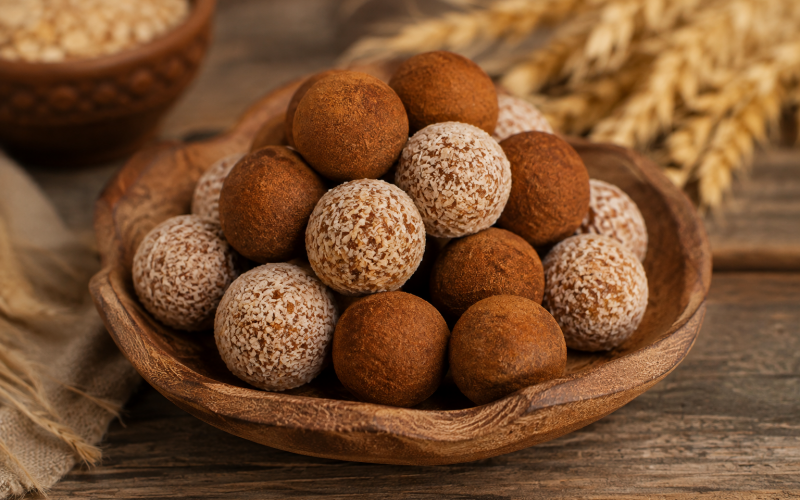
Armenian cuisine is often associated with famous dishes such as dolma, khorovats, lavash, and gata. Yet beyond these well-known foods lies a much larger culinary heritage built around simple ingredients, seasonal produce, and centuries-old cooking traditions. Among these lesser-known dishes is Porkhindz, a traditional Armenian preparation based on roasted wheat.
At first glance, Porkhindz may seem remarkably simple. Its foundation is an ordinary grain that has been cultivated in the Armenian highlands for thousands of years. But the simplicity of the dish is precisely what makes it interesting. Roasting transforms the wheat, bringing out a deeper aroma and a distinctive nutty flavor, while grinding and preparing it in traditional ways creates a food that is both practical and deeply connected to Armenian rural life.
Porkhindz offers a glimpse into an older way of cooking, when families relied on locally grown grains and knew how to turn basic ingredients into nourishing and flavorful food. Its story is therefore not simply the story of a recipe. It is also a story about wheat, agriculture, family traditions, and the enduring character of Armenian cuisine.
What Is Porkhindz?
Porkhindz is a traditional Armenian dish made from roasted wheat. The grain is traditionally cleaned, roasted, and processed before being used to prepare the finished food. Depending on the recipe and family tradition, Porkhindz can have different textures and can be served in either sweet or more savory forms.
One of its defining characteristics is the roasting of the wheat before further preparation. This seemingly simple step gives the grain a completely different character. Instead of tasting like ordinary boiled or cooked wheat, roasted wheat develops a warm, toasted aroma and a more pronounced, slightly nutty flavor.
The exact preparation of Porkhindz can vary. Some versions emphasize the roasted grain itself, while others combine it with ingredients such as butter, milk, sugar, honey, nuts, or dried fruit. This variation is typical of traditional Armenian cuisine, where recipes were often preserved within families rather than written according to one standardized formula.
For someone encountering Porkhindz for the first time, it can be helpful to think of it as a traditional Armenian way of transforming wheat through roasting and grinding into a distinctive grain-based dish.
The Ancient Role of Wheat in Armenian Cuisine
To understand Porkhindz, it is important to understand the importance of wheat itself.
The Armenian highlands belong to one of the ancient agricultural regions of the Near East. Wheat and other cereal crops have played a fundamental role in the food culture of the region for thousands of years. Long before modern food systems made ingredients available year-round, grain was one of the most reliable foundations of the diet.
Wheat could be grown, harvested, dried, stored, and processed over long periods. This made it particularly valuable for agricultural communities.
It could become bread, porridge, cracked wheat, flour, roasted grain, and numerous other preparations. Different methods of processing the same crop could produce completely different foods.
This versatility is one of the reasons grain-based dishes became such an important part of traditional Armenian cuisine.
From Harvest to the Kitchen
Traditional wheat production involved much more work than simply buying a bag of grain from a modern supermarket.
After harvesting, wheat had to be cleaned and prepared for storage. Grain was an important household resource, and families needed to make sure it could be preserved and used over an extended period.
Processing grain was therefore an essential part of everyday rural life. Different tools and techniques were used to remove unwanted material, grind the grain, and prepare it for cooking.
The knowledge of how to work with wheat was often passed from one generation to another. Children learned by watching their parents and grandparents, while individual families developed their own preferred methods.
Porkhindz belongs to this broader tradition of making the most of an agricultural staple.
Grain as More Than Food
In Armenian culture, grain has traditionally represented much more than calories or an agricultural commodity.
The harvest was closely connected with ideas of abundance, prosperity, fertility, and the continuation of family life. Bread, wheat, and other grain products naturally acquired cultural and symbolic importance in societies where agriculture was central to survival.
This helps explain why traditional grain dishes can carry a meaning that goes beyond their ingredients.
A bowl of a simple wheat-based dish can represent the work of farmers, the rhythm of the seasons, the resources of a household, and knowledge inherited from previous generations.
The Origins and History of Porkhindz
There is no simple historical date that can be given as the exact moment when Porkhindz was invented. Like many traditional foods, it developed within a broader culinary culture rather than appearing as the creation of a single known cook.
Its history is likely connected to the long tradition of processing wheat in Armenian households.
Roasting grain is a particularly practical technique. It changes the flavor of wheat, reduces its moisture, and produces a product that can subsequently be processed and incorporated into different dishes. In traditional societies, techniques like this often developed because people needed to preserve food, make it easier to store, or improve its flavor without relying on complicated ingredients.
Over generations, a basic method could become a recognizable dish.
The recipe might then be remembered within a family, with one generation teaching the next how long to roast the wheat, how finely to grind it, and what ingredients to add.
This means that there may never have been one single “original” Porkhindz recipe. Instead, there could be many versions belonging to different families and communities.
That is one of the fascinating characteristics of traditional cuisine: authenticity does not always mean following one fixed recipe.
Why Roast the Wheat?
Roasting is the feature that gives Porkhindz much of its distinctive character.
Raw wheat has a relatively mild flavor. Once heated, however, the grain undergoes changes that produce a much richer aroma and taste. Properly roasted wheat develops toasted, nutty notes that make it considerably more flavorful than plain cooked grain.
The degree of roasting matters.
If the grain is only lightly roasted, it retains a relatively delicate wheat flavor. A deeper roast produces a stronger toasted aroma and darker color. If it is overheated, however, the grain can become bitter or burnt.
Traditional cooks therefore had to rely on experience rather than precise thermometers and cooking times. They could judge the progress of the roasting process by its smell, appearance, and texture.
This is a recurring feature of traditional cooking. What modern recipes express through exact measurements and temperatures was often expressed historically through observation and experience.
The Ingredients of Traditional Porkhindz
The basic ingredient of Porkhindz is wheat, but the finished dish can contain additional ingredients depending on the particular tradition.
Wheat
The quality of the wheat is fundamental. Since the dish is based on the grain itself, there is little to hide poor-quality ingredients.
The wheat needs to be properly cleaned and prepared before roasting. Traditional varieties and modern commercial wheat can produce somewhat different results in terms of flavor, texture, and aroma.
Water and Other Basic Ingredients
Some preparations can remain remarkably simple, using only the roasted wheat and a small number of additional ingredients.
This simplicity reflects the nature of traditional rural cuisine. Rather than combining dozens of components, cooks often focused on making one basic ingredient as flavorful as possible.
Optional Additions
Different versions of Porkhindz may include ingredients such as:
- butter;
- milk or other dairy products;
- sugar;
- honey;
- salt;
- nuts;
- dried fruits.
Sweet additions create a completely different character, turning roasted wheat into something suitable for breakfast or dessert-like eating. Butter and dairy products can make it richer and creamier, while nuts and dried fruits introduce additional textures.
The important point is that there is no reason to expect every Armenian family to prepare Porkhindz in exactly the same way.
How Traditional Porkhindz Is Made
Although recipes differ, the basic process illustrates the traditional philosophy behind the dish.
Preparing the Wheat
The wheat is first cleaned carefully. Any unwanted particles or damaged grains need to be removed.
This step may seem insignificant today, but traditionally grain preparation was an important household task. Wheat was often processed at home, and the quality of the final dish depended on careful preparation from the beginning.
Roasting the Wheat
The cleaned wheat is then roasted.
This is the stage that defines Porkhindz. The grain is heated until it develops its characteristic toasted aroma.
The process requires attention. The goal is to develop flavor without burning the wheat.
An experienced cook could judge the process by smell and appearance. Once the grain had developed the desired roasted character, it could be removed from the heat and allowed to cool.
Grinding the Roasted Grain
After roasting, the wheat can be ground or otherwise processed depending on the particular recipe.
Traditional kitchens relied on manual grinding tools, while modern cooks can use contemporary kitchen equipment.
The degree of grinding influences the final texture. A coarser preparation preserves more of the character of the grain, while a finer grind produces a smoother result.
Turning the Grain into a Dish
The processed roasted wheat is then prepared according to the particular version of Porkhindz.
It may be combined with liquid, dairy products, butter, sweeteners, or other ingredients to create the desired consistency.
Some versions can be relatively dry and grainy, while others can become softer and more porridge-like.
This flexibility is part of the appeal of Porkhindz. The same basic roasted wheat can form the foundation for several different preparations.
What Does Porkhindz Taste Like?
The flavor of Porkhindz is primarily defined by roasted wheat.
Instead of the neutral taste associated with plain boiled grain, it has a warm, toasted character with noticeable nutty notes.
The exact flavor depends on the degree of roasting and the ingredients added afterward.
A version with butter may taste richer and more rounded. Milk can soften the roasted character and create a creamier texture. Honey or sugar emphasizes the natural sweetness of the grain, while nuts and dried fruit add contrasting flavors and textures.
The dish can therefore be surprisingly versatile despite its humble origins.
For people who enjoy whole grains, toasted cereals, nutty flavors, or traditional porridges, Porkhindz offers an unusual way to experience wheat.
Porkhindz in Traditional Armenian Everyday Life
Traditional Armenian cuisine developed around the realities of everyday life.
Food had to be nourishing, affordable, practical, and capable of being prepared from ingredients that families could grow, preserve, or obtain locally.
Wheat naturally met many of these requirements.
A household could store grain for long periods and process it into different foods as needed. This made wheat an essential part of the traditional food supply.
Porkhindz reflects this practical approach. It does not depend on expensive or exotic ingredients. Its distinctive character comes from how the main ingredient is processed.
This is an important feature of many traditional foods: culinary creativity often emerges not from abundance, but from the need to make simple ingredients interesting.
Regional and Family Variations of Porkhindz
One of the challenges of describing traditional Armenian food is the temptation to look for a single definitive recipe.
In reality, Armenian cuisine has developed across different regions and communities, and recipes have often been transmitted through families.
Porkhindz is no exception.
One household might roast the wheat more lightly, while another might prefer a deeper toasted flavor. The grain may be ground more finely or left relatively coarse.
Some families may prepare it as a sweet dish, while others may favor a more neutral or savory interpretation.
Butter, dairy products, honey, sugar, nuts, and dried fruit can all change the character of the final dish.
These differences should not necessarily be viewed as contradictions. They are part of what makes traditional food authentic.
A recipe passed down through generations is often a living tradition rather than a rigid set of instructions.
Porkhindz and Other Armenian Grain Dishes
Porkhindz belongs to a much broader family of Armenian foods based on grains and legumes.
Porkhindz and Mshosh
Mshosh is another traditional Armenian dish that demonstrates the importance of simple plant-based ingredients in Armenian cooking.
While the two dishes are quite different in their ingredients and preparation, they share a broader culinary philosophy: inexpensive, locally available ingredients can become deeply satisfying dishes through careful processing and cooking.
Porkhindz and Other Wheat Preparations
Wheat appears in Armenian cuisine in many forms.
It can be transformed into flour for bread, cracked or processed into grain dishes, used in soups, or incorporated into festive and everyday foods.
What makes Porkhindz distinctive is its emphasis on roasting the wheat before it becomes part of the finished dish.
Why Does Armenian Cuisine Have So Many Grain-Based Foods?
The answer is partly agricultural and partly practical.
Grains were relatively durable, could be stored, and provided an important source of energy. They could also be transformed into many different foods.
In a traditional household, one crop could therefore provide the foundation for numerous meals.
This versatility helped make wheat central to the culinary identity of the region.
The Nutritional Value of Roasted Wheat
From a nutritional perspective, wheat provides carbohydrates, dietary fiber, plant protein, and various micronutrients.
The nutritional profile of a Porkhindz dish depends heavily on how the wheat is processed and what is added to it.
A preparation based primarily on whole or minimally processed wheat can retain more of the grain’s natural fiber and nutrients. On the other hand, adding significant amounts of butter, sugar, or other ingredients changes the overall nutritional composition.
It is therefore useful to think of Porkhindz not as a single standardized nutritional product, but as a family of preparations based on roasted wheat.
Its nutritional value is one part of its story, but its cultural importance is equally significant.
Porkhindz as an Example of Armenian Food Philosophy
Perhaps the most interesting thing about Porkhindz is how well it illustrates a broader principle of Armenian cuisine.
Take a simple ingredient and treat it with care.
The dish does not require a long list of expensive products. Wheat is transformed through roasting, grinding, and careful preparation.
The result depends on technique rather than complexity.
This approach can be found throughout traditional Armenian cooking. Bread, dairy products, vegetables, herbs, grains, fruits, and meat can all be prepared in ways that emphasize their natural characteristics.
Traditional Armenian cuisine is therefore not necessarily about elaborate recipes. Very often, it is about knowing how to make the most of what is available.
Porkhindz is a particularly clear example of this philosophy.
How Porkhindz Fits into Modern Armenian Cuisine
Like many traditional foods, Porkhindz exists at an interesting point between the past and the present.
Modern food culture offers an enormous variety of ingredients and convenience products. Preparing grain from scratch is no longer a necessity for most households.
As a result, some traditional dishes have become less common in everyday life.
At the same time, interest in regional cuisine and culinary heritage has been growing. Chefs, food historians, travelers, and younger generations are increasingly interested in recovering recipes that once seemed ordinary.
Foods such as Porkhindz are valuable in this context because they tell a story that cannot be reduced to a restaurant menu.
They connect modern Armenians and visitors with older agricultural practices and household traditions.
The dish can also be adapted to modern tastes without losing its essential identity. Contemporary cooks may experiment with presentation or additional ingredients while keeping roasted wheat at the center of the preparation.
How to Serve Porkhindz Today
There is considerable room for creativity when serving Porkhindz.
A traditional-style preparation can be enjoyed in a simple form that allows the roasted wheat to remain the dominant flavor.
For a sweeter version, it can be paired with:
- honey;
- sugar;
- dried apricots;
- raisins;
- walnuts or other nuts;
- dairy products.
A richer version can incorporate butter or milk, creating a softer and more comforting dish.
These combinations also make Porkhindz suitable for different occasions. It can be thought of as a breakfast food, a snack, a simple dessert, or a traditional grain dish depending on the recipe.
The best approach is not necessarily to modernize it completely, but to preserve the character of the roasted wheat while allowing different ingredients to complement it.
How to Experience Porkhindz in Armenia
For travelers interested in Armenian cuisine, trying lesser-known traditional dishes can be more rewarding than limiting a culinary journey to the country’s most famous foods.
Porkhindz is particularly interesting because it provides a connection with everyday Armenian food culture.
Instead of simply asking what Armenia’s “famous dishes” are, visitors can explore what Armenian families have historically cooked with the ingredients available around them.
Local markets, rural communities, traditional restaurants, food festivals, and culinary experiences can all provide opportunities to discover less familiar dishes.
Trying Porkhindz in Armenia also places the food in its natural cultural context. The landscape, agricultural traditions, local grains, seasonal ingredients, and hospitality all become part of the experience.
Porkhindz and the Preservation of Armenian Culinary Heritage
Traditional food is a form of cultural memory.
A recipe can preserve information about what people grew, how they processed food, what tools they used, and what they considered valuable enough to pass to their children.
When an old dish disappears, more than a recipe can be lost. A small part of everyday cultural history may disappear with it.
That is why documenting and preparing traditional foods such as Porkhindz matters.
Families preserve recipes by continuing to cook them. Chefs can reinterpret them. Researchers can document their history. Travelers can discover them and help create interest in Armenia’s less familiar culinary traditions.
The preservation of food heritage does not necessarily mean freezing recipes in the past. Traditions can evolve while retaining their essential identity.
Porkhindz can therefore exist in both worlds: as an old-fashioned home dish and as an ingredient or inspiration for contemporary Armenian cooking.
Why Porkhindz Deserves to Be Better Known
Porkhindz may not have the international recognition of Armenian lavash or khorovats, but its relative obscurity is part of what makes it fascinating.
It represents a quieter side of Armenian cuisine — one connected not with lavish celebrations, but with grain, agriculture, household cooking, and the practical wisdom of generations.
Its story begins with wheat.
The grain is cleaned, roasted, processed, and transformed. What emerges is something much more flavorful than the simplicity of the ingredient might suggest.
That transformation is also a metaphor for traditional cuisine itself. A handful of ordinary ingredients can carry centuries of knowledge when prepared according to a tradition.
For anyone interested in Armenia beyond the most familiar dishes, Porkhindz offers a chance to explore this deeper culinary heritage.
Conclusion: A Taste of Armenia’s Wheat Tradition
Porkhindz is a reminder that the history of a cuisine is not written only in grand festive dishes.
Sometimes it can be found in a humble grain.
Roasted wheat connects Porkhindz with Armenia’s agricultural past, the importance of cereals in traditional diets, and the household knowledge passed from one generation to another. Its ingredients may be simple, but its story reaches far beyond the kitchen.
Today, discovering Porkhindz means discovering a lesser-known part of Armenian food culture — one where flavor comes from careful processing, tradition is preserved through family recipes, and a familiar grain becomes something distinctive.
For travelers, food lovers, and anyone curious about Armenia’s culinary heritage, it is worth looking beyond the country’s most famous dishes. Visit Armenia, explore its villages and markets, share a meal with local people, and taste traditional dishes such as Porkhindz where their stories began.




