

Armenian cuisine is one of the oldest and richest culinary traditions in the world, shaped by thousands of years of history, geography, and cultural exchange. Nestled at the crossroads of Eastern Europe, the Middle East, and the Caucasus, Armenia has developed a food culture that blends hearty ingredients, aromatic herbs, ancient cooking techniques, and a deep respect for natural flavors. For many people encountering Armenian food for the first time—whether in Armenia itself, in diaspora communities, or through restaurants abroad—one of the most common questions is: “Is Armenian food spicy?”
This curiosity is understandable, especially for travelers or food enthusiasts who associate countries in the region with bold spices or intense heat. Those familiar with Middle Eastern dishes might expect fiery chilis; those familiar with Caucasian cuisines might think of robust seasonings; and those who have tried Armenian food in North America or Europe might have encountered dishes adapted to local palates. The question arises partly from these culinary comparisons and partly from a general assumption that cuisines from the East or Near East often involve strong, spicy flavors.
However, it is important to clarify what people actually mean when they ask about “spicy” food. In English, the word spicy can refer to two very different things:
- Spices as aromatic seasonings used for flavor—such as cinnamon, cumin, coriander, paprika, and black pepper.
- Spiciness as heat, referring to the burning sensation caused by chili peppers, hot sauces, and capsaicin-rich ingredients.
Understanding this difference—spice versus heat—is crucial when discussing Armenian cuisine. Armenian dishes are indeed rich in spices, herbs, and fragrant seasonings that build complexity and depth. They offer savory warmth, earthy tones, and delicate aromatics. But when it comes to fiery, chili-based heat, Armenian cuisine is generally not considered hot. It does not traditionally rely on aggressive chili peppers, tongue-burning sauces, or the intense heat that characterizes some Asian, Latin American, or even neighboring regional cuisines.
In short, the simplest answer is this:
Armenian food is flavorful, aromatic, and wonderfully seasoned—but it is usually not very hot. It emphasizes balance, natural ingredients, and the subtle interplay of herbs and spices rather than overpowering heat. For anyone curious about trying Armenian cuisine, this means you can expect bold flavors without the fear of extreme spiciness.
Historical and Cultural Context of Armenian Cuisine
Overview of Armenia’s Geographical Location at the Crossroads of East and West
Armenia’s culinary identity is deeply rooted in its location at a historical crossroads—geographically, culturally, and politically. Situated between Eastern Europe and Western Asia, Armenia lies in the South Caucasus, bordered by Turkey, Georgia, Iran, and Azerbaijan. This position placed ancient and medieval Armenia directly along major trade and migration routes, including branches of the famed Silk Road. As a result, Armenian cooking absorbed influences from both East and West while preserving its own indigenous traditions.
This intersection brought exposure to spices, herbs, and cooking methods from Persia, the Mediterranean, the Levant, and Central Asia. Yet Armenian cuisine never fully aligned with any single neighboring culinary tradition. Instead, it developed its own balance—less fiery than Persian cuisine, less herb-heavy than Georgian cuisine, and less oily or intensely seasoned than some Middle Eastern cuisines. Its geography created a natural blending point where flavors, techniques, and ingredients from multiple regions met and evolved into something uniquely Armenian.
Influence of Ancient Kingdoms and Trade Routes on Flavor Profiles
Throughout millennia, the Armenian Highlands were home to powerful kingdoms such as Urartu, the Orontid Dynasty, the Artaxiad Dynasty, and later the Bagratid Kingdom. Each era introduced new agricultural innovations, new cooking tools, and new ingredients. Ancient Armenians were among the first to cultivate grapes for winemaking, to develop sophisticated irrigation systems, and to domesticate wheat varieties used in breads like lavash—a UNESCO-recognized cultural heritage.
Trade routes that passed through Armenia brought exotic spices such as cinnamon, black pepper, coriander, sesame seeds, cumin, and saffron. Yet unlike some cultures that embraced these spices intensely, Armenian cuisine incorporated them gently. They were used to accentuate natural flavors rather than dominate them. The influence of the Silk Road introduced fragrant but mild spices that shaped Armenian stews, pilafs, and meat dishes. Even when hot peppers eventually arrived in the region centuries later, Armenian cooks adopted them cautiously, integrating them in moderation rather than turning them into culinary centerpieces.
This blending of ancient agricultural practices with global trade influences created a culinary palette that is aromatic but not overwhelmingly spicy—harmonious rather than aggressive.
Cultural Values in Cooking: Hospitality, Warmth, Balance of Flavors
Hospitality (հյուրընկալություն) is one of the defining characteristics of Armenian culture. A guest is traditionally considered a blessing, and the expectation is that they should be offered the best dishes the household can provide. This cultural value directly influences how food is seasoned. When serving guests of various ages, backgrounds, and sensitivities, Armenian families prioritize comfort, warmth, and accessibility in their cooking. Extremely spicy or intensely hot dishes might overwhelm some guests, which would be contrary to the spirit of hospitality.
Armenian food aims to create a sense of harmony—flavors that are deep but balanced, comforting but not overpowering. This principle is evident in classic dishes such as kharcho, dolma, khashlama, harissa, and khorovats, where slow cooking, fragrant herbs, and natural ingredients create richness without burning heat. The cuisine values the idea that every guest, from children to elders, should enjoy the same table without discomfort, which naturally discourages excessive chili heat.
Traditional Culinary Philosophy: Fresh Ingredients > Aggressive Heat
For centuries, Armenian cooking has emphasized freshness, especially aromatic herbs and high-quality seasonal produce. Because Armenia historically had fertile lands, abundant orchards, and a strong agrarian economy, there was less dependence on heavy spices for preservation or flavor enhancement. Fresh herbs such as parsley, dill, tarragon, basil, thyme, mint, and cilantro play a central role in shaping flavor profiles.
This traditional culinary philosophy can be summarized as:
- Let the natural flavor of meat, vegetables, and grains shine.
- Use spices and seasonings to support, not overshadow, core ingredients.
- Prefer slow cooking—braising, stewing, grilling—over high-heat methods that require intense spicy blends.
- Use aromatics like garlic, onion, and herbs instead of chili-based heat.
Because fresh ingredients were readily available, there was no cultural need to rely on strong chili heat to make dishes more flavorful. The emphasis has always been on harmony and simplicity through natural flavors.
Role of Family, Holidays, and Rituals in Determining Flavors and Cooking Styles
Armenian cuisine is inseparable from family life, holidays, and communal rituals. Meals are not merely nutritional events—they are social bonds, cultural expressions, and symbols of togetherness. This affects not only what Armenians cook but also how they season their food.
- Family gatherings often include large, shared platters where everyone, including children, eats from the same spread. This reinforces the preference for mild but aromatic dishes.
- Religious holidays, especially Christmas, Easter, and Vardavar, involve traditional recipes that have been passed down for centuries. These dishes—like harissa during religious festivals or fish-based meals during fasting periods—are celebrated for their purity and simplicity rather than spiciness.
- National celebrations and communal feasts often feature grilled meats, pilafs, and vegetable dishes seasoned with herbs, butter, and natural juices—again reflecting a preference for balanced flavors.
- Ritual dishes such as dolma for weddings or ghapama for autumn celebrations highlight sweetness, richness, and aroma but rarely chili heat.
Because food in Armenia is deeply tied to community, continuity, and tradition, the flavors remain rooted in approaches that everyone can enjoy. Hot spiciness rarely plays a central role in these shared cultural experiences.
Armenian Understanding of “Spicy”
The Linguistic Aspect: How Armenians Describe Seasoning vs. Chili Heat
To understand whether Armenian food is “spicy,” it is essential to look at how Armenians themselves talk about flavors. In everyday Armenian language, the distinction between seasoning and chili-induced heat is much clearer than in English. While English speakers often use “spicy” to refer to both aromatic spices and hot peppers, Armenians tend to separate these concepts linguistically and culturally.
In Armenian, people usually describe food in terms of its aroma, flavor, richness, or warmth, rather than in terms of sharp, burning spiciness. When Armenians refer to something as “spicy,” they typically mean flavorful or aromatic, not “hot.” If a dish truly has chili heat, this is usually indicated separately and clearly, as it is not a default characteristic of the cuisine.
Because the Armenian palate places strong emphasis on the natural taste of ingredients, most Armenians experience spicy heat as something foreign or unusual—not necessarily unwelcome, but not traditionally associated with Armenian cooking. As a result, the language reflects a nuanced perception in which “spices” enhance flavor and aroma rather than introduce a fiery sensation.
Armenian Words for “Spicy,” “Hot,” “Flavorful,” “Aromatic”
Here are some commonly used Armenian words that help explain the culinary distinctions:
- Համեղ (hamegh) – tasty, delicious.
This is the most general positive word describing food and does not imply spiciness. - Համով (hamov) – flavorful, full of taste.
Often used to describe dishes rich in herbs, seasonings, or natural juices. - Բուրավետ (bouravet) – aromatic, fragrant.
Refers to pleasing smells from herbs, roasted meats, or baked pastries. - Կծու (ktsu) – hot, spicy (in the sense of chili heat).
This word specifically indicates a burning or sharp taste caused by pepper. It is not typically used to describe traditional dishes unless chili was intentionally added. - Սուր համ (sur ham) – sharp taste.
Can refer to acidity (like vinegar), garlic intensity, or mild heat, but not necessarily to chilis. - Համեմունք (hamemunk) – spices, seasonings.
A broad term that includes herbs, aromatic seeds, dried spices, and seasoning blends.
Understanding these terms reveals that Armenian culinary vocabulary focuses more on flavor complexity and aromatic qualities, while chili-based heat is treated as a separate, less common category.
Difference Between Herbs, Spices, and Hot Spices in Armenian Cooking
Armenian cooking uses a wide range of flavor enhancers, but they fall into distinct cultural categories:
Herbs (կանաչի – kanachi)
These are fresh greens used generously in salads, soups, stews, and side dishes. Common herbs include:
- Parsley
- Dill
- Mint
- Tarragon
- Basil
- Cilantro
- Thyme
Herbs are essential to Armenian cuisine and are valued for their freshness and aroma, not heat.
Spices (համեմունքներ – hamemunkner)
Armenians use spices such as:
- Cumin
- Coriander
- Black pepper
- Cinnamon
- Paprika
- Sumac
- Sesame seeds
These provide warmth, depth, and complexity but are usually mild. Even paprika, which in some cultures can be hot, is typically used in its sweet, aromatic form.
Hot Spices and Chilis (կծու պղպեղ – ktsu pghpegh)
Chili peppers do exist in Armenian cooking, especially in pickled vegetables, adjika-style sauces, and some regional variations. However:
- They are not foundational.
- They are not present in most traditional dishes.
- Their use is typically optional or personal preference.
Thus, while Armenians recognize the concept of “hot spices,” these ingredients sit at the fringe rather than the core of the cuisine.
Preference for Rich Aroma, Herbs, and Depth Over Burning Heat
Culturally and historically, Armenian cuisine leans toward aromatic richness rather than intense heat. Several factors shape this preference:
- Agricultural abundance: Fresh herbs, vegetables, fruits, and grains have always been plentiful in the Armenian Highlands, allowing cooks to develop flavors naturally rather than relying on hot spices.
- Family-oriented meals: Traditional meals are meant to be enjoyed by people of all ages, from small children to grandparents, making overly spicy food impractical.
- Culinary tradition: Generations of Armenian cooks have prioritized slow cooking, natural juices, butter, and herbs over sharp, burning sensations.
- Cultural symbolism: Aroma and richness often symbolize hospitality and warmth. Excessive heat, which might exclude or overwhelm some guests, is not considered “sharing-friendly.”
As a result, even when spices are used, the goal is harmony—not intensity. Armenian dishes layer flavor delicately, allowing herbs, grains, vegetables, and meats to complement one another without the overpowering kick of chili heat.
Key Herbs and Spices in Armenian Cuisine
Overview: Spices Used for Aroma, Not Heat
Armenian cuisine is celebrated for its fragrant, herbal, and richly aromatic flavor profile. Instead of relying on burning heat or fiery chili peppers, Armenian cooks use herbs and spices to bring out the natural essence of vegetables, meats, and grains. The goal is harmony—not intensity. Spices are added in moderate quantities, often subtly, to highlight freshness and depth rather than overwhelm the palate.
This gentle approach traces back to Armenia’s agricultural history: a land abundant in fresh greens, wild herbs, dairy, fruits, and vegetables. Because cooks never needed to compensate for lack of flavor or preservation with strong heat, the culinary tradition developed around balanced, earthy, and comforting seasonings.
Common Herbs
Herbs—locally known as kanachi (կանաչի)—are foundational in Armenian cooking. They are used fresh whenever possible and appear in salads, soups, stews, stuffing, grilled dishes, and even breads.
Parsley (մաղադանոս – maghdanos)
Parsley is one of the most widely used herbs in Armenian cuisine. It adds a clean, fresh, slightly peppery aroma and is essential in salads, vegetable dishes, and as a garnish. Its presence defines the brightness of dishes like tabbouleh-style Armenian salads.
Cilantro (քորիանդր – koriandr)
Cilantro provides a distinctive citrus-like aroma. Although not used as heavily as in some Central Asian cuisines, it frequently appears in salads, soups, and fresh herb assortments served alongside meals.
Dill (սամիթ – samit)
Dill is one of Armenia’s most cherished herbs, especially in dishes involving potatoes, eggs, yogurt, or fish. It adds a mild, grassy sweetness and is used generously in both fresh and dried forms.
Basil (ռեհան – rehan)
Armenian basil varieties range from sweet green basil to purple basil, known for its slightly stronger, earthy aroma. Basil is eaten fresh, added to salads, or paired with grilled meats and cheese.
Tarragon (էստրագոն – estragon)
Tarragon has a licorice-like flavor and is a signature herb in many Armenian dishes. It is often used in pickles, soups, salads, and with lamb-based meals. Armenian tarragon is particularly aromatic and is famously used in tarragon lemonade.
Mint (անանի – anani or անանուխ – ananoukh)
Mint offers a refreshing coolness and is used in meat dishes, yogurt-based sauces, salads, and rice stuffings. Its role is to balance richer, heavier flavors rather than introduce heat.
Collectively, these herbs represent the backbone of Armenian flavor—fresh, fragrant, cooling, and deeply aromatic.
Common Spices
Armenian spices tend to be warm and earthy rather than hot. They enhance dishes with background depth rather than fiery heat.
Cumin (քիմիոն – kimin)
Cumin is used in moderate amounts, particularly in meat dishes like kebab or dolma. It adds a warm, nutty undertone.
Coriander (քորիանդրի սերմ – koriandri serm)
Ground coriander provides a citrusy, slightly sweet aroma used in pilafs, stews, and meat rubs.
Sumac (սումակ – sumak)
Sumac is a tart, lemony spice used to brighten grilled meats, salads, and onions. It adds tang, not heat.
Paprika (կարմիր պղպեղ – karmir pghpegh)
In Armenia, paprika is typically the sweet variety. It contributes color and subtle sweetness, rarely heat. It is essential in many meat marinades, stews, and potato dishes.
Black Pepper (սև պղպեղ – sev pghpegh)
Used lightly and sparingly. Unlike cuisines where black pepper provides noticeable sharpness, Armenian cooks often treat it as a background seasoning, not a dominant flavor.
Cinnamon (դարչին – darchin)
Cinnamon appears in both sweet and savory dishes, particularly in regional meat stews and festive recipes. Its use is gentle, adding warmth rather than intensity.
Clove (մշկընկույզ – mshkunkuyz)
Used infrequently and usually in holiday dishes or pickles. Even then, only tiny amounts are added for fragrance.
Allspice (բոլորահամ – boloraham)
Found mainly in Western Armenian dishes, allspice adds a mild sweetness and complexity to meat dishes and pilafs.
Overall, these spices shape Armenian cuisine into something deeply aromatic but never overpowering.
Regional Spice Blends (e.g., Armenian “Mixed Spice”)
Different Armenian regions developed their own subtle seasoning blends. These blends vary in intensity but follow the same principle—aroma over heat.
Armenian Mixed Spice (համեմունքների խառնուրդ)
This blend often includes:
- Cumin
- Coriander
- Sweet paprika
- Allspice
- Cinnamon
- Black pepper
- Fenugreek (optional, more common in Western Armenian versions)
Unlike Middle Eastern baharat or Georgian khmeli-suneli, Armenian mixed spice tends to be milder and less herb-heavy. It provides warmth and harmony without overwhelming the main ingredients.
Regional variations may include:
- More sweet spices (cinnamon, allspice) in Western Armenian kitchens
- Additional herbs or fenugreek in Cilician or diaspora traditions
- Simple cumin-plus-paprika blends in Eastern Armenia
Even when blends vary, they consistently avoid aggressive chili heat.
Rarely Used Hot Spices Compared to Neighboring Cuisines
Hot spices and chili peppers play a minimal role in Armenian cooking. While some modern households enjoy spicy adjika or chili flakes, these are not part of the classical culinary tradition.
Compared to neighbors:
- Georgian cuisine uses chili peppers more frequently (e.g., adjika, hot sauces).
- Turkish cuisine incorporates hot paprika and chili pastes in many regional dishes.
- Persian cuisine occasionally uses mild heat from pepper, though still less than Turkey or Georgia.
Armenia’s traditional dishes virtually never rely on chilis for flavor. When heat appears, it is usually:
- optional
- served on the side
- mild
- influenced by modern preferences, not historical patterns
This makes Armenian cuisine approachable for those sensitive to chili heat.
Comparison With Georgian, Turkish, and Persian Spice Levels
Armenian cuisine occupies a unique place among its neighboring culinary traditions.
Compared to Georgian Cuisine
- Georgians use chili peppers, garlic, and intense herb blends like khmeli-suneli.
- Armenian dishes are softer, less herbal-heavy, and typically not hot.
- Georgian adjika can be quite spicy; Armenian versions are usually milder.
Compared to Turkish Cuisine
- Turkey uses pul biber (Aleppo pepper), hot paprika, and pepper pastes extensively.
- Many Turkish dishes have noticeable heat, unlike Armenian ones.
- Armenian flavors rely more on herbs and less on chili pastes.
Compared to Persian Cuisine
- Persian dishes are also generally mild in heat, similar to Armenian cooking.
- However, Persian cuisine uses more saffron, turmeric, and sweet spices.
- Armenian flavors are earthier and more herb-forward.
Overall, Armenia’s seasoning style is milder than Turkey and Georgia, and comparable or slightly less aromatic-sweet than Persia, making it one of the least chili-heavy cuisines in the region.
Chili Peppers in Armenian Cuisine
Historical Introduction of Chili Peppers to Armenia
Chili peppers are not indigenous to the Armenian Highlands. Like many parts of Europe and Western Asia, Armenia first encountered chili peppers after the Columbian Exchange in the 16th century, when traders and explorers introduced New World crops—including tomatoes, potatoes, and chili peppers—to the Old World.
Despite their arrival, chili peppers never became central to Armenian culinary identity. Unlike in regions where chillis were quickly embraced and integrated into national dishes—such as the Caucasus north of Armenia, Turkey, or parts of the Middle East—Armenians adopted them slowly and selectively.
This selective adoption was influenced by long-established food traditions emphasizing mild, balanced, and fragrant accents rather than sharp or fiery sensations. Armenian cuisine already had a deep-rooted flavor system built around herbs, sweet paprika, tangy sumac, garlic, onion, and natural juices—leaving little space for intense chili heat to become a defining element.
Current Usage: Minimal and Mostly Optional
In modern Armenian cooking, chili peppers are used sparingly and typically as an optional addition. Most iconic dishes—khashlama, dolma, ghapama, harissa, khorovats, spas, and countless others—contain no chili heat at all. When chili is present, it is generally intended for individuals who enjoy hot flavors, rather than as a built-in component of the dish.
Restaurants often place chili flakes or thin slices of fresh chili on the table as optional accompaniments. Home cooks may set out a small bowl of spicy paste or pickled peppers for those who prefer additional heat. This reflects the Armenian cultural preference for inclusivity: food should be enjoyable for everyone, from children to elders, so anything extremely spicy is kept on the side.
In short, chili peppers in Armenia are an extra, not a foundation.
Fresh vs. Dried Chili Usage
Both fresh and dried chili peppers appear in Armenian cuisine, but their use is relatively minor compared to other spices.
Fresh Chilies
Fresh hot peppers are more common:
- Served sliced as a table condiment
- Added to salads by individuals who enjoy heat
- Pickled for winter consumption
- Included in fresh herb assortments in certain regions
Even so, only a minority of dishes incorporate fresh chilies directly into the recipe.
Dried Chilies and Chili Flakes
Dried chili flakes are used occasionally but lightly. Armenian chili flakes are typically:
- Mild to moderately hot
- Used in tiny amounts
- Added to marinades or vegetable dishes only when desired
Unlike neighboring Turkish pul biber, Armenian dried red pepper is not used aggressively or in large quantities.
Hot Peppers in Rural Armenia and Armenian Diaspora Communities
Rural Armenia
In rural areas, where agriculture is central to daily life, some families grow hot peppers in home gardens and orchards. Rural communities may use chili peppers slightly more often—primarily:
- Pickled with garlic
- Added to vegetable preserves
- Included in homemade relishes
- Used in winter “tursu” assortments
Still, even in rural cooking, heat remains modest and rarely defines the flavor of traditional dishes.
Armenian Diaspora
Diaspora communities have adapted to local influences. For example:
- Armenians living in the Caucasus or Russia may use spicier adjika inspired by Georgian or Abkhaz cuisine.
- Middle Eastern Armenians (Lebanon, Syria) may include slightly hotter pepper pastes due to regional tastes.
- Western Armenian communities influenced by Turkish cuisine sometimes use mild chili pastes, but sparingly.
Even with these influences, chili heat remains an adopted preference rather than a traditional culinary hallmark.
Spicy Condiments
Because traditional Armenian dishes are not hot, spicy condiments offer individuals the chance to adjust the heat level according to personal preference.
Adjika
Origin: Abkhazia/Georgia
Armenian variation:
- Typically milder
- Often includes more herbs and sweet paprika
- Not as intensely hot as original versions
Armenian adjika is used sparingly as a spread, marinade, or condiment but is rarely fiery.
Red Pepper Paste (karmir pasta)
This paste is similar to Turkish biber salçası but usually:
- Milder
- More aromatic
- Less oily
Red pepper paste may be added to meats or stews, but always gently, and never to create intense heat.
Hot Pepper Flakes
Hot pepper flakes are often placed on the table as an optional seasoning. Their use is:
- Personal, not universal
- Low to moderate in heat
- A modern addition rather than a traditional requirement
These condiments offer flexibility without altering the fundamental mildness of Armenian food.
Overall Assessment: Heat Is Not Central to Traditional Armenian Cooking
Across the broad spectrum of Armenia’s culinary history and modern practice, one fact stands out clearly: chili heat is not central to Armenian cuisine. The use of hot peppers is:
- Limited
- Optional
- Moderate
- Culturally secondary
Instead, Armenian food is defined by:
- Fresh herbs
- Mild spices
- Natural flavors
- Slow cooking
- Balance and harmony
- Aromatic depth rather than fire
Even though modern influences have introduced more opportunities for heat, the core identity of Armenian cuisine remains fragrant, comforting, and gentle, with chili peppers playing a supporting role at most.
Armenian Dishes Commonly Mistaken as Spicy
Many Armenian dishes contain rich seasonings, herbs, or bold aromas, which sometimes leads outsiders to assume they are spicy in the chili-heat sense. In reality, the vast majority of Armenian dishes are completely mild, with flavor profiles built on freshness, slow cooking, and subtle depth rather than fire.
Below are some of the most commonly misunderstood Armenian dishes—and why they may seem spicy despite having little to no heat.
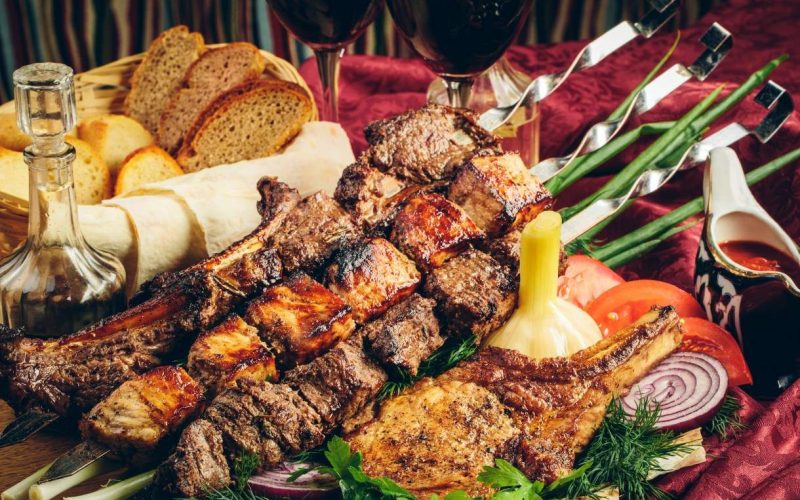
Khorovats (BBQ): Smoky and Savory, Not Spicy
Khorovats (Armenian barbecue) is often mistaken as spicy because the meat is marinated in:
- garlic
- onion
- black pepper
- sweet paprika
- herbs
- sometimes red pepper paste (usually mild)
However, khorovats is not a spicy dish. Its defining characteristics are:
- smoke from the fire
- charred edges
- natural juices of lamb, pork, or beef
- subtle sweetness from paprika
Even when a marinade includes “red pepper,” in Armenian cooking that typically refers to sweet paprika rather than hot chili.
Harissa: Comforting Wheat-and-Meat Porridge, Zero Heat
Harissa, one of Armenia’s most historic dishes, is a slow-cooked blend of:
- cracked wheat (or einkorn)
- chicken or lamb
- butter or fat
- salt
It includes no chili, no strong spices, and no heat.
Its flavor comes from long simmering, producing a smooth, comforting, almost creamy porridge enjoyed during winter and religious celebrations.
Many people assume harissa is spicy because the word resembles “harissa,” the North African chili paste—but the two are completely unrelated.
Tolma/Dolma: Herbs and Spices but Rarely Hot Pepper
Tolma (Armenian dolma) involves grape leaves or vegetables stuffed with:
- meat
- rice
- onion
- parsley
- cilantro
- sometimes mint
- mild spices like black pepper, cinnamon, or allspice (especially in Western Armenian versions)
The aromatic stuffing sometimes leads people to think it’s spicy, but dolma contains no chili heat.
Even black pepper is used lightly, and the overall flavor is gentle, herbaceous, and savory.
Lahmahjun: “Armenian Pizza” with Flavorful Paste, Not Typically Hot
Lahmahjun (or lahmacun) is a thin flatbread topped with minced meat mixed with:
- tomato
- onion
- parsley
- garlic
- sweet paprika
- cumin
- black pepper (minimal)
Non-Armenians often assume it is spicy because it resembles Turkish or Middle Eastern versions that include hot pepper paste.
However, Armenian lahmahjun is typically mild, with heat added only:
- optionally
- through chili flakes served on the side
- or in diaspora variations influenced by Turkish cuisine
The dominant taste is savory tomato-herb paste, not chili.
Ghapama: Sweet Pumpkin Dish, No Spice Heat
Ghapama is a festive baked pumpkin stuffed with:
- rice
- dried fruits (apricots, raisins, plums)
- honey
- cinnamon (optional)
- nuts
It is sweet, fragrant, and dessert-like.
Any association with “spice” comes from sweet spices like cinnamon or clove, not chili heat.
Ghapama is one of the least spicy dishes imaginable—warm, comforting, and aromatic.
Khash: Garlic-Heavy but Not Spicy-Hot
Khash, a winter bone broth, is widely known for two things:
- being eaten at dawn
- being served with huge amounts of garlic
However, garlic creates a sharp, pungent flavor, not chili-based heat.
Khash includes:
- no hot peppers
- no chili paste
- no spicy seasonings
Its intensity comes from richness and aroma, not from spiciness. Many visitors confuse the strong garlic hit with heat, but they are entirely different sensations.
Spas: Yogurt Soup with Herbs
Spas is a creamy yogurt-based soup containing:
- wheat or rice
- fresh herbs (dill, mint, sometimes cilantro)
- garlic (optional)
It is refreshing and tangy, with absolutely no hot spices.
Its flavor profile is cooling rather than warming, making it one of Armenia’s mildest and most soothing dishes.
Shurpa and Other Soups with Herbal Profiles
Armenia has a variety of brothy soups—like shurpa, kharcho (Armenian version), and vegetable stews—that often lead outsiders to assume spiciness because they contain:
- paprika
- black pepper
- bay leaf
- dill
- parsley
- garlic
These ingredients create aroma and depth, not heat.
Even when paprika is added, it is sweet paprika, which adds color and mild sweetness rather than spiciness.
Armenian soups are known for being:
- balanced
- herb-rich
- savory
- comforting
But never fiery.
Dishes That Can Be Spicy (Depending on Region or Cook)
While Armenian cuisine is generally known for its balance, aromatics, and gentle seasoning, there are still several exceptions—dishes or regional variations where heat plays a more noticeable role. These instances are not the norm across the country, but they do reflect local tastes, neighboring influences, and modern culinary creativity.
Some Regional Variations Use Hot Pepper
Although chili heat is not deeply rooted in Armenian culinary tradition, certain regions have their own interpretations where spicy food becomes more common. These areas typically have greater exposure to wild peppers, homegrown chili varieties, or cross-cultural exchanges with nearby cuisines.
• Tavush Region
Tavush, located in the northeast of Armenia with a lush, forested landscape, is known for using more fresh herbs and occasionally fresh chili peppers. Rural cooks sometimes add small amounts of hot red or green peppers to stews, vegetable dishes, or pickles. The heat level remains moderate, but noticeable compared to other parts of the country.
• Syunik Region
Syunik, in the south bordering Iran, has a slightly bolder palate influenced by its proximity to Persian and Middle Eastern culinary traditions. Here you may find spicier versions of tolma, khorovats marinades with added red pepper, or soups infused with chili. Still, the heat is usually controlled and rarely overwhelming.
• Lori Region
Known for its dairy-rich cuisine and hearty rural dishes, Lori occasionally uses dried or fresh hot peppers in bean stews, vegetable sautés, and homemade condiments. Chili is never the dominant flavor, but a small fiery kick is more common here than in central Armenia.
Across these regions, the use of hot pepper remains optional rather than fundamental, appearing more in certain households than as a widespread culinary rule.
Spicy Dips and Spreads
Some Armenian dips and spreads incorporate chili by choice rather than tradition. Their spiciness fluctuates depending on the cook, region, and intended audience.
• “Eritsuk” (hot pepper paste)
This spread—made from ground hot peppers, garlic, salt, and sometimes tomato—varies dramatically in heat. In some households it is intensely spicy, resembling Middle Eastern chili pastes, while in others it is mellow and used more as a flavor accent.
• Spicy Adjika Variant
Although adjika is originally from Abkhazia and Georgia, Armenians have their own adaptations. Armenian adjika is typically milder, but spicier versions exist, especially where people adopt Georgian-style cooking. These hotter blends include more chili, garlic, and sometimes walnuts.
Other spicy spreads may incorporate chili in small amounts to add complexity, but they rarely become overwhelmingly hot.
Diaspora Influences
The Armenian diaspora—particularly communities in the Middle East—has introduced a wider range of spicy dishes into the broader Armenian culinary identity. These dishes are not part of historic Armenian tradition but have been embraced in diasporic households for generations.
• Middle Eastern Armenian Spicy Dishes
Armenians in Lebanon, Iran, and Iraq often use more chili peppers due to local culinary norms. Dishes such as kebabs seasoned with Aleppo pepper, chili-enhanced pilafs, or spicy tomato-based stews are common.
• Cilician Influences
Historical Cilician Armenia (located in modern-day southeastern Turkey) preserved Mediterranean and Levantine food traditions. Some modern descendants of Cilician Armenians prepare dishes with more pronounced heat, especially in marinades and mezes.
• Syrian-Armenian Cuisine
Syrian-Armenian food is particularly famous for its deep, warm, slightly spicy flavors, thanks in large part to Aleppo pepper, a mild-to-medium chili with fruity notes. Dishes like muhammara, spicy kebabs, and chili-enhanced lahmajoun have become iconic in this community.
These diaspora influences contribute to the misconception that Armenian food is universally spicy, when in fact these dishes come from Armenians living in regions where hot spices are more culturally prominent.
Modern and Restaurant Interpretations Where Chefs Add Heat for Tourists
In contemporary restaurants—especially in areas with many tourists, like Yerevan’s city center—chefs sometimes modify traditional recipes by adding heat. This is usually done to:
- appeal to visitors expecting bold, spicy flavors
- create fusion-style dishes with modern flair
- differentiate their menu and attract adventurous diners
Examples include:
- “Spicy lahmajoun” created for foreigners who want more heat
- Marinated khorovats with chili-based sauces
- Red-pepper-enhanced soups designed to appear more “exotic”
- Chili-infused hummus or meze plates inspired by Middle Eastern trends
These versions are not representative of traditional Armenian cooking but reflect the evolving global food scene.
Comparison With Other Regional Cuisines
Understanding whether Armenian food is spicy becomes clearer when comparing it to the cuisines of neighboring countries. Armenia sits at a cultural crossroads—between the Caucasus, the Middle East, and parts of the former Ottoman and Persian culinary worlds. While this position brings shared ingredients and cooking styles, approaches to chili heat differ widely. In these comparisons, Armenian cuisine consistently stands out as aromatic, balanced, and much less chili-forward than many of its neighbors.
Georgia: Strong Use of Ajika, Chili, and Spices
Georgia is arguably the spiciest country in the South Caucasus. Although Georgian cuisine is not universally “hot,” it uses hot adjika, red pepper flakes, and spicy sauces much more frequently than Armenia.
- Ajika — a chili-based paste with garlic and herbs — is a staple in Georgian kitchens and can be extremely hot depending on the region.
- Many Georgian dishes incorporate chili directly into the cooking process rather than serving it on the side.
- Even milder Georgian dishes tend to include spice blends that lean bolder and sharper than Armenian seasoning.
Compared to Georgia, Armenian food is significantly milder and focuses more on herbs and warm, subtle spices.
Turkey: Some Regions Use Hot Pepper (Urfa, Marash), but Armenian Dishes Remain Milder
Turkish cuisine varies widely by region. In the southeast — particularly around Urfa and Marash — hot peppers, pepper pastes, and chili flakes are heavily used.
- Urfa pepper and Marash pepper are iconic Turkish chili varieties that add both heat and smoky depth.
- Southeastern Turkish dishes like spicy kebabs, stews, and mezes can be noticeably hotter than Armenian versions.
By contrast, Armenian dishes that share Ottoman-era roots — such as dolma, stuffed vegetables, or kebabs — are typically prepared with much less chili. Armenians may use pepper paste or paprika, but usually the sweet, mild kind, emphasizing aroma rather than heat.
Iran: Aromatic Spices, Rarely Hot
Iranian cuisine, which historically influenced southern Armenian regions, is known for its fragrance, balance, and gentle spice usage, not for chili heat.
- Iranian dishes rely on saffron, turmeric, cinnamon, rose petals, dried limes, and herbs, not chili peppers.
- Heat is generally avoided to preserve the floral and aromatic qualities of the dishes.
In this sense, Armenian cuisine is closer to Iranian cuisine than to Georgian or southeastern Turkish cooking. Both share an appreciation for depth without spiciness.
Middle East: Aleppo Pepper Adds Mild Heat
In Middle Eastern cooking — particularly Syrian and Lebanese traditions — heat is present but usually soft and controlled.
- Aleppo pepper, widely used in the region, has a gentle, fruity heat rather than a burning sensation.
- It adds warmth, not fire, to dishes like kebabs, stews, and meze plates.
Middle Eastern Armenian communities adopted Aleppo pepper into their culinary repertoire, which is why diasporic Armenian cuisine sometimes feels slightly hotter than homeland Armenian cooking. However, the heat remains mild and never approaches the intensity of cuisines that rely heavily on strong chili varieties.
Caucasus Region Overall: Spice vs. Heat Comparison
The broader Caucasus region includes Armenia, Georgia, and Azerbaijan, each with distinct culinary traditions:
- Georgia → Bold spices, frequent chili usage, hot adjika
- Azerbaijan → Middle Eastern influences; some spicy dishes, but heat varies widely
- Armenia → Herb-heavy, aromatic, restrained use of chili, mild overall
In regional comparison, Armenian cuisine is one of the least spicy in terms of heat but among the richest in herbs. Its flavor profile focuses on freshness, natural ingredients, and harmony rather than intensity.
How Armenians Add Heat When They Want It
Even though Armenian food is usually not hot by default, Armenians do enjoy spicy flavors when they choose to, and they have several traditional ways to add heat at the table or during cooking. These methods allow individuals to customize the level of spice according to personal preference, without altering the overall mild character of the cuisine. Heat becomes an optional accent rather than a foundational element.
Table Condiments (Fresh Chopped Chilies, Pepper Flakes, Adjika)
Many Armenian households provide heat on the side, allowing diners to season food to their liking.
• Fresh chopped chilies
Small amounts of fresh red or green chilies may be served on the table, especially in rural regions. Diners add them to meats, soups, or salads for a sharper kick. These chilies are typically mild to medium in heat.
• Red pepper flakes
Crushed red pepper flakes are a common optional seasoning, sprinkled on grilled meat, soups, or vegetable stews. Their heat level is usually mild compared to Turkish or Georgian varieties.
• Adjika
Armenian-style adjika—much milder than the Georgian version—is another favorite. It adds warmth, garlic, and spice without overwhelming heat. Those who prefer stronger heat may use a hotter homemade variant.
By serving spicy condiments separately, Armenian families preserve the traditional mildness of the dishes while offering flexibility for spice lovers.
Pickled Hot Peppers Served as Side Dishes
Pickling is a central part of Armenian culinary tradition, thanks to the country’s cold winters and rich vegetable-growing seasons. Among the many pickled foods—cucumbers, cabbage, garlic—hot peppers also appear on the table.
Pickled hot peppers offer:
- a mild to moderate heat
- tanginess from the brine
- a crunchy texture that pairs well with grilled meats and hearty stews
These are rarely extremely spicy, but they add brightness and a controlled kick. Some households also pickle a mixture of vegetables with chili, creating a flavorful, slightly spicy medley.
Homemade Chili Oils and Pastes
In certain families—especially those with ties to Cilician, Middle Eastern, or Georgian culinary traditions—homemade chili preparations are popular. These include:
- Chili oils infused with garlic, paprika, and moderate chili types
- Chili pastes combining peppers, tomatoes, salt, garlic, and herbs
- “Eritsuk”-style hot pastes, varying from mild to very spicy depending on the cook
These condiments are typically prepared in small batches and stored for everyday use. Their heat level is rarely as intense as Southeast Asian or Latin American chili oils; instead, they deliver warmth, aroma, and gentle spice.
Pepper-Infused Vodka Shots (Traditional in Certain Regions)
In some rural areas and festive settings, especially in the north and south of Armenia, pepper-infused vodka (sometimes called “kakhakh”) is a traditional way to add heat—quite literally.
This drink is made by:
- infusing whole hot peppers in strong homemade vodka
- allowing the flavors and heat to steep over days or weeks
- serving the drink during celebrations, toasts, and winter gatherings
The result is a warming, spicy shot that delivers a sharp but pleasant burn. While not a food dish, it is an important cultural example of how Armenians incorporate heat in celebratory contexts.
Eating Armenian Food as a Visitor
Armenian cuisine is a fascinating blend of rich flavors, fresh ingredients, and centuries-old traditions. For visitors exploring the country, food is often a highlight of the travel experience. However, questions about spiciness frequently arise. Is Armenian food spicy? The answer is nuanced. While Armenia is not generally known for extremely hot dishes like those found in Thailand or India, the cuisine does include flavorful spices and occasional heat, which can be surprising to tourists unfamiliar with the region.
What Tourists Commonly Expect vs. What They Get
Many tourists arrive in Armenia expecting fiery, spicy meals, often influenced by neighboring cuisines such as Turkish or Middle Eastern food, which feature bold and sometimes hot spices. There is also a tendency to associate the word “spice” with heat, but in Armenian cooking, “spice” more often refers to aromatic herbs and seasonings rather than chili-based heat.
In reality, most Armenian dishes are mild to moderately seasoned, highlighting the natural flavors of fresh vegetables, grains, meats, and dairy products. Popular dishes such as khorovats (Armenian barbecue), dolma (stuffed grape leaves), and harissa (slow-cooked wheat and chicken or lamb porridge) are flavorful, rich, and savory but rarely fiery hot. Some stews or sauces may include black pepper, paprika, or Aleppo pepper, giving a gentle warmth rather than an overwhelming heat.
Common Misconceptions
A common misconception is that Armenian food is inherently bland because it is not extremely spicy. This is far from the truth. Armenian cuisine is celebrated for its depth of flavor, achieved through the use of fresh herbs like tarragon, dill, parsley, coriander, and mint, as well as aromatics such as garlic, onions, and lemon. The cuisine emphasizes balance and harmony over intensity.
Another misconception is that Armenian food lacks variety for those who enjoy heat. In fact, Armenian tables often offer condiments, sauces, and pickled vegetables that allow diners to adjust flavors according to personal preference. While the main dishes are mild, optional additions like adjika (a spicy red pepper paste popular in the Caucasus) or fresh chili peppers can introduce heat for those who desire it.
Etiquette: When to Request “Spicier” Dishes
When dining in Armenia, it is important to understand local etiquette regarding requests for spicier food. Armenians take pride in their culinary traditions, and dishes are usually served according to family or restaurant recipes. Modifying a dish by asking for additional heat is generally acceptable, but it should be done politely.
It is recommended to wait until the main course arrives before making a request. Observing how locals enjoy their food can help gauge what is customary. In some traditional settings, especially in home-cooked meals, overly spicy food may be considered unusual or even inappropriate. In restaurants, however, staff are usually accommodating and familiar with tourists’ preferences, so a polite request for more heat is perfectly fine.
How to Ask for More Heat in Armenian Restaurants (Phrases and Tips)
For visitors who enjoy spicy food, it is useful to know a few local phrases or strategies:
- “Karas sirunats e?” – Literally: “Can it be made spicy?”
- “Mot sirunats e?” – “Can you make it hot?”
- “Khndrum em, lav sirunats petq e” – “I like it spicy.”
In addition to verbal requests, pointing to red chili flakes or sauces at the table and asking, “Can I have some of this?”, is widely understood. Many restaurants provide adjika, chili oil, or hot pepper sauces on the side, so diners can adjust spice levels themselves.
Tip: Armenian cooks tend to respect the natural flavor of ingredients, so do not expect extremely high heat. Start with small adjustments and add more if needed.
Vegetarian/Vegan Dishes and Spice Levels
Vegetarian and vegan options in Armenia are plentiful, reflecting the country’s reliance on fresh produce, legumes, and grains. Many of these dishes, including vegetable stews, lentil soups, rice pilaf, and stuffed vegetables, are naturally mild in spice.
For visitors who prefer spicier vegetarian food, it is often necessary to request additional heat, either through hot sauces or freshly chopped peppers. Some popular vegetarian dishes to try include:
- Eetch (Armenian bulgur salad) – Mild and tangy, can be spiced with extra paprika or chili.
- Lobia (white bean stew) – Savory and hearty, easily made spicier on request.
- Tabbouleh-style salads and herb platters – Typically mild, meant to highlight fresh herbs, but can be paired with chili paste for heat.
It is also worth noting that Armenian cuisine celebrates pickled and fermented vegetables, which often provide a tangy punch that complements mild dishes without adding chili heat.
Armenian food is generally not very spicy by default, but it is rich in flavor and can be adjusted to suit personal preferences. Visitors should expect aromatic, balanced meals rather than fiery dishes, but with polite requests and awareness of local condiments, even those who enjoy heat can find satisfying options. Understanding these nuances enhances both the culinary experience and the cultural appreciation of Armenia’s rich food heritage.
Armenian Diaspora and Modern Innovations
Armenian cuisine has a long and storied history, rooted in the fertile lands of the Armenian Highlands and shaped by centuries of trade, migration, and cultural exchange. With the Armenian diaspora spread across the globe—from Russia and the Middle East to Europe and the Americas—the cuisine has naturally evolved, adapting to local tastes, ingredients, and culinary trends. These global influences have introduced modern innovations, including subtle and bolder uses of spice, while maintaining the essence of traditional Armenian flavors.
How Armenian Cuisine Changed Abroad
When Armenians settled in new countries, they often had to adapt their recipes to locally available ingredients, cooking methods, and consumer preferences. This adaptation led to noticeable changes in flavor, texture, and, in some cases, spiciness.
For example, Armenian bakeries in the United States may incorporate more sugar or cinnamon into traditional pastries, reflecting American dessert trends, while Armenian restaurants in Russia often feature richer sauces or heavier meats to suit local palates. In the Middle East, Armenian dishes might be paired with bolder spices or chili-infused condiments to align with regional tastes.
As a result, diaspora communities often serve as laboratories for culinary innovation, where traditional Armenian dishes evolve while still preserving their cultural identity.
Influence from Russian, American, Middle Eastern, and European Cultures
The Armenian diaspora’s exposure to different culinary traditions has left a tangible mark on how dishes are seasoned and served:
- Russian Influence: In Russia and former Soviet countries, Armenian food often incorporates cream, sour cream (smetana), and hearty root vegetables. While spiciness remains mild, the overall richness of dishes is enhanced.
- American Influence: In the United States, Armenian restaurants and food trucks experiment with fusion dishes, often amplifying flavors and introducing chili peppers, smoked paprika, or hot sauces to cater to adventurous diners.
- Middle Eastern Influence: Countries like Lebanon, Syria, and Iran have influenced Armenian cuisine with the use of warm spices, cumin, coriander, and sometimes moderate chili heat. This has introduced slightly spicier versions of traditional dishes like khorovats or stuffed vegetables.
- European Influence: In France, Germany, and Italy, Armenians adopt Mediterranean techniques such as grilling, roasting, and herb blends. Herbs like rosemary, thyme, and oregano complement Armenian staples, often keeping spice levels mild but aromatic.
These influences demonstrate the flexibility of Armenian cuisine, which can maintain its identity while embracing local culinary trends.
Fusion Cuisine and New Spicy Trends
One of the most exciting developments in modern Armenian cuisine is the rise of fusion dishes. Young chefs, particularly in cosmopolitan areas, are experimenting with heat, combining traditional Armenian recipes with global spicy trends.
For example:
- Khorovats tacos: Traditional Armenian barbecue served in tortilla shells with pickled chili slaw.
- Spicy lavash wraps: Filled with grilled meats, fresh herbs, and chili sauces inspired by Southeast Asian or Mexican cuisine.
- Hot pepper eggplant dip: A modern twist on traditional baba ghanoush, with smoked paprika and chili flakes.
While historically Armenian cuisine is not extremely spicy, these innovations reflect a growing openness to heat, especially among urban and younger diners.
Armenian Street Food Evolution
Street food has become a canvas for culinary experimentation within Armenian communities abroad. Classic street snacks such as lahmajo (Armenian pizza), khorovats skewers, and puri (bread) sandwiches are often reimagined with new spice profiles.
Food vendors in cities like Los Angeles, Paris, and Moscow introduce spicy sauces, harissa blends, or chili-infused spreads, appealing to modern consumers seeking bolder flavors. This evolution has made Armenian street food more accessible and exciting for international audiences while retaining its cultural roots.
Young Chefs Reinterpreting Spice Use
The new generation of Armenian chefs is particularly influential in redefining spice use. Many are culinary school-trained and exposed to global gastronomy trends. They respect traditional techniques and ingredients but are willing to push boundaries:
- Creative pairings: Using chili with yogurt-based sauces or herbs like tarragon and coriander.
- International spice blends: Incorporating smoked paprika, chili flakes, cayenne, or harissa into stews, salads, and grilled meats.
- Flavor layering: Introducing gentle heat alongside garlic, lemon, and pomegranate molasses for depth rather than overwhelming spiciness.
These chefs are shaping a modern Armenian culinary identity that balances authenticity with adventurous flavors. As a result, spicy dishes are no longer rare anomalies—they are part of a broader trend of innovation and reinterpretation, appealing to both locals and international food enthusiasts.
The Armenian diaspora has played a crucial role in modernizing and diversifying Armenian cuisine. While traditional dishes remain mild by default, exposure to global flavors has introduced new ways to incorporate spice. From fusion cuisine to street food and creative reinterpretations by young chefs, Armenian food is increasingly versatile, demonstrating that spice can be used thoughtfully to enhance, rather than overpower, traditional flavors. Visitors exploring Armenian food today can experience both the comforting classics and the exciting modern innovations that reflect the cuisine’s global evolution.
Health Aspects of Herbs and Spices in Armenian Cuisine
Armenian cuisine is not only celebrated for its flavor but also for its thoughtful use of herbs and spices that contribute to health and well-being. While Armenian food is generally mild in terms of heat, the aromatic herbs and seasonings used play a significant role in nutrition, traditional medicine, and digestive balance.
Nutritional Benefits of Herbs
Armenian dishes commonly incorporate fresh herbs such as parsley, cilantro, dill, tarragon, mint, and basil. These herbs are more than decorative—they provide essential vitamins, minerals, and antioxidants:
- Parsley is rich in vitamin C, vitamin K, and flavonoids, supporting immune function and bone health.
- Dill offers antioxidants and compounds that may help reduce inflammation and improve digestion.
- Mint soothes the stomach and promotes digestive comfort, making it ideal in soups, salads, and teas.
- Tarragon contains trace minerals and beneficial plant compounds that enhance metabolic activity and stimulate appetite.
By layering these fresh herbs into dishes, Armenian cuisine delivers nutritional benefits naturally, without relying on excessive oil or salt.
The Role of Spices in Traditional Armenian Medicine
Armenian culture has a long history of using spices for medicinal purposes. Traditional remedies often combine herbs and mild spices to promote health:
- Garlic and onion are valued for antimicrobial properties and cardiovascular support.
- Paprika and black pepper are sometimes used in small amounts to stimulate circulation and digestion.
- Sumac provides antioxidants and a mild tang that is thought to aid metabolism.
These culinary practices reflect a holistic approach, where flavor and wellness are intertwined. Dishes are designed to nourish the body while satisfying the palate.
Why Mild Cuisine Is Good for Digestion
Armenian cuisine’s mild nature has clear digestive advantages. Spicy foods can sometimes irritate the stomach or cause discomfort for sensitive individuals, while Armenian dishes often:
- Promote slow digestion with legumes, grains, and lean meats.
- Include herbal teas and broths after meals, aiding nutrient absorption.
- Pair acids like lemon or pomegranate molasses with fats to balance digestion naturally.
This gentle approach makes Armenian cuisine suitable for people of all ages, including children, the elderly, and those with digestive sensitivities.
Balance Between Aroma and Health
Armenian cooking emphasizes aromatic herbs and subtle spices over heat, achieving complex flavors that enhance enjoyment and health simultaneously. The key principle is balance: a dish should delight the senses without overwhelming the digestive system. Even when heat is added, it is typically in measured amounts, ensuring that aroma, texture, and nutritional benefit remain at the forefront.
Recipes to Illustrate Armenian Flavor Without Heat
One of the best ways to appreciate Armenian cuisine is through classic recipes that showcase deep flavor without relying on spiciness. These dishes highlight the natural taste of fresh ingredients, slow cooking, and aromatic herbs.
Mild Classic Dishes (Brief Recipe Descriptions)
- Harissa: A slow-cooked porridge of wheat and meat (usually chicken or lamb), seasoned lightly with salt and herbs. The long cooking process creates a rich, comforting texture.
- Spas: A traditional yogurt and herb soup, often including wheat or rice and fresh herbs like mint and dill. Mild, refreshing, and slightly tangy.
- Khashlama: Braised meat (beef, lamb, or veal) with root vegetables and mild seasoning, typically cooked in its own juices for hours until tender.
- Ghapama: A festive pumpkin dish stuffed with rice, dried fruits, and nuts, gently flavored with cinnamon or allspice.
- Zhingyalov hats: Flatbread stuffed with finely chopped greens and herbs, offering a herbaceous and aromatic experience without heat.
- Armenian Rice Pilaf: Fragrant rice cooked with vegetables, butter, and fresh herbs; sometimes includes nuts or dried fruits for depth of flavor.
These dishes illustrate that Armenian cuisine relies on layering flavors, textures, and aromas rather than chili heat.
Optional “Hotter” Variants to Show Flexibility
For those who enjoy some spice, mild Armenian dishes can be adapted without losing their identity:
- Adding a few chili flakes or fresh peppers to harissa or khashlama.
- Incorporating a touch of paprika or cayenne in rice pilaf or Ghapama.
- Serving zhingyalov hats with a spicy yogurt or adjika dip on the side.
These small adjustments allow diners to enjoy more heat while preserving the subtle, herb-driven character of the cuisine.
Flavor-Building Techniques That Don’t Rely on Heat
Armenian chefs achieve flavor complexity through techniques such as:
- Slow cooking and braising, which develop rich, concentrated flavors.
- Herb layering, adding fresh herbs at the end of cooking to preserve aroma.
- Acid balancing, using lemon juice, pomegranate, or vinegar to brighten flavors.
- Toasting grains and nuts to enhance depth in pilafs or stuffed dishes.
- Fermentation and pickling, introducing tangy notes that complement mild dishes.
These methods create a satisfying, aromatic, and balanced cuisine that is flavorful, healthy, and accessible to all palates—even without intense heat.
Armenian Food Is Aromatic, Rich, and Flavorful but Usually Not Spicy-Hot
Armenian cuisine offers a culinary experience that is deeply aromatic, rich, and layered in flavor, yet it is typically mild in terms of heat. Unlike cuisines that rely on fiery spices to define taste, Armenian dishes celebrate the natural flavors of fresh vegetables, grains, meats, and dairy, enhanced with gentle seasonings. Visitors often find the cuisine surprisingly satisfying, with each dish showcasing balance, texture, and harmony rather than overwhelming spiciness.
Importance of Herbs Over Chili
Herbs are the cornerstone of Armenian flavor. Parsley, dill, tarragon, mint, and cilantro, among others, are used abundantly to build taste profiles, provide aromatic depth, and contribute nutritional benefits. While chili peppers and hot spices are rarely central, the careful layering of herbs, subtle spices, and condiments like sumac or pomegranate molasses ensures that dishes remain vibrant and memorable without heat.
Regional and Modern Exceptions
There are exceptions to the mildness, both regionally and in modern adaptations. In some areas, particularly where Middle Eastern influences are strong, dishes may incorporate a touch of chili or warm spices. Abroad, in diaspora communities, chefs experiment with fusion dishes and hotter variants, introducing bold flavors that appeal to international palates. These innovations demonstrate the flexibility of Armenian cuisine, showing that it can be adapted to incorporate more heat while remaining true to its culinary roots.
Encouragement to Explore the Cuisine with an Open Mind
Ultimately, Armenian food rewards an open-minded approach to dining. Whether sampling traditional classics like harissa, khashlama, or Ghapama, or exploring modern spicy innovations, diners are invited to experience a cuisine that values flavor, freshness, and balance. Even without intense heat, Armenian dishes provide complex, satisfying, and healthy culinary experiences. By appreciating the subtle use of herbs and spices, visitors can gain a richer understanding of Armenia’s cultural and gastronomic heritage.
Armenian cuisine proves that spiciness is not the only path to flavor, and that the true essence of a dish often lies in its aroma, texture, and harmony of ingredients.
For a true experience of Armenia’s rich flavors and culinary culture, explore our guides and recipes—reach out to us for the ultimate Armenian food experience!





38 Responses
Spotted 95ubet95 advertised, visited 95ubet95.info. It’s what it is, really, which is easy enough to understand and operate. 95ubet95
Alright, giving gameb369 a shot. The selection looks decent. Fingers crossed for some good luck tonight! You might wanna check it out gameb369
A7xmexico? If it’s anything like the band A7X im gonna have a good time. Checking it out, and you might wanna too a7xmexico
Hola amigos I have been searching for a reliable place to unwind and have a good time and this one truly delivers. The customer support is super chill and the bonuses actually make sense. Feels like a home away from home. Give it a try and let me know what you think: mexicano777
If you are based in Mexico and want a casino that actually knows the local market this is your go to place. The game selection is massive with everything from classic slots to live dealer tables that feel completely authentic. I love that they accept our local payment methods and handle withdrawals without making you jump through too many hoops. The whole experience feels premium without the usual hidden fees. casinosmexico
I have been looking for a reliable gaming platform and this one really delivers. The promotions are fair and withdrawals go through without any hassle. Really appreciate how they keep the community engaged. You should give it a try mxmd777
[7697]kaostoto | Login Resmi Link Alternatif Slot Gacor Deposit Pulsa,kaostoto menyediakan link alternatif resmi untuk akses situs slot gacor hari ini dengan kemudahan deposit pulsa tanpa potongan. Daftar dan mainkan sekarang juga. visit: kaostoto
[9444]9777 Official Login | সেরা অনলাইন স্লট গেমস ও অ্যাপ ডাউনলোড,9777 প্ল্যাটফর্মে বিকাশ দিয়ে সহজে ক্যাসিনো ডিপোজিট করুন এবং সেরা অনলাইন স্লট গেমসের অভিজ্ঞতা নিন। আজই অ্যাপটি ডাউনলোড করে গেম শুরু করুন। visit: 9777
[5530]luckybangla88 Official Login | সেরা স্লট গেম ও ক্যাসিনো বোনাস,luckybangla88-এ আজই যোগ দিন। বিকাশ দিয়ে সহজে টাকা জমা করে সেরা স্লট গেম খেলুন এবং আকর্ষণীয় অনলাইন ক্যাসিনো বোনাস বুঝে নিন। এখনই অ্যাপ ডাউনলোড করুন। visit: luckybangla88
[8914]Betwarts | Link Vào Mới Nhất – Hướng Dẫn Chơi Baccarat Uy Tín,Betwarts cung cấp link vào mới nhất, hỗ trợ tải app chính thức nhanh chóng. Khám phá luật chơi quay hũ slots và nạp tiền casino qua Momo tiện lợi. Truy cập ngay! visit: betwarts
Quick registration process and I was playing within five minutes. The mobile version is fully optimized and works smoothly on both iOS and Android devices. Exactly what I was looking for. clmrbet
My brother told me about this spot and I kept coming back because the experience keeps getting better. The live games are broadcast in crystal clear quality and the croupiers are incredibly friendly. I appreciate the fair bonus terms and the quick verification process that gets me my winnings in record time. fly88hcom
I have been playing on this platform for a couple of months and the daily login rewards really keep the excitement alive. The interface is so clean that even my grandma could find the slots without asking for help. Withdrawals are quick and the support team actually replies fast. I highly recommend it for anyone looking for a trustworthy gaming spot. dreamjililogin
If you like Jili games, this is the place to be. The hit rate feels much better here compared to other sites. Give phjdbjili a try.
[1862]ceo অফিসিয়াল লগইন | বিকাশ ডিপোজিট ও সেরা ক্যাসিনো বোনাস,ceo অ্যাপ ডাউনলোড করে শুরু করুন আপনার গেমিং যাত্রা। এখানে পাবেন সহজ স্লট গেম নিয়ম এবং দ্রুত বিকাশ ডিপোজিট সুবিধা। আজই জয়েন করুন। visit: ceo
Finally found a reliable link that actually works. The slots are exciting and the bonuses are generous. I’m having a great time here. Check bigslot288link
[3500]istana404: Login Resmi Link Alternatif Slot Gacor Hari Ini,istana404 menyediakan akses login resmi dan link alternatif terbaru. Daftar situs casino terpercaya dengan panduan deposit via dana yang mudah. Gabung sekarang! visit: istana404
Had an amazing run here last night! The atmosphere is exciting and the payouts are very fair. jili178casino
The registration process was super smooth and I got into the games instantly. Definitely one of the best platforms I have tried lately. Check it out at jilihot777loginregister
Super easy to get started and the interface is very user friendly. I managed to hit a jackpot on my second try. I’m staying with jili56comlogin for sure.
The login process is super quick and I haven’t faced any glitches so far. Great job on the optimization! 7sjilicomlogin
The bonuses here are actually worth it. I managed to hit a decent win last night using the welcome credit. 90jiliclublogin
I’ve tried a few sites lately, but this one really stands out. The interface is smooth and the payouts are fast. Definitely my new go-to spot! idcoklat777
If you love high-energy gameplay and quick results, you gotta try this. The graphics are sharp and the luck is on my side here. Love pkc999game.
The login process is seamless and I never have any issues with my account access. It is refreshing to find a site that actually works properly. Visit phpcomelogin for a hassle-free experience.
[7726]jeetwin লগইন এবং অ্যাপ ডাউনলোড | বিকাশ অনলাইন ক্যাসিনো গেম,jeetwin লগইন করার নিয়ম জানুন এবং অ্যাপ ডাউনলোড করে নিন। বিকাশ দিয়ে অনলাইন ক্যাসিনো গেম এবং লাইভ ক্যাসিনো খেলার নিয়ম জানতে আজই ভিজিট করুন। visit: jeetwin
The registration process was super smooth and I got into the games instantly. Definitely one of the best platforms I have tried lately. Check it out at jilihot777loginregister
Really impressed with the customer support here. They answered my questions about the deposit process in minutes. phd63com is definitely one of the more trustworthy options out there.
I love how straightforward the registration is. No unnecessary hassle, just straight to the fun. Definitely check out br25s if you are looking for a new spot.
[6440]777bet login করুন | বিকাশ দিয়ে ক্যাসিনো ডিপোজিট ও স্লট গেম,777bet login করুন এবং সহজেই 777bet app download করে নিন। বিকাশ দিয়ে ক্যাসিনো ডিপোজিট এবং অনলাইন স্লট গেম খেলার নিয়ম জানতে আজই জয়েন করুন। visit: 777bet
Really impressed with the customer support team. They answered my questions in minutes. idmpo1881 is definitely a trusted platform.
Really impressed with the layout and how easy it is to navigate. It feels very professional and secure, which is exactly what I look for. idtuan88
Honestly one of the best platforms I have used lately. The registration was a breeze and I started playing in minutes. Visit 9777bdgame now.
Finally found a platform that doesn’t lag during peak hours. The registration process was a breeze. Great job guys at phjljl1.
This has quickly become my go to spot for a bit of downtime fun. I really like how they mix classic arcade vibes with modern betting mechanics so it never feels boring. The customer service team actually responds fast and they remember your account details if you hit a snag. I also appreciate that they run a weekly loyalty reload that keeps things interesting without feeling pay to win. bgd33game
I had a great run last night! The games are fair and the atmosphere is exciting. Definitely spending more time on 7brwincom.
Finally found a site that doesn’t lag during the big games. The payout speed is impressive and the variety of options is great. Highly recommend 939bet43 to anyone looking for a reliable spot.
Best experience I’ve had in a while. The customer support is helpful and the bonuses are actually worth it. Give phokjili a shot and see for yourself.