

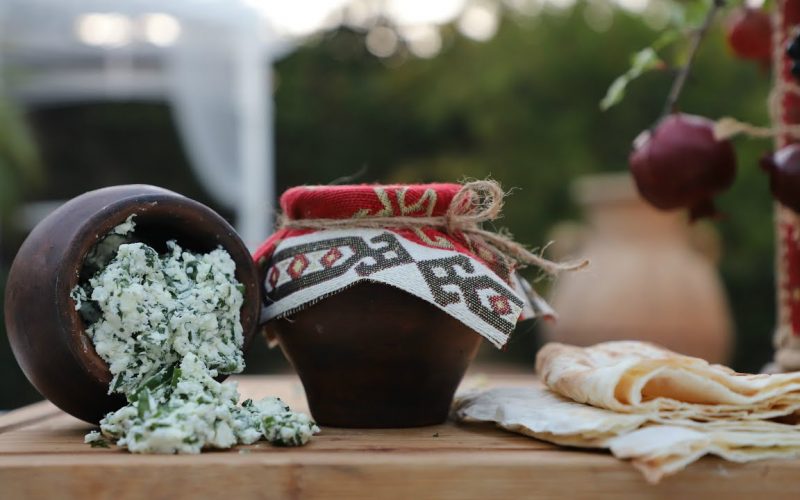
Armenia’s culinary heritage is deeply rooted in centuries of pastoral life, mountain traditions, and time-honored preservation techniques. Among its many distinctive dairy products, cheese holds a special place as both a daily food and a cultural symbol. Armenian cheesemaking is not merely a culinary practice but an expression of survival, adaptation, and respect for the land.
One of the most intriguing and lesser-known traditional cheeses is Horac Panir (also spelled Horats Panir), often referred to as “buried cheese.” Unlike fresh or brined cheeses commonly found in modern markets, Horac Panir is aged underground in clay vessels, allowing it to develop a unique depth of flavor shaped by time, soil, and natural fermentation.
What makes Horac Panir stand out among traditional Armenian cheeses is its extraordinary production method. The combination of high-mountain milk, wild herbs, and underground aging creates a product that is both rustic and sophisticated, deeply tied to Armenia’s mountainous geography and ancient food preservation techniques.
This article explores the origins, meaning, ingredients, production methods, and cultural significance of Horac Panir, revealing why this traditional cheese remains one of Armenia’s most fascinating culinary treasures.
Historical Background of Horac Panir
The origins of Horac Panir are closely connected to the Vayots Dzor region of Armenia, a mountainous area known for its harsh climate, rich pastoral traditions, and long history of winemaking and cheesemaking. In such environments, food preservation was essential for survival, especially during long winters when fresh milk was not available.
Rural mountain communities developed ingenious methods to extend the shelf life of dairy products. One of these methods was underground aging, where cheese was stored in sealed clay vessels buried in cool soil. This natural refrigeration system allowed villagers to preserve dairy for months while enhancing its flavor through slow fermentation.
In traditional Armenian pastoral culture, cheese was a daily necessity. Shepherd families depended on sheep, goats, and cows, transforming surplus milk into durable food sources. Horac Panir emerged as part of this necessity-driven innovation, reflecting a lifestyle closely connected to seasonal movement, grazing lands, and self-sufficiency.
Over time, what began as a practical storage method evolved into a distinctive culinary tradition. While modern refrigeration has reduced the need for underground storage, Horac Panir has remained a symbol of authenticity and heritage. Today, it is often recreated by artisanal producers who seek to preserve ancient Armenian food practices.
Culturally, cheese in Armenia has always represented hospitality and resilience. Offering cheese to guests is a sign of respect and generosity, while traditional preservation methods reflect the ability of Armenian communities to endure and adapt in challenging environments.
Meaning Behind the Name
The name “Horac Panir” (or Horats Panir) comes from Armenian linguistic roots that directly reflect the cheese’s production method.
- “Panir” (պանիր) simply means cheese in Armenian.
- “Horac” / “Horats” is derived from a word associated with burial or underground placement.
Together, the term is commonly interpreted as “buried cheese.” This name is not symbolic in a metaphorical sense—it literally describes the traditional method of aging cheese in underground clay vessels.
The “buried” aspect refers to the fermentation process that takes place beneath the soil. By isolating the cheese from light and external air fluctuations, producers create a stable microenvironment where slow aging can occur naturally.
In different regions of Armenia, similar concepts exist under various local names, often emphasizing storage, fermentation, or underground aging. While the terminology may differ, the underlying principle remains the same: using the earth itself as a natural preservation chamber.
Ingredients and Milk Sources
The foundation of Horac Panir lies in its high-quality mountain milk, which plays a crucial role in defining its flavor and texture. Traditionally, the cheese is made from:
- Cow’s milk
- Goat’s milk
- Sheep’s milk
- Or a combination of these (mixed milk)
Mountain pastures in Armenia are rich in wild grasses and aromatic plants, which directly influence the quality of the milk. Animals grazing in these regions produce milk that is naturally more nutrient-dense and higher in fat content, making it ideal for long-aged cheeses like Horac Panir.
High-fat milk is especially important because it contributes to the cheese’s creamy texture and allows it to withstand long fermentation periods without losing structure. The richness of the milk also enhances the final depth of flavor after aging.
In addition to milk, traditional recipes often include wild herbs, roots, and seeds gathered from the surrounding mountains. These natural ingredients may vary depending on the region and season, but they typically serve two purposes: flavor enhancement and preservation support.
Common additions include aromatic herbs that grow in Armenia’s alpine zones, which infuse the cheese with earthy, slightly floral, and sometimes spicy notes. These ingredients reflect the strong connection between Armenian cuisine and its natural environment.
Regional differences also play a role in ingredient composition. In some areas, goat’s milk is more dominant due to terrain, while in others, sheep’s milk is preferred for its richness. These variations contribute to subtle differences in taste across different batches of Horac Panir.
Traditional Production Method
The production of Horac Panir follows a carefully structured traditional process that has been passed down through generations. Although techniques may vary slightly between families and regions, the core method remains consistent.
Milk curdling and fermentation
Fresh milk is first warmed and allowed to naturally curdle or is combined with a natural starter culture. This initiates the fermentation process and separates curds from whey.
Addition of herbs and spices
Once the curds form, they are gently pressed and mixed with selected herbs, spices, or wild plant ingredients. These additions enhance both flavor and preservation qualities.
Placement into clay vessels
The prepared cheese mixture is then transferred into traditional clay jars. Clay is essential because it is porous enough to allow slow gas exchange while maintaining stable internal conditions.
Burial in soil for aging
The sealed clay vessels are buried underground, typically in cool, shaded mountain soil. This burial process protects the cheese from temperature fluctuations and external contamination.
Use of natural mountain environment for fermentation
The surrounding environment plays a crucial role in fermentation. Natural soil bacteria, consistent underground humidity, and stable temperatures create ideal conditions for slow aging.
Role of temperature and humidity
Underground storage maintains relatively constant temperatures throughout the year. This stability allows enzymes and bacteria to work gradually, developing complex flavors without spoilage.
Aging period
Horac Panir is typically aged for several months, and in some traditional cases, it may remain buried for six months or longer. The longer aging period results in a stronger aroma, sharper taste, and deeper complexity.
Unique Aging Process (Burial Technique)
One of the most remarkable aspects of Horac Panir is its burial aging technique, which transforms a simple dairy product into a deeply complex and aromatic cheese.
Why clay pots are used
Clay vessels are essential in traditional Armenian cheesemaking because they are naturally porous. This allows a minimal exchange of air while protecting the cheese from direct exposure to contaminants. Unlike metal or plastic containers, clay helps regulate moisture and temperature, creating a stable microclimate inside the vessel. This slow, controlled environment is ideal for long fermentation.
Why they are buried underground
Burying the clay pots in soil is a traditional preservation method used long before refrigeration existed. Underground storage provides:
- Constant, cool temperatures throughout the year
- Protection from sunlight and heat fluctuations
- Natural insulation against external weather conditions
In the mountainous regions of Armenia, this method was especially effective for preserving dairy products during hot summers and harsh winters.
Microbial and environmental effects on flavor development
The underground environment plays an active role in shaping the cheese’s flavor. Soil contains a diverse ecosystem of microorganisms, and while the sealed clay vessel limits direct contact, subtle microbial exchange still influences fermentation. Combined with natural humidity and stable temperature, this leads to:
- Slow enzymatic breakdown of fats and proteins
- Development of deep umami and tangy notes
- Formation of complex aromatic compounds
Comparison with other underground or cave-aged cheeses worldwide
Horac Panir shares similarities with other traditional cheeses aged in natural environments:
- French cave-aged cheeses, such as Roquefort
- Italian alpine cheeses matured in mountain cellars
- Georgian “sack cheese” stored in cool underground spaces
However, Horac Panir is distinct because it combines burial in soil + sealed clay vessels + wild mountain ingredients, a combination rarely found elsewhere.
How this method preserves cheese without refrigeration
Before modern cooling systems, this technique was a natural solution for long-term preservation. The combination of:
- Low temperature
- Reduced oxygen exposure
- Controlled humidity
prevents spoilage while encouraging slow fermentation, allowing the cheese to remain edible for months while improving in flavor over time.
Flavor Profile and Texture
Horac Panir is known for its bold and layered sensory profile, shaped by both its ingredients and its long underground aging process.
Taste description
The flavor is typically:
- Sharp and slightly pungent
- Salty but balanced
- Tangy with fermented acidity
- Subtly herbal due to wild mountain plants
As it ages, the cheese becomes more intense, developing deeper umami notes and a lingering aftertaste.
Aroma influenced by wild mountain plants
One of the defining characteristics of Horac Panir is its natural herbal aroma. Depending on the region and added ingredients, it may carry hints of:
- Alpine grasses
- Wild thyme or similar aromatic herbs
- Earthy, soil-like undertones from underground aging
This creates a fragrance that is rustic and distinctly tied to the Armenian highlands.
Texture
The texture varies depending on aging time but is generally:
- Semi-soft
- Creamy yet structured
- Slightly crumbly at the edges
With extended aging, the cheese may become firmer and more compact, while still retaining a moist interior.
Fat content and richness
Because it is made from high-fat mountain milk, Horac Panir is naturally rich and satisfying. The fat content contributes to:
- Smooth mouthfeel
- Enhanced flavor retention
- Longer-lasting taste on the palate
How aging affects flavor intensity
As the cheese matures underground:
- Proteins break down into amino acids, intensifying umami
- Fats develop deeper, nuttier tones
- Herbal notes become more integrated and less sharp
The result is a cheese that evolves significantly over time, becoming more complex with each month of aging.
Nutritional Value and Composition
Horac Panir is not only a traditional delicacy but also a nutrient-dense food shaped by fermentation and high-quality milk.
Protein and fat levels
Like most aged cheeses, Horac Panir is rich in:
- High-quality dairy protein
- Natural fats derived from sheep, goat, or cow milk
These nutrients make it a highly energy-dense food, historically important for mountain communities with physically demanding lifestyles.
Impact of fermentation on digestibility
The long fermentation process partially breaks down:
- Lactose
- Milk proteins
This makes the cheese easier to digest compared to fresh dairy products, especially for people with mild lactose sensitivity.
Presence of beneficial bacteria (traditional probiotics)
Natural fermentation encourages the growth of beneficial microorganisms, which may support gut health. While not standardized like modern probiotic products, traditional cheeses like Horac Panir naturally contain microbial diversity developed during underground aging.
Nutritional differences compared to fresh Armenian cheeses
Compared to fresh cheeses:
- Higher protein concentration
- Lower lactose content
- Stronger flavor density
- Increased mineral concentration due to aging
Fresh Armenian cheeses tend to be milder and more hydrated, while Horac Panir is more concentrated and nutritionally dense.
Culinary Uses in Armenian Cuisine
Horac Panir plays a versatile role in Armenian culinary traditions, ranging from simple rural meals to modern gourmet interpretations.
Eating Horac Panir as a standalone dish
In traditional settings, Horac Panir is often eaten on its own, allowing its complex flavor to be fully appreciated. It is typically sliced or broken into pieces and served at room temperature.
Use in traditional breakfasts
It is commonly included in rural breakfasts alongside:
- Fresh bread
- Butter
- Herbs and vegetables
Its strong flavor pairs well with simple, fresh ingredients.
Pairing with lavash, herbs, and vegetables
One of the most traditional ways to enjoy Horac Panir is with:
- Thin Armenian lavash
- Fresh green herbs (parsley, cilantro, etc.)
- Tomatoes, cucumbers, and onions
This combination balances the richness of the cheese with freshness and acidity.
Incorporation into baked dishes and pies
Modern Armenian cuisine also incorporates Horac Panir into:
- Savory pies
- Baked bread fillings
- Casseroles and layered dishes
Its strong flavor makes it ideal as a seasoning cheese.
Serving in rural vs. modern urban contexts
In rural areas, Horac Panir is still consumed in its traditional form. In urban restaurants, however, it is often:
- Presented in refined plating styles
- Paired with wines or artisanal bread
- Used in fusion cuisine inspired by Armenian heritage
Regional Variations and Related Cheeses
Armenia has a rich cheese-making tradition, and Horac Panir exists within a broader ecosystem of regional varieties.
Chanakh (brined cheese)
Chanakh cheese is a brined cheese stored in salt solution, known for its salty and slightly sour flavor. Unlike Horac Panir, it is not aged underground but preserved in brine.
Lori (semi-soft cheese)
Lori cheese is a semi-soft, mild cheese with a smooth texture. It is significantly less intense than Horac Panir and is commonly used in cooking and sandwiches.
Ktor Panir (pressed and salted cheese)
Ktor Panir is a pressed, salted cheese with a dense texture. It is designed for long storage but does not undergo underground fermentation like Horac Panir.
Differences in aging, texture, and preparation methods
- Horac Panir: underground aging, complex fermentation, strong herbal notes
- Chanakh: brined preservation, salty and tangy profile
- Lori: mild, fresh, semi-soft texture
- Ktor Panir: dense, salted, long-lasting storage cheese
Similar underground or jar-aged cheeses in Caucasus cuisine
Across the Caucasus region, similar preservation traditions exist, including:
- Underground-aged Georgian cheeses
- Jar-fermented dairy products in rural mountain areas
- Cave-stored cheeses in high-altitude settlements
However, Horac Panir remains distinctive due to its combination of burial aging, clay vessels, and herbal infusion, which creates a uniquely Armenian identity.
Cultural and Social Significance
Horac Panir is far more than a traditional food product—it is a reflection of Armenia’s pastoral identity, survival strategies, and deep-rooted community values.
Role in Armenian pastoral and mountain life
In mountain regions such as Vayots Dzor, cheesemaking was historically a central part of daily life. Families relied on livestock not only for meat and milk but also for long-term food security. Horac Panir emerged as a practical solution for preserving excess milk during peak production seasons.
Cheese as a symbol of hospitality and resilience
In Armenian culture, offering cheese to guests is an act of warm hospitality and respect. Horac Panir, with its rich and complex flavor, represents abundance and generosity. At the same time, its underground preservation method symbolizes resilience—an ability to endure harsh climates and limited resources.
Traditional seasonal production practices
Cheesemaking traditionally followed seasonal cycles:
- Spring and summer: high milk production from grazing animals
- Autumn: peak cheese preparation and preservation
- Winter: consumption of stored cheeses, including buried varieties like Horac Panir
This cycle reflects a sustainable relationship between people and nature.
Family and community involvement
Horac Panir production was traditionally a collective activity. Families worked together during milk processing, while knowledge was passed down through generations. In some villages, entire communities participated in preparing and burying clay vessels.
Connection to festivals and rural traditions
Although not a festival food in the modern sense, Horac Panir is often associated with rural celebrations marking seasonal transitions, harvest periods, and pastoral milestones. It remains a quiet but meaningful part of Armenia’s cultural calendar.
Modern Production and Commercialization
While Horac Panir remains deeply traditional, it has gradually entered the modern food economy in Armenia.
How Horac Panir is produced today
Today, Horac Panir is primarily produced by:
- Small artisanal dairies
- Rural households preserving traditional methods
- Select gourmet producers focusing on heritage foods
Some producers still use underground aging, while others replicate the environment using controlled cellars.
Shift from household to small-scale commercial production
Historically a household product, Horac Panir is now partially commercialized. This shift allows broader distribution, especially in Armenian cities and specialty food markets. However, production remains limited due to its time-intensive process.
Challenges of maintaining traditional methods
Maintaining authenticity presents several challenges:
- Limited access to traditional grazing lands
- Declining number of experienced cheesemakers
- Regulatory requirements for food safety
- Difficulty replicating natural underground conditions at scale
These factors make true traditional Horac Panir relatively rare.
Export potential and global interest
There is growing international interest in:
- Artisan cheeses
- Fermented heritage foods
- “Ancient food” culinary experiences
Horac Panir fits well into this trend, though export is limited due to preservation complexity and niche production volume.
Influence of tourism
Food tourism in Armenia has helped revive interest in traditional cheeses. Visitors often seek authentic culinary experiences, encouraging local producers to preserve and showcase Horac Panir as part of Armenia’s gastronomic identity.
Comparison with Similar World Cheeses
Horac Panir can be better understood when compared to other traditional cheeses with similar aging techniques.
Georgian mountain cheeses
In neighboring Georgia, mountain cheeses are often aged in cool cellars or wrapped and stored in natural environments. While similar in origin, they typically lack the burial-in-soil technique that defines Horac Panir.
Balkan aged cheeses
In Balkan regions, certain cheeses are aged in cloth, wooden containers, or brine. These methods focus on preservation through salting rather than underground fermentation, making their flavor profiles more saline and less earthy.
Underground cave cheeses in Europe
European examples include cave-aged cheeses like Roquefort or Comté-style maturation. These rely on natural caves with controlled humidity, but again differ from Horac Panir’s sealed clay pot burial system.
What makes Horac Panir unique globally
Horac Panir stands out due to its combination of:
- Underground soil burial
- Sealed clay vessel fermentation
- Wild mountain herb infusion
- High-altitude pastoral milk
This multi-layered method creates a cheese that is both geographically and culturally specific to Armenia.
How to Serve and Enjoy Horac Panir
Horac Panir can be enjoyed in both traditional and modern culinary contexts.
Traditional serving suggestions
Traditionally, it is served:
- In slices or broken chunks
- At room temperature
- Alongside fresh bread and herbs
This allows its full aroma and flavor complexity to develop.
Pairings with Armenian wine and herbs
Horac Panir pairs exceptionally well with:
- Dry red Armenian wines
- Fresh mountain herbs such as parsley, dill, and coriander
- Pickled vegetables and seasonal greens
The acidity of wine balances the cheese’s richness.
Use in modern fusion cuisine
Modern chefs incorporate Horac Panir into:
- Gourmet cheese boards
- Stuffed pastries
- Fusion pasta dishes
- Fine dining tasting menus
Its bold flavor makes it a powerful ingredient in small quantities.
Serving temperature and presentation tips
Best practices include:
- Serving slightly warmed to release aroma
- Avoiding refrigeration right before serving
- Presenting with simple, natural accompaniments
Recipe Inspiration (Modern Adaptation Section)
While traditional underground aging is difficult to replicate at home, a simplified version of Horac-style baked cheese can be created.
Simplified home version
Ingredients:
- Full-fat cow or sheep milk
- Natural starter culture or yogurt
- Salt
- Optional dried herbs (thyme, oregano, or similar)
Clay pots or oven alternatives
If clay vessels are unavailable:
- Use ceramic baking dishes
- Cover tightly with foil or lids to simulate sealed environment
Substitutes for traditional Armenian ingredients
Since wild mountain herbs may not be accessible:
- Use Mediterranean or alpine herbs as substitutes
- Combine multiple herbs for complexity
Baking techniques for flavor development
- Slow bake at low temperature
- Allow extended resting time after baking
- Store in a cool environment for short maturation
This does not fully replicate Horac Panir but approximates its rich, baked-fermented profile.
Preservation and Storage
Proper storage is essential to maintaining Horac Panir’s quality.
Traditional methods
Historically, cheese was preserved through:
- Underground burial in clay pots
- Sealed clay containers
- Brine or salted environments (in some variants)
Modern refrigeration techniques
Today, producers and consumers typically use:
- Refrigeration at controlled temperatures
- Airtight packaging to prevent moisture loss
- Vacuum sealing for export products
Shelf life considerations
Depending on aging stage:
- Young cheese: several weeks
- Aged Horac Panir: several months
Proper storage significantly extends usability.
Changes in flavor over time
As it ages further:
- Flavor becomes sharper and more concentrated
- Texture becomes firmer
- Aroma intensifies, often becoming more earthy
Health Considerations
Like most fermented dairy products, Horac Panir offers both nutritional benefits and dietary considerations.
Fermented dairy benefits
Fermentation contributes to:
- Easier digestion
- Enhanced nutrient absorption
- Natural development of beneficial microorganisms
Salt content considerations
Due to preservation methods, Horac Panir may contain:
- Moderate to high salt levels
Consumers with low-sodium diets should consume it in moderation.
Lactose reduction
Long fermentation significantly reduces lactose content, making it more tolerable for some lactose-sensitive individuals.
Dietary suitability
Horac Panir is suitable for:
- High-protein diets
- Traditional omnivorous diets
It may not be suitable for those avoiding dairy or high-fat foods.
Horac Panir stands as a remarkable example of Armenia’s ancient culinary intelligence and deep cultural heritage. More than just a cheese, it is a product shaped by geography, tradition, and necessity.
Its underground aging process, use of clay vessels, and reliance on mountain milk reflect a way of life closely tied to nature and seasonal rhythms. Today, it continues to represent a living tradition that connects modern Armenia with its pastoral past.
In an era of industrial food production, Horac Panir remains relevant as a symbol of authenticity, craftsmanship, and cultural identity. It reminds us that some of the most complex flavors come not from technology, but from time, patience, and respect for natural processes.
Preserving foods like Horac Panir is not only about maintaining recipes—it is about safeguarding the stories, landscapes, and communities that created them.
Come to Armenia and experience Horac Panir for yourself—taste a tradition shaped by mountains, time, and heritage.





41 Responses
https://shorturl.fm/jHBiy
https://shorturl.fm/YB6al
Новинки музыки 2026 скачать бесплатно https://shorturl.fm/tunN9
Последние новинки музыки 2026 скачать бесплатно https://shorturl.fm/l9SWZ
Популярные песни 2026 скачать бесплатно https://shorturl.fm/DXlpZ
https://shorturl.fm/iMQnu
https://shorturl.fm/ueozB
https://shorturl.fm/qd4Tq
https://shorturl.fm/2tV38
https://shorturl.fm/ZuAF0
https://shorturl.fm/x6l8E
https://shorturl.fm/Wg8ii
https://shorturl.fm/EqokV
https://shorturl.fm/PdKmp
https://shorturl.fm/zg6xS
https://shorturl.fm/7kvSb
https://shorturl.fm/HbVia
https://shorturl.fm/UHXhR
https://shorturl.fm/yD8BY
https://shorturl.fm/tZR6E
https://shorturl.fm/C74AA
https://shorturl.fm/9Hmtw
[3269]ao88 | Link Vào Chính Thức – Tải App Và Hướng Dẫn Chơi Baccarat,ao88 cung cấp link truy cập an toàn, hỗ trợ tải app APK nhanh chóng và hướng dẫn nạp tiền qua Momo tiện lợi. Khám phá luật chơi xóc đĩa chi tiết ngay hôm nay! visit: ao88
Really impressed with the security and the ease of depositing funds. It feels safe and professional which is all I care about. Check out cpc88login for a secure bet.
I appreciate how transparent this site is with its terms. It makes me feel safe and confident while playing. sersanbetslot is a winner in my book.
Really appreciate the customer support here. They helped me out quickly. Great vibes at phjili49!
Solid performance and very reliable service. The slot games are fair and the rewards are generous. I’m definitely sticking with armorbet78slot for a long time.
I switched over from another provider and the difference is night and day. The app runs smoothly on my phone and customer support is available around the clock. Great selection of games and the bonus structure is very player friendly. kr12betkorea
I have been coming back to this spot for months and it just feels like hanging out with an old friend who really knows how to handle a wheel. The setup is super smooth and makes every spin feel completely natural. It is the perfect place to unwind and enjoy the thrill without any hassle. roulettetablelayout
The graphics are amazing and the gameplay is very fluid. I actually managed to hit a decent win last night. Big thanks to phjljl33slot for the thrill.
The registration process was a breeze and I was able to start playing in under two minutes. Everything feels very professional here at jilibet88loginregister
Great interface and the graphics are stunning. It feels like a premium casino experience right from my phone. 38jilicclogin
https://addlinks.pro/vP3uz
https://addlinks.pro/SfjHG
Finally found a place where the RTP feels honest. I had a lucky streak today and it was a blast. Join the fun at lucky71game.
The registration guide was very helpful for a beginner like me. I am now fully set up and enjoying the platform. Head over to jljl5577registration.
Lately I have been looking for a reliable spot to unwind after a long work day and I finally found my go to place. The games run super smooth on my phone and the support team actually cares about keeping things fair. If you want a chill vibe with solid payouts just give this one a try phdiwataplay
Finally found a place that actually pays out without a headache. The interface is very user-friendly and the games are top notch. Check out suksesjitulogin if you want a reliable experience.
Such a fun and vibrant platform! The games are exciting and the community seems really friendly. I’m having a great time with bigbunnyapp.
The bonuses here are actually legit! I managed to hit a decent streak last night. It feels way more fair than other platforms I have tried. Visit 200jilicasino
Just started playing here a week ago and I’m already hooked. The rewards system is very generous. Glad I found vnnohu009 early on.