

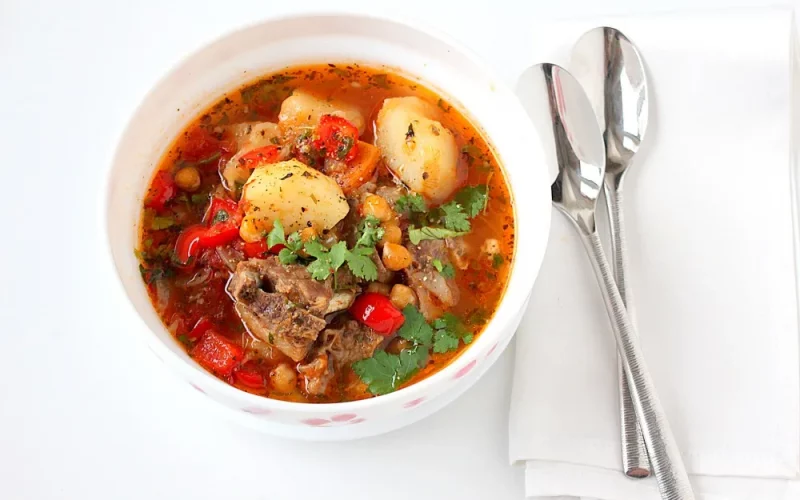
Imagine a deep bowl of soup placed on a wooden table in a cold mountain house. Steam rises slowly, carrying the aroma of tender meat, slow-cooked broth, herbs, and subtle spices. The air feels warm even before the first spoonful. This is the sensory world of Bozbash—a dish that is as much about feeling as it is about taste.
Bozbash is a traditional hearty soup from Armenian cuisine, typically made with lamb or beef, chickpeas, potatoes, onions, and sometimes dried fruits such as prunes or apricots. It is slow-cooked, rich, and deeply nourishing, designed not only to feed the body but also to comfort it.
In Armenian culinary tradition, Bozbash is often described as a “soul-warming” dish. This is not just poetic language—it reflects its role in everyday life. For generations, it has been prepared during cold months, when families needed meals that could provide both energy and emotional warmth. The long simmering process fills homes with a sense of stability and continuity, turning cooking into an act of care.
Across the Caucasus region, especially in Armenia and neighboring cultures, Bozbash has long been associated with winter comfort food traditions. It is the kind of dish that appears when the weather turns harsh, when people gather indoors, and when food becomes a central part of emotional and physical resilience.
Thesis: Bozbash is more than just a soup. It is a cultural symbol of hospitality, endurance, and heritage—carrying within it centuries of culinary tradition and the shared memory of communities that have preserved it through time.
Origins and Historical Background of Bozbash
The word “Bozbash” is believed to have Persian linguistic roots. It is commonly associated with the Persian components “boz” (gray or mixed) and “bash” (head or main), though interpretations vary. In culinary context, the name is often understood as referring to a “mixed” or “hearty” dish, emphasizing its combination of meat, legumes, and vegetables rather than a single dominant ingredient.
Historically, Bozbash developed within a broad culinary landscape shaped by Armenian, Persian, and Caucasian food traditions. These regions were deeply interconnected through trade routes, migrations, and cultural exchange. As a result, many dishes evolved in parallel, sharing ingredients and cooking techniques while developing distinct local identities.
Bozbash likely originated as a practical rural dish, designed to make the most of available ingredients. In mountainous and agricultural regions, people relied on slow-cooked meals that could feed large families and sustain them through long winters. Over centuries, the recipe adapted to local conditions—some regions added dried fruits for sweetness, others emphasized sour notes through fermented ingredients or herbs.
Nomadic and semi-nomadic lifestyles also influenced the development of Bozbash. Portable ingredients such as dried legumes and preserved meat were essential, and cooking methods had to be simple yet effective. This led to the tradition of long simmering in a single pot, allowing flavors to develop gradually over time.
Before modern kitchens, Bozbash was traditionally cooked over open fire. Large cauldrons or clay pots were used, often placed above hearths or outdoor fire pits. The slow, even heat allowed tough cuts of meat to become tender while enriching the broth with deep, layered flavors. This method also made Bozbash a communal dish—prepared in large quantities and shared among family members or guests.
Over time, the dish spread widely across the Caucasus region, including Armenia, Azerbaijan, and parts of Iran and Eastern Anatolia. Each region adapted Bozbash according to local tastes and available ingredients, creating multiple variations while preserving its essential identity as a hearty, slow-cooked soup.
Cultural Significance in Armenian Cuisine
In Armenian culture, Bozbash is more than just a traditional meal—it is a reflection of family life, hospitality, and cultural continuity.
At the family level, Bozbash often appears at the center of shared meals. It is not typically a quick weekday dish; instead, it is prepared with intention. Cooking it takes time, patience, and attention, which makes it especially suited for family gatherings, weekends, and occasions when people come together around the table. Serving Bozbash is a way of expressing care, as the dish itself symbolizes effort and warmth.
Hospitality is one of the most important cultural values in Armenian society, and Bozbash plays a subtle but meaningful role in this tradition. Offering a guest a hot, rich bowl of Bozbash is a gesture of generosity and respect. It signals that the guest is welcome, valued, and worthy of nourishment that goes beyond basic sustenance.
Seasonally, Bozbash is strongly associated with winter. In colder months, when fresh produce is limited and temperatures drop, the dish becomes a source of both physical comfort and emotional grounding. It is also sometimes served during festive occasions or family celebrations, especially in rural areas where traditional cooking practices remain strong.
There is a noticeable difference between rural and urban households in how Bozbash is prepared and consumed. In rural communities, the dish often follows older, more traditional recipes, sometimes cooked in large pots over fire or in outdoor settings. In urban environments, modern kitchens and time constraints have led to simplified versions, but the essence of the dish remains the same.
Symbolically, Bozbash represents comfort, resilience, and warmth within Armenian food culture. It reflects the ability of communities to adapt to challenging climates and historical hardships while maintaining a strong sense of identity. Every bowl carries a sense of continuity—linking present-day families with generations that came before them.
In this way, Bozbash is not just part of Armenian cuisine. It is part of Armenian memory.
Key Characteristics of Authentic Bozbash
Authentic Bozbash is defined not by a single strict recipe, but by a set of sensory and culinary principles that remain consistent across regions. Its identity is built through depth of flavor, slow cooking, and a careful balance between richness and subtle acidity.
The flavor profile is the first defining element. Bozbash is typically rich and meaty, with a noticeable depth that comes from long simmering of meat and bones. At the same time, it often carries a gentle sour or tangy note, depending on the regional variation. This acidity may come from dried fruits, sour plums, or tomato-based ingredients. Herbs add a fresh, slightly earthy dimension, creating a layered and complex taste rather than a single dominant flavor.
The texture profile is equally important. A well-prepared Bozbash has tender, almost melt-in-the-mouth pieces of meat, soft but still structured vegetables, and a broth that is noticeably thickened by natural collagen from bones and slow cooking. Chickpeas add a slight firmness, preventing the dish from becoming too uniform in texture. The result is a balanced spoonful where every ingredient retains its identity while contributing to a unified whole.
A defining feature of Bozbash is its slow-cooking tradition. This is not a dish that can be rushed. The long simmering process—often lasting several hours—allows connective tissues in the meat to break down and release gelatin into the broth. This technique is essential for achieving the signature richness and depth that distinguishes Bozbash from simpler soups.
Traditionally, lamb or beef serves as the protein base. Lamb is especially common due to its strong cultural presence in Armenian and Caucasian pastoral traditions. Beef is also widely used, particularly in regions where it is more accessible. In both cases, the use of bone-in cuts is crucial, as it enhances the flavor and body of the broth.
The fat content and bone broth foundation are central to authenticity. Fat is not merely an ingredient but a carrier of flavor, giving the soup its velvety mouthfeel. Marrow bones contribute additional richness, creating a broth that is deeply nourishing and full-bodied. Skimming or removing fat excessively is often seen as diminishing the traditional character of the dish.
Core Ingredients of Bozbash
Although Bozbash varies across regions, it is built upon a recognizable set of core ingredients that define its structure and taste.
Meat Base
The meat base is the foundation of Bozbash.
- Lamb is the most traditional choice, valued for its rich, slightly gamey flavor that complements slow cooking.
- Beef variations are also common, especially in urban or modern adaptations where lamb may be less accessible.
- Marrow bones play a critical role, releasing gelatin during long cooking and creating the characteristic thick, silky broth.
Together, these components form the structural and flavor backbone of the dish.
Vegetables and Legumes
Vegetables and legumes provide balance, texture, and nutritional depth.
- Chickpeas are one of the signature ingredients of Bozbash. They add a nutty flavor and firm texture that contrasts with the softness of meat and potatoes.
- Potatoes contribute body and help thicken the broth naturally as they break down during cooking.
- Onions are essential for building the flavor base, often sautéed or slowly simmered until they dissolve into the broth.
- Tomatoes or tomato paste introduce acidity and umami depth, especially in modern or urban versions.
- Seasonal vegetables may vary depending on region and availability, reflecting the dish’s adaptability across rural traditions.
Fruits and Flavor Enhancers
One of the most distinctive aspects of Bozbash is the occasional use of fruit-based sour and sweet-sour elements.
- Dried fruits such as apricots and prunes appear in some regional versions, adding subtle sweetness and complexity.
- Pomegranate molasses or sour plum pastes (often comparable to alcha or tklapi-style ingredients in neighboring cuisines) provide a sharp, tangy contrast to the richness of the meat.
These elements are not universal, but when used, they define a more layered and aromatic style of Bozbash.
Herbs and Spices
Herbs and spices in Bozbash are generally simple but essential for balance.
- Cilantro adds freshness and a slightly citrusy brightness.
- Dill contributes a soft herbal aroma that pairs well with legumes and potatoes.
- Basil may appear in some regional variations, adding a sweet herbal note.
- Black pepper provides gentle heat and depth.
- Salt balance is critical; it must enhance without overpowering the natural richness of the broth.
Rather than heavy spicing, Bozbash relies on restraint, allowing the ingredients themselves to define the final taste.
Regional Variations of Bozbash
Bozbash exists not as a single fixed recipe but as a family of related dishes that vary across geography, climate, and cultural preference.
Yerevan-Style Bozbash
The Yerevan-style Bozbash represents a more urban and simplified interpretation.
It is typically:
- More meat-forward, emphasizing lamb or beef as the dominant element.
- Relatively mild in flavor layering, with fewer sweet-sour components compared to rural versions.
- Focused on clarity and balance, often avoiding overly complex additions.
This version reflects a more modern, city-based approach where consistency and accessibility are prioritized over rustic variation.
Shusha / Mountain Region Version
The Shusha or mountain-region variation is often considered more traditional and intense in flavor.
Key characteristics include:
- A stronger sour profile, frequently achieved through dried fruits or souring agents.
- Use of wild herbs, which introduce more aromatic and slightly bitter notes.
- A deeper connection to rural and mountainous culinary traditions, where foraged ingredients play a significant role.
This version tends to feel more rustic, layered, and expressive compared to urban adaptations.
Summer vs Winter Bozbash
Bozbash also adapts to seasonal availability, creating distinct summer and winter versions.
- Winter Bozbash is heavier, richer, and more caloric, often relying on fatty cuts of meat and dried ingredients. It is designed to provide warmth and sustenance during cold months.
- Summer Bozbash is lighter and more vegetable-forward, sometimes using fresh seasonal produce instead of dried fruits or heavier fats. The broth may be less dense, offering a more refreshing variation while maintaining the same structural identity.
This seasonal flexibility highlights the dish’s practical origins and long-standing adaptability.
Urban Modern Interpretations
In contemporary culinary settings, especially restaurants, Bozbash has undergone further evolution.
Modern interpretations often include:
- Restaurant-style presentation, with carefully plated portions and refined visual aesthetics.
- Health-conscious adaptations, such as reduced fat content or use of leaner cuts of meat.
- Simplified ingredient lists designed for consistency in commercial kitchens.
While these versions may differ from traditional rural preparations, they preserve the essential idea of Bozbash as a slow-cooked, hearty soup rooted in regional heritage.
Traditional Cooking Method (Step-by-Step Narrative Section)
The traditional preparation of Bozbash is not simply a cooking process—it is a slow ritual that reflects patience, care, and respect for ingredients. Each step builds upon the previous one, gradually transforming basic components into a deeply flavored, unified dish.
The process often begins with preparing and soaking chickpeas. Since dried chickpeas are a staple ingredient, they are typically soaked overnight in cold water. This step softens them, reduces cooking time, and ensures a creamy yet intact texture after long simmering. In traditional households, this preparation is often done the evening before cooking, signaling that Bozbash is planned and intentional rather than spontaneous.
Next comes browning the meat, a crucial stage for developing depth of flavor. Lamb or beef pieces, often with bones attached, are seared in a pot until a rich golden-brown crust forms. This Maillard reaction is essential, as it creates complex savory notes that will later enrich the broth. In many traditional settings, this step is done in the same pot that will later be used for simmering, ensuring that no flavor is lost.
After browning, the dish enters its most important phase: the slow simmering process. Water or broth is added, and the heat is reduced to a gentle, steady level. This stage can last several hours, during which connective tissues in the meat gradually break down, releasing gelatin that thickens the soup naturally. The slow transformation is central to Bozbash’s identity—rushing this step would fundamentally alter the dish.
Ingredients are then added through a process of layering in stages. Chickpeas, onions, and sometimes potatoes are introduced at different times depending on their cooking requirements. This staged approach ensures that each ingredient reaches the perfect texture without becoming overcooked or dissolving completely into the broth.
The role of low heat and long cooking duration cannot be overstated. Bozbash relies on gentle heat rather than boiling intensity. A strong boil would disrupt the clarity of the broth and toughen the meat. Instead, a calm simmer allows flavors to merge gradually, creating a cohesive and harmonious profile.
As the dish nears completion, final seasoning adjustments are made. Salt, black pepper, and sometimes souring agents such as pomegranate molasses or dried fruit reductions are carefully balanced. This stage is highly individual and often reflects family tradition or regional preference.
Finally, many traditional cooks allow a resting time before serving. Once the heat is turned off, the pot is left covered for a short period. This resting phase allows flavors to settle and integrate fully, improving both aroma and taste. When served, Bozbash is at its most balanced—rich, cohesive, and deeply aromatic.
Variations and Related Soups in the Region
Bozbash exists within a broader family of Caucasian and Near Eastern soups, many of which share techniques, ingredients, and historical influences while maintaining distinct identities.
A key comparison is with Azerbaijani bozbaş, a closely related dish that shares the same name and structural foundation. Azerbaijani versions often emphasize meat, potatoes, and chickpeas, but may differ in seasoning and presentation. Some regional variations include meatballs or larger cuts of lamb, and the soup can range from clear broths to thicker stews depending on local tradition.
Another important point of comparison is Georgian meat soups, particularly dishes such as kharcho. While kharcho is more aggressively spiced and often incorporates walnuts and stronger herbal profiles, Bozbash tends to be more restrained in spice usage. Both dishes, however, share a reliance on slow-cooked meat and layered flavors developed over time.
Across the Caucasus, these soups reflect shared culinary influences shaped by geography, trade routes, and centuries of cultural interaction. Mountainous environments, pastoral economies, and seasonal constraints encouraged the development of hearty, slow-cooked dishes that could sustain communities through harsh winters.
Despite these similarities, there are notable differences in souring agents and spice usage. Bozbash often uses subtle sour elements such as dried fruits, sour plum pastes, or tomato-based acidity. In contrast, neighboring cuisines may rely more heavily on tart sauces, vinegar-based additions, or more pronounced spice blends. This gives Bozbash a generally softer, more rounded sourness compared to some regional counterparts.
Nutritional Value and Health Aspects
From a nutritional perspective, Bozbash is a highly balanced and energy-dense dish, shaped by centuries of adaptation to demanding climates and physically active lifestyles.
One of its primary strengths is its high protein content, derived from both meat and legumes. Lamb or beef provides complete animal protein, essential amino acids, and essential minerals such as iron and zinc. Chickpeas complement this by adding plant-based protein, making the dish nutritionally well-rounded.
The long simmering of bones produces a collagen-rich broth, which is often valued for its potential benefits to joint health, skin elasticity, and overall digestive comfort. While modern science continues to study these effects, traditional culinary wisdom has long regarded slow-cooked bone broths as restorative and strengthening.
Historically, Bozbash has also been recognized for its energy-dense qualities, making it especially important in cold climates and mountainous regions. The combination of fats, proteins, and carbohydrates provides sustained energy, which was essential for agricultural and pastoral communities during long winters or physically demanding work.
The inclusion of chickpeas and vegetables contributes meaningful dietary fiber, supporting digestion and promoting satiety. Potatoes and legumes also provide complex carbohydrates, offering steady energy release rather than quick spikes in blood sugar.
In modern nutritional interpretations, Bozbash is often viewed as a balanced meal in a single bowl. It contains protein, fats, carbohydrates, and fiber, along with vitamins and minerals from herbs and vegetables. While traditional versions may be rich and calorie-dense, contemporary adaptations can adjust fat content or portion size to fit different dietary needs without losing the essence of the dish.
Ultimately, Bozbash demonstrates how traditional cuisine often aligns naturally with principles of nutritional balance, even without formal dietary science—emerging from generations of practical knowledge, environmental adaptation, and culinary intuition.
Bozbash in Modern Armenian Life
In contemporary Armenian life, Bozbash continues to hold a meaningful place, even as lifestyles, kitchens, and food habits have evolved. It exists today at the intersection of tradition and modernity—equally present in family homes and professional kitchens.
In restaurants, Bozbash is often featured as part of traditional Armenian menus that aim to showcase national culinary heritage. It is typically presented in a refined but still rustic style, emphasizing authenticity rather than heavy modernization. In home cooking, however, the dish remains closer to its original form, especially in families that preserve older recipes passed down through generations.
Like many traditional dishes, Bozbash has also been influenced by globalization. Modern ingredients, new cooking techniques, and time constraints have led to simplified versions of the dish. Some cooks reduce cooking time using pressure cookers, adjust fat content for dietary preferences, or replace certain traditional ingredients with more widely available alternatives. Despite these changes, the core identity of Bozbash—slow-cooked meat with legumes in a rich broth—remains largely intact.
At the same time, there has been a noticeable revival of traditional cuisine among younger generations. Many young Armenians are increasingly interested in rediscovering ancestral recipes, not only as food but as a form of cultural connection. Cooking Bozbash at home has become a way to reconnect with heritage, family memory, and regional identity.
Bozbash has also become part of culinary tourism in Armenia. Visitors seeking authentic experiences are often introduced to traditional soups like Bozbash as part of cultural food tours or rural hospitality experiences. In this context, the dish serves as both nourishment and storytelling—offering insight into Armenian history, climate, and way of life through taste.
Serving Suggestions and Pairings
The way Bozbash is served is an important part of its cultural expression. Presentation is usually simple, emphasizing warmth, generosity, and homeliness rather than formal aesthetics.
Traditionally, Bozbash is served in deep ceramic or earthenware bowls. These vessels help retain heat and enhance the rustic character of the dish. The presentation is intentionally unpretentious, reflecting its origins as a communal, family-centered meal rather than a refined culinary product.
A key accompaniment to Bozbash is lavash, the traditional Armenian flatbread. Soft, thin, and flexible, lavash is used to scoop broth, wrap pieces of meat, or simply accompany each bite. It plays an essential role in balancing the richness of the soup and completing the meal.
Common side dishes include pickled vegetables such as cucumbers, cabbage, or green tomatoes. These add acidity and crunch, creating contrast with the soft, slow-cooked texture of Bozbash. Fresh herbs—such as parsley, cilantro, or green onions—are often placed on the table as optional garnishes, allowing diners to adjust freshness to taste.
In modern settings, beverage pairings have also expanded. Traditionally, Bozbash might be enjoyed with simple tea or water. Today, it is sometimes paired with light wines, especially dry white or medium-bodied red wines, which complement the dish’s richness without overwhelming it. In more casual home settings, herbal teas remain a common and comforting choice.
Cooking Tips for the Perfect Bozbash
Achieving an excellent Bozbash depends less on complex technique and more on patience, balance, and respect for ingredients. Several key principles define a successful preparation.
The most important rule is the necessity of slow cooking. Bozbash cannot be rushed. High heat or shortened cooking time will prevent the meat from becoming tender and will limit the development of deep, layered flavors. Traditional quality is achieved only through long, gentle simmering.
Another crucial aspect is balancing sour and savory notes. Bozbash often relies on a subtle interplay between rich meatiness and gentle acidity. Too much sourness can overpower the dish, while too little can make it feel heavy. Ingredients such as dried fruits, tomato paste, or pomegranate molasses should be used with careful restraint to maintain harmony.
The choice of meat cuts significantly affects the final result. Cuts with bone, connective tissue, and moderate fat content are ideal, as they release gelatin and create a naturally thick, flavorful broth. Lean cuts alone tend to produce a less rich and less traditional result.
Proper management of chickpea texture is also essential. Chickpeas should be fully softened but not disintegrated. Overcooking can turn them mushy and dull the contrast they provide, while undercooking leaves them too firm and disrupts the harmony of textures. Pre-soaking and gradual cooking help achieve the ideal consistency.
Finally, many experienced cooks emphasize the importance of allowing flavors to rest overnight. Like many slow-cooked dishes, Bozbash often tastes even better the next day. Resting allows the broth, meat, legumes, and aromatics to fully integrate, resulting in a deeper, more cohesive flavor profile when reheated and served.
Common Mistakes to Avoid
Although Bozbash is a relatively straightforward dish in terms of ingredients, its success depends heavily on technique and patience. Several common mistakes can significantly affect its flavor, texture, and overall authenticity.
One frequent error is overcooking vegetables. Because Bozbash is a long-simmered dish, vegetables such as potatoes or carrots can easily break down if added too early or cooked at too high a temperature. When this happens, the broth becomes overly thick or muddy, and the vegetables lose their distinct identity instead of contributing structured texture.
Another major mistake is using lean meat without marrow or bone content. While lean cuts may seem healthier or more convenient, they lack the connective tissue and fat necessary to create the deep, rich broth that defines Bozbash. Without marrow bones, the soup loses much of its traditional body, resulting in a thinner and less satisfying flavor profile.
A third common issue is skipping the soaking of legumes, especially chickpeas. Dry chickpeas that are not properly soaked overnight require significantly longer cooking and may remain unevenly cooked—some too firm, others overly soft. This disrupts the balance and texture of the dish, which depends on uniform tenderness.
Over-seasoning too early in the cooking process is another mistake. Because Bozbash reduces and concentrates over time, early heavy seasoning can lead to an overly salty or unbalanced final dish. Traditional cooking relies on gradual seasoning adjustments toward the end, allowing flavors to develop naturally before final correction.
Finally, one of the most critical errors is rushing the simmering process. Bozbash depends on slow, gentle heat to transform tough cuts of meat into tender, flavorful pieces and to allow the broth to develop depth. Increasing heat to speed up cooking undermines this transformation and results in a less cohesive, less aromatic soup.
Bozbash as a Symbol of Armenian Identity
Beyond its culinary role, Bozbash carries deep symbolic meaning within Armenian cultural identity. It is not only a traditional dish but also a reflection of continuity, memory, and shared experience.
At the heart of this symbolism is its connection to family traditions. Bozbash is often prepared during family gatherings, weekends, or special occasions, where cooking becomes a collective activity. The process itself—slow, deliberate, and communal—mirrors the values of patience and togetherness that are central to Armenian family life.
Closely linked to this is the transmission of recipes across generations. Bozbash is rarely learned from written instructions alone; instead, it is passed down through observation, participation, and oral guidance. Grandparents teaching younger family members how to balance flavors or judge cooking time turns the dish into a living cultural archive.
The dish also carries strong emotional and nostalgic associations. For many, the smell of Bozbash simmering evokes memories of childhood, home kitchens, and seasonal gatherings. It becomes more than food—it becomes a sensory link to personal and collective history.
In a broader sense, Bozbash plays a role in preserving cultural heritage through food. As modern lifestyles change eating habits, traditional dishes like Bozbash serve as anchors of identity. They preserve knowledge about local ingredients, historical cooking methods, and regional flavor preferences, ensuring that cultural memory remains alive in everyday life.
A Soup That Tells a Story
Bozbash is far more than a traditional soup. It is a layered expression of Armenian culinary heritage, shaped by geography, history, and generations of lived experience. Across its variations—whether rural or urban, simple or richly complex—it consistently reflects a deep connection between food, environment, and culture.
Its culinary importance lies in its balance of richness, texture, and slow-developed flavor. But its cultural importance extends even further. Bozbash represents hospitality offered without hesitation, endurance shaped by climate and history, and the quiet strength of traditions that persist through change.
Ultimately, Bozbash endures because it speaks to something universal. It is a dish of comfort, warmth, and belonging. In every bowl, there is not only nourishment, but also a story—of families gathered around tables, of recipes remembered and retold, and of a culture preserved through the simple, powerful act of cooking.
If you want to truly understand the spirit of Armenian cuisine, you should try Bozbash yourself—ideally by visiting Armenia, where its flavor comes alive in an authentic atmosphere of hospitality, tradition, and homemade warmth.





72 Responses
https://shorturl.fm/hank9
https://shorturl.fm/k6AmH
https://shorturl.fm/8CUGY
https://shorturl.fm/6FVSI
https://shorturl.fm/uMmID
https://shorturl.fm/0df1y
https://shorturl.fm/2ZZPC
https://shorturl.fm/7RzxG
https://shorturl.fm/HVYTq
https://shorturl.fm/RZ1We
https://shorturl.fm/YnGCI
https://shorturl.fm/1mpB3
https://shorturl.fm/2ewFO
https://shorturl.fm/7RgS7
https://shorturl.fm/cAo7v
https://shorturl.fm/Z5WHv
https://shorturl.fm/jhwsH
https://shorturl.fm/xQ0hN
https://shorturl.fm/JY5iv
https://shorturl.fm/cboPf
https://shorturl.fm/46sEA
https://shorturl.fm/Y2Hgc
https://shorturl.fm/MY7L5
https://shorturl.fm/xpFFt
https://shorturl.fm/gwYCc
https://shorturl.fm/ZIKK1
https://shorturl.fm/e04gt
https://shorturl.fm/ecAil
https://shorturl.fm/ckPrW
https://shorturl.fm/msrtl
https://shorturl.fm/Ed4a5
https://shorturl.fm/4BOyp
https://shorturl.fm/3k9I9
https://shorturl.fm/waqFJ
https://shorturl.fm/ohBlD
https://shorturl.fm/QPbah
https://shorturl.fm/v2P0u
https://shorturl.fm/QZQ8F
https://shorturl.fm/esyJ9
https://shorturl.fm/uYszL
https://shorturl.fm/Ermzh
https://shorturl.fm/8Ry5e
https://shorturl.fm/A7gwh
https://shorturl.fm/4UFpy
https://shorturl.fm/2JybD
https://shorturl.fm/jxPQQ
https://shorturl.fm/pnZqm
https://shorturl.fm/78YNP
https://shorturl.fm/cMbyl
https://shorturl.fm/bscUx
[3119]vb88 Official Login | বিকাশ পেমেন্ট ও সেরা ক্যাসিনো বোনাস,vb88 অ্যাপ ডাউনলোড করে সেরা স্লট গেমের নিয়ম জানুন এবং বিকাশ দিয়ে সহজেই গেম খেলুন। আকর্ষণীয় অনলাইন ক্যাসিনো বোনাস পেতে আজই যোগ দিন। visit: vb88
[8515]4777bat Official Login | সেরা অনলাইন স্লট ও ক্যাসিনো গেমস,4777bat-এ লগইন করে উপভোগ করুন সেরা অনলাইন স্লট ও ক্রাশ গেম। বিকাশ দিয়ে সহজ ডিপোজিট এবং অ্যাপ ডাউনলোড করে আজই খেলা শুরু করুন। visit: 4777bat
The app version is a game changer! I can play anywhere and it doesn’t lag at all. So glad I downloaded jilidayapp.
The variety of games is insane. There is always something new to explore and the community is pretty chill. Glad I found planetligalogin.
Just had a massive win on the live dealer table. The atmosphere feels like a real casino right from my living room. Big thanks to phsg7772.
Great rewards and even better customer support. I had a small issue with my account and they sorted it out in minutes. Big thanks to vntc88.
I really appreciate the transparency of bralong777. The rules are clear and the winning experience is very exciting. I’ve had some great wins here recently! bralong777
Superb service and a very welcoming community. I had a small issue with my account but it was sorted in minutes. bangladeshjaya9 is truly professional.
Super honest site with great bonuses for new players. I had a great time exploring the games on phjili123 today.
The customer support team is top-notch. They helped me solve my deposit issue in minutes. Great service and a great platform at pkmintx1.
The login process is quick and the game variety is amazing. I always have a great time whenever I visit 777barlogin
Super smooth gameplay and the interface is very user friendly. I had a bit of a lucky streak yesterday and the withdrawal was processed almost instantly. Highly recommend pk777zc to anyone looking for a reliable platform.
Finally a platform that actually works smoothly in my region. The login process is seamless and the app performance is top notch. bajiloginpakistanapp is definitely the way to go.
A very clean and professional site. I appreciate how easy it is to deposit and withdraw funds without any hassle. bdu444 is legit.
The mobile app is a game changer. I can play whenever I have a few spare minutes and the connection is always stable. Best way to access fb777applogin for sure.
[5948]Steakbet Login PH | Slots at Casino na may GCash Deposit,Mag-steakbet login ph na para sa online slots gcash deposit. I-steakbet download APK para sa mabilis na access sa live casino. Maglaro na rito! visit: steakbet
The login process is seamless and I never experience any lag during my sessions. It makes the whole gaming experience much more enjoyable. I always use slot97login for my daily play!
Great experience so far. The app is lightweight and the customer service is very responsive. Definitely a 5 star experience with 3365betapp
Very reliable site with a great community of players. I feel safe depositing my money here because the withdrawals are seamless. Trust phjljl99.
I was looking for a reliable place to grab the latest APKs and this site really delivered. The download speed is impressive and everything works perfectly. Definitely checking out in7apkdownloadin again soon!
[718]bt222 login করুন – বিকাশ ডিপোজিট ও অনলাইন স্লট গেম,bt222 login করুন এবং সেরা লাইভ ক্যাসিনো বোনাস উপভোগ করুন। বিকাশ দিয়ে ক্যাসিনো ডিপোজিট করে সহজে bt222 app download করে খেলা শুরু করুন। visit: bt222
This is definitely the go-to spot for anyone looking for a fun and rewarding experience. The local support is a huge plus. Visit phpkjili